
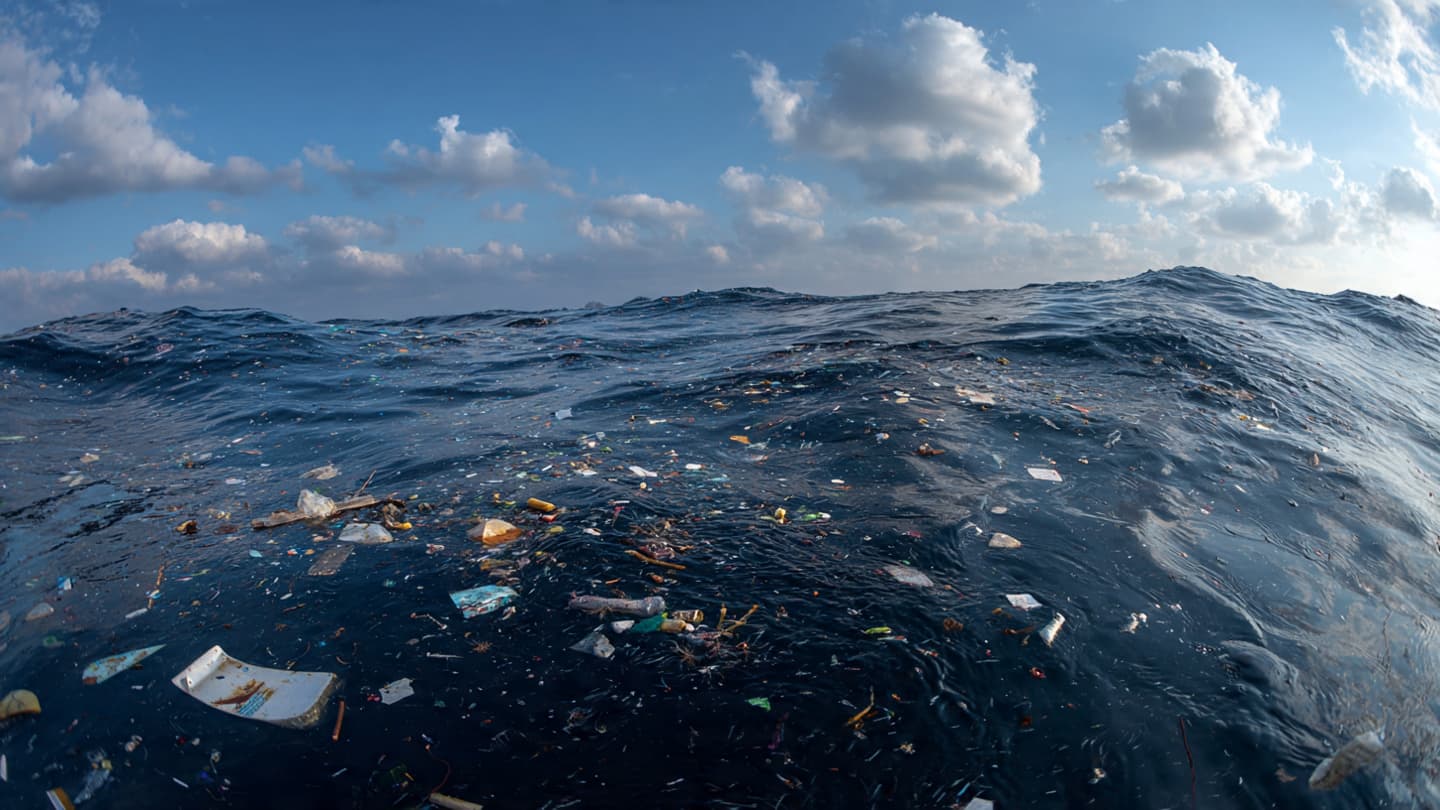
Far from shore, where the ocean seems uninterrupted and vast, there are places where currents gather more than water. The Great Pacific Garbage Patch stands as one such place, where accumulation tells a story not immediately visible from the surface.
The Great Pacific Garbage Patch, a large area of marine debris in the Pacific Ocean, has long been recognized as a significant environmental concern. Composed largely of plastic waste, it reflects patterns of global consumption and disposal.
Recent discussions suggest that the patch may represent only one part of a broader, less visible problem. Scientists are increasingly focused on microplastics—tiny particles that disperse throughout the ocean.
Unlike larger debris, microplastics can be difficult to detect and remove. They can enter marine ecosystems, affecting organisms at various levels of the food chain.
Research indicates that these particles may be more widespread than previously understood, extending beyond concentrated areas like the garbage patch.
The patch itself forms due to ocean currents that draw debris into a relatively stable region. While visible from a scientific perspective, much of its content remains beneath the surface.
Efforts to address plastic pollution include cleanup initiatives, policy measures, and changes in manufacturing practices. However, the scale of the issue presents ongoing challenges.
Scientists continue to study how plastic waste moves through ocean systems, seeking ways to better understand and mitigate its impact.
As awareness grows, the Great Pacific Garbage Patch serves not only as a visible accumulation but also as a reminder of the broader, often hidden dimensions of environmental change.
AI Image Disclaimer: Images provided are AI-generated visualizations of ocean pollution and debris accumulation.
Sources: National Geographic, NOAA, BBC, Reuters
Published by Banx Network. This article is part of the Banx decentralized media programme, powered by the BXE token on the XRP Ledger.



