
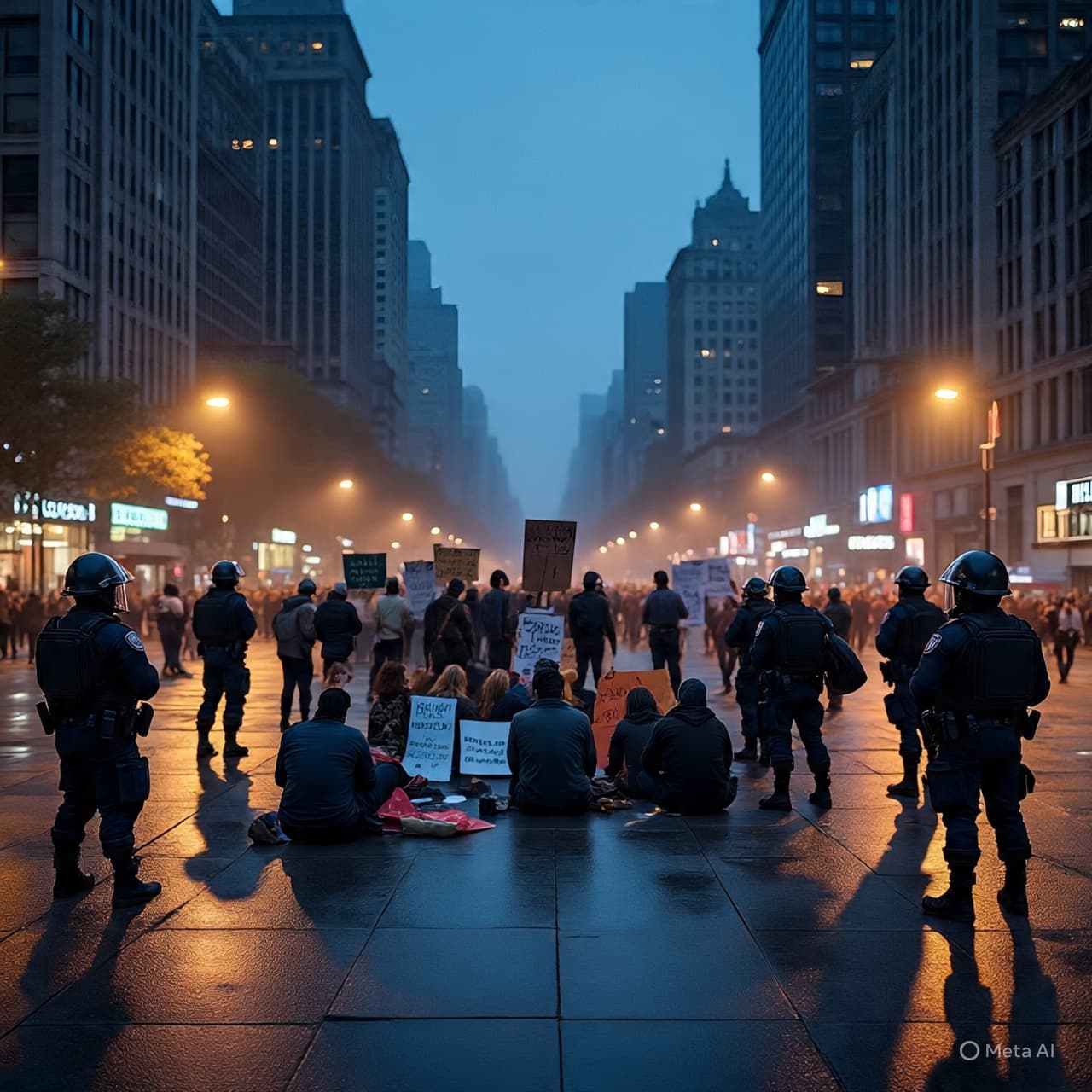
In the waning light of a Sydney evening, as the amber glow of streetlamps slips into the encroaching dusk, the city feels both still and unsettled — a quiet at odds with the thunder of recent days. Along the corridors of its wide thoroughfares and hidden lanes, there linger echoes of grief and protest, of voices raised in solidarity and in dissent. This is a city that has known a sudden rupture of peace, where the laughter of a Hanukkah celebration at Bondi Beach once mingled with surf and sunlight and, in an instant, was replaced by shock and sorrow. In these moments, public life drifts between remembering and responding, between the tender hush of mourning and the agitated cadence of demonstration.
The arrival of Israel’s president for a state visit — a journey meant by some as a gesture of solidarity with those affected by that tragedy — unfolded against this delicate backdrop. In parks and near the shadows of Town Hall, thousands gathered to express their opposition, not only to the visit itself but to broader concerns about conflict on distant lands and the reverberations of those conflicts here at home. The rhythms of protest swelled into something more turbulent when tensions between demonstrators and police spilled into physical confrontation, pepper spray hanging in the air like dust motes in a shaft of light.
Across the spacious squares, the motion of feet and chants interwove with the measured movements of law enforcement. Officers, tasked with maintaining order under powers enacted in the aftermath of the beach massacre, pushed to disperse crowds whose passions were both raw and reflective of deep global grievances. In the course of this uneasy dance, arrests were made and accusations of excessive force emerged. Some protesters, gathered for peaceful prayer or to raise slogans, found themselves caught in a moment that felt both sudden and long‑anticipated.
For many in Sydney and beyond, the streets became an arena where memory and motion intersected uncomfortably: families remembering lost loved ones at Bondi, activists decrying distant wars, and those charged with public safety navigating laws tightened after recent terror. The authorities appealed for calm, urging that grief and dissent find expression without the escalation of violence; yet, in the throbbing heart of the city, the line between peace and upheaval remained fragile, colored by the grief that had not yet yielded to time.
Even as authorities stressed the need to protect mourners and maintain order, there was a palpable sense of unresolved tension. Some voices in the crowd saw the president’s presence as an opportunity for unity, others as a painful reminder of fractures both local and global. And so, under skies that flickered from twilight to night, the city held space for both remembrance and unrest, its avenues tracing stories that refuse easy closure.
In the largest reports from Sydney, at least twenty‑seven people were arrested after clashes between police and demonstrators during protests against the visit of Israeli President Isaac Herzog. Authorities had deployed expanded powers to manage the crowds, reflecting heightened sensitivities following a terror attack at Bondi Beach in December that killed fifteen people at a Hanukkah event. Officials called for restraint and peaceful expression of views, while some demonstrators and observers accused police of excessive force. The visit itself included memorial activities honoring the victims of the massacre and efforts to express solidarity with Australia’s Jewish community.
AI Image Disclaimer
Visuals are AI‑generated and serve as conceptual representations.
Sources (Media Names Only)
Reuters The Guardian Fox News Taipei Times Haaretz
Published by Banx Network. This article is part of the Banx decentralized media programme, powered by the BXE token on the XRP Ledger.


