
Key Highlights
- Protests erupted in Sydney against Israeli President Isaac Herzog's visit.
- Over 27 arrests were made during clashes between police and demonstrators.
- The protests reflect broader concerns about global conflicts and local grievances.
In the waning light of a Sydney evening, the city feels both still and unsettled, a quiet at odds with the thunder of recent protests. The echoes of grief and dissent linger in the air, as voices raised in solidarity clash with those expressing opposition. This is a city that has experienced a sudden rupture of peace, where the laughter of a Hanukkah celebration at Bondi Beach was abruptly replaced by shock and sorrow. In these moments, public life drifts between remembering and responding, between the tender hush of mourning and the agitated cadence of demonstration.
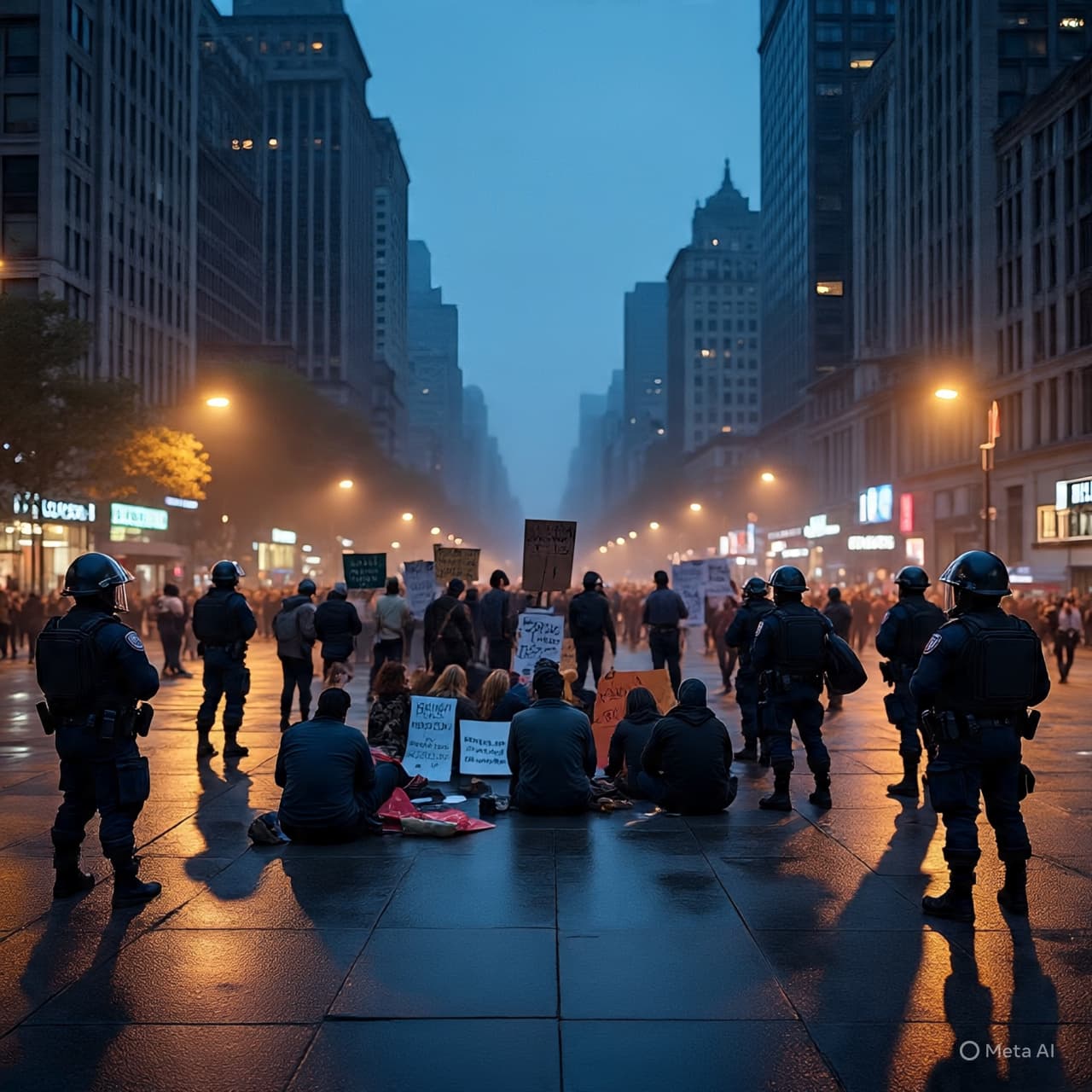
The arrival of Israeli President Isaac Herzog for a state visit was intended as a gesture of solidarity with those affected by recent tragedies. However, it unfolded against a backdrop of tension, as thousands gathered in parks and near Town Hall to express their opposition not only to the visit but also to the broader implications of international conflicts. The rhythms of protest intensified when tensions between demonstrators and police escalated into physical confrontations, with pepper spray hanging in the air like dust motes in a shaft of light.
Across the spacious squares, the movement of feet and chants interwove with the measured responses of law enforcement. Officers, tasked with maintaining order under powers enacted after the Bondi Beach massacre, pushed to disperse crowds whose passions were raw and reflective of deep global grievances. In the course of this uneasy dance, arrests were made, and accusations of excessive force emerged. Some protesters, gathered for peaceful prayer or to raise slogans, found themselves caught in a moment that felt both sudden and long-anticipated.
For many in Sydney and beyond, the streets became an arena where memory and motion intersected uncomfortably: families remembering lost loved ones at Bondi, activists decrying distant wars, and those charged with public safety navigating laws tightened after recent terror. Authorities appealed for calm, urging that grief and dissent find expression without escalating violence; yet, in the throbbing heart of the city, the line between peace and upheaval remained fragile, colored by grief that had not yet yielded to time.
Even as authorities stressed the need to protect mourners and maintain order, a palpable sense of unresolved tension lingered. Some voices in the crowd viewed the president’s presence as an opportunity for unity, while others saw it as a painful reminder of fractures both local and global. Under skies that flickered from twilight to night, the city held space for both remembrance and unrest, its avenues tracing stories that refuse easy closure.
In the largest reports from Sydney, at least twenty-seven people were arrested after clashes between police and demonstrators during protests against the visit of Israeli President Isaac Herzog. Authorities had deployed expanded powers to manage the crowds, reflecting heightened sensitivities following a terror attack at Bondi Beach in December that killed fifteen people during a Hanukkah event. Officials called for restraint and peaceful expression of views, while some demonstrators and observers accused police of excessive force. The visit itself included memorial activities honoring the victims of the massacre and efforts to express solidarity with Australia’s Jewish community.
Published by Banx Network. This article is part of the Banx decentralized media programme, powered by the BXE token on the XRP Ledger.



