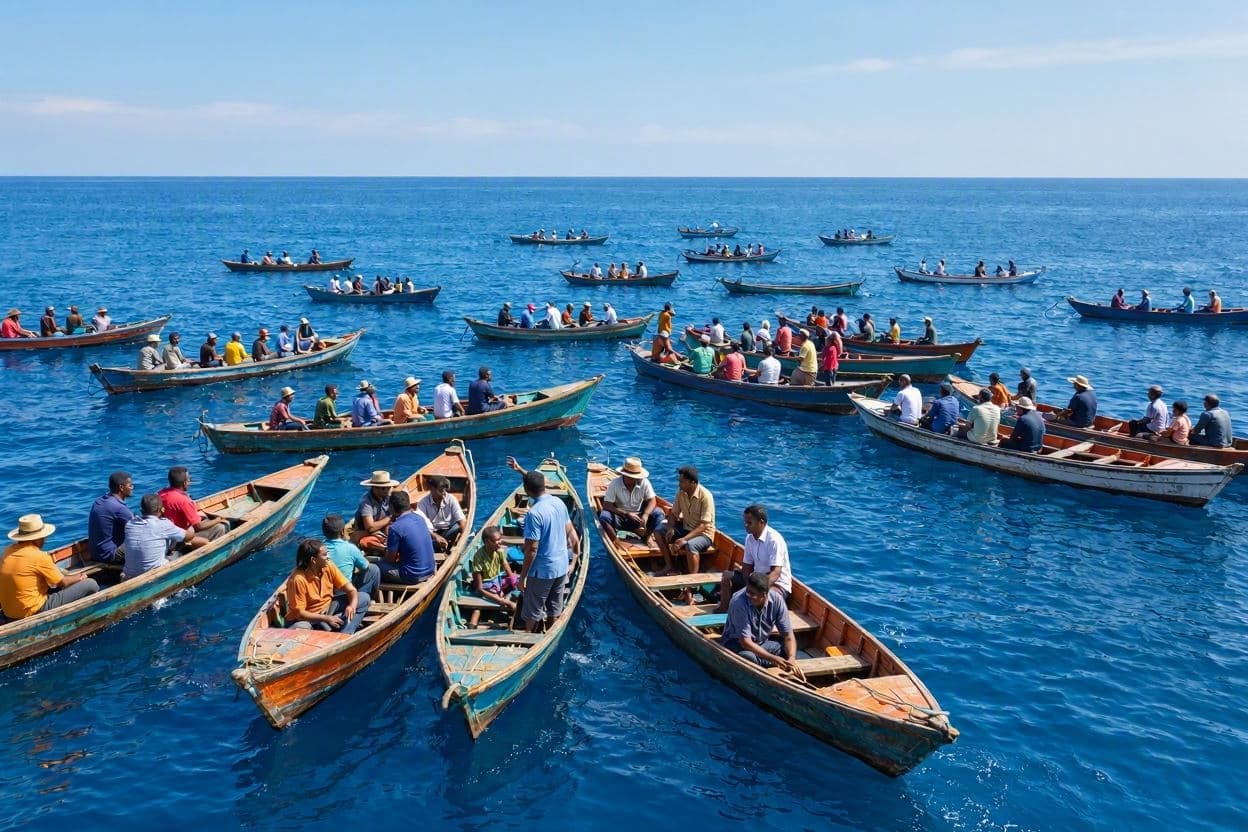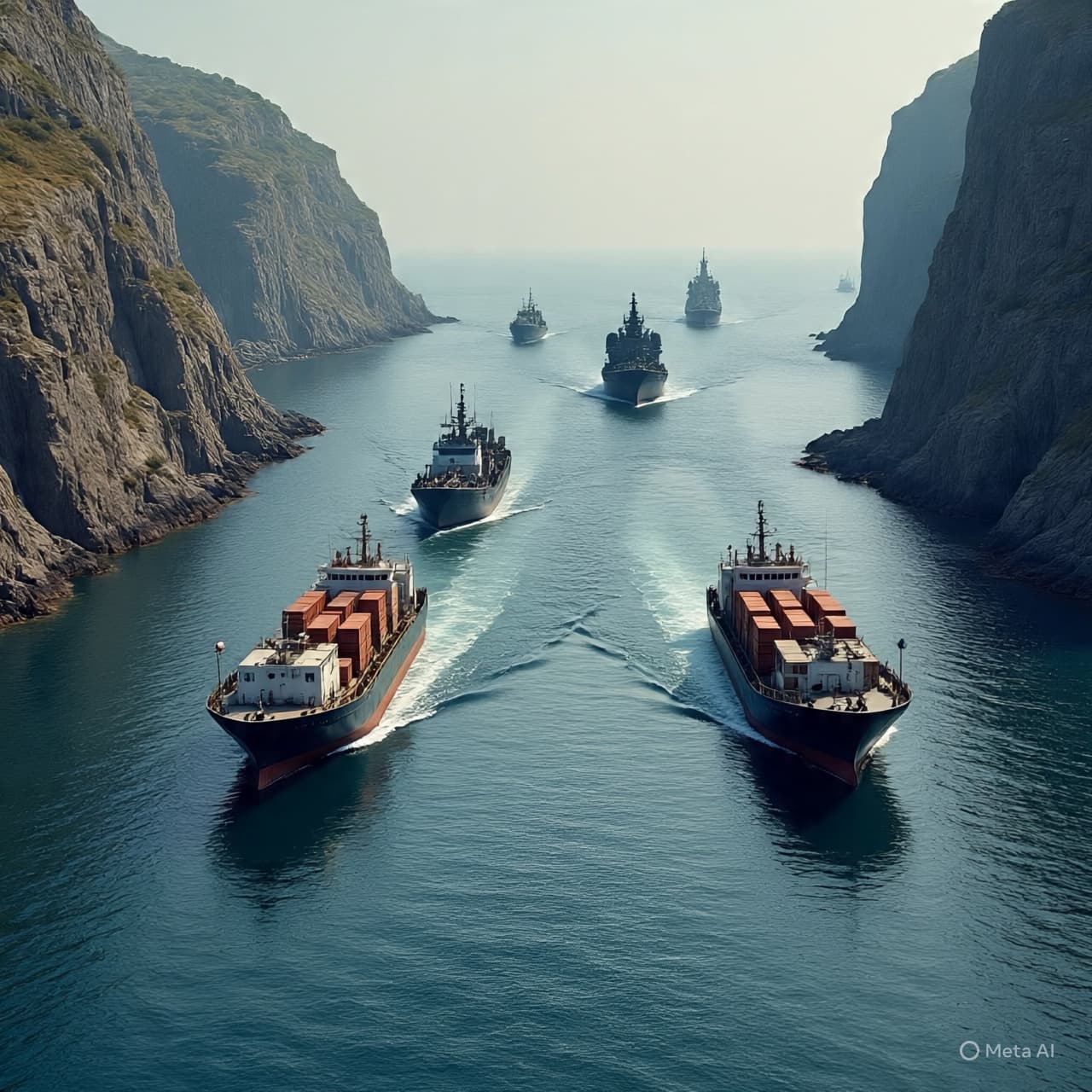
There are moments in global affairs when the sea, vast and indifferent, becomes a mirror—reflecting not only the movement of ships but the quiet anxieties of nations. The Red Sea, once a steady corridor of commerce, now feels like a narrow passage filled with echoes of uncertainty. Cargo vessels move, but not without hesitation; routes exist, but not without question. And in the background, a deeper concern begins to surface, like a tide that cannot be held back: if this is the strain in the Red Sea, what then of the Strait of Hormuz?
In recent months, Western powers have found themselves navigating a challenge that is less about firepower and more about persistence. Securing shipping lanes in the Red Sea has proven difficult, not because of a lack of capability, but because of the evolving nature of disruption. Threats are no longer confined to conventional naval engagements. Instead, they emerge unpredictably—drones, missiles, and asymmetric tactics that blur the line between deterrence and reaction.
Efforts to safeguard maritime traffic have involved coordinated patrols, multinational cooperation, and strategic positioning. Yet, despite these measures, the sense of full control remains elusive. Commercial shipping companies have adjusted routes, increased insurance costs, and, in some cases, opted for longer journeys around Africa rather than risk passage through contested waters. The economic implications ripple outward, touching supply chains, energy markets, and global trade timelines.
It is within this context that attention shifts, almost inevitably, toward the Strait of Hormuz. Unlike the Red Sea, which is already demonstrating its vulnerabilities, Hormuz represents a far more concentrated point of global dependency. A significant portion of the world’s oil supply passes through this narrow corridor. Its geography offers little room for maneuver, and its strategic importance elevates every potential disruption into a matter of global consequence.
If securing the Red Sea has proven complex, Hormuz presents a scenario layered with even greater sensitivity. The proximity of regional powers, longstanding geopolitical tensions, and the sheer volume of energy transit create a setting where even minor incidents can carry outsized implications. The challenge here is not only about maintaining open passage but about preventing escalation in a space where margins for error are exceptionally thin.
Western naval capabilities remain substantial, and their presence continues to signal commitment to maritime security. However, the nature of modern conflict—fragmented, adaptive, and often indirect—suggests that traditional approaches may not always yield immediate clarity. Security, in this sense, becomes less about absolute assurance and more about continuous management of risk.
For global markets, the distinction between disruption and stability is measured not in absolutes, but in degrees. A delay here, a rerouted shipment there—these are the subtle shifts that accumulate into broader economic patterns. Energy prices respond, insurance premiums adjust, and the quiet calculus of risk becomes part of everyday decision-making for industries far removed from the water itself.
As the situation continues to unfold, the Red Sea may be seen not as an isolated challenge, but as an early indication of a more complex maritime landscape. Hormuz, standing at the crossroads of energy and geopolitics, remains a focal point of both concern and vigilance.
In the end, the sea does not choose sides. It carries what passes through it, whether peacefully or under tension. The question that remains is not whether these routes can be secured in absolute terms, but how the world adapts to a reality where certainty itself has become a shifting horizon.
AI Image Disclaimer Visuals are created with AI tools and are not real photographs.
Source Check (Credible Media Outlets): Reuters BBC News The New York Times Al Jazeera Financial Times
Published by Banx Network. This article is part of the Banx decentralized media programme, powered by the BXE token on the XRP Ledger.