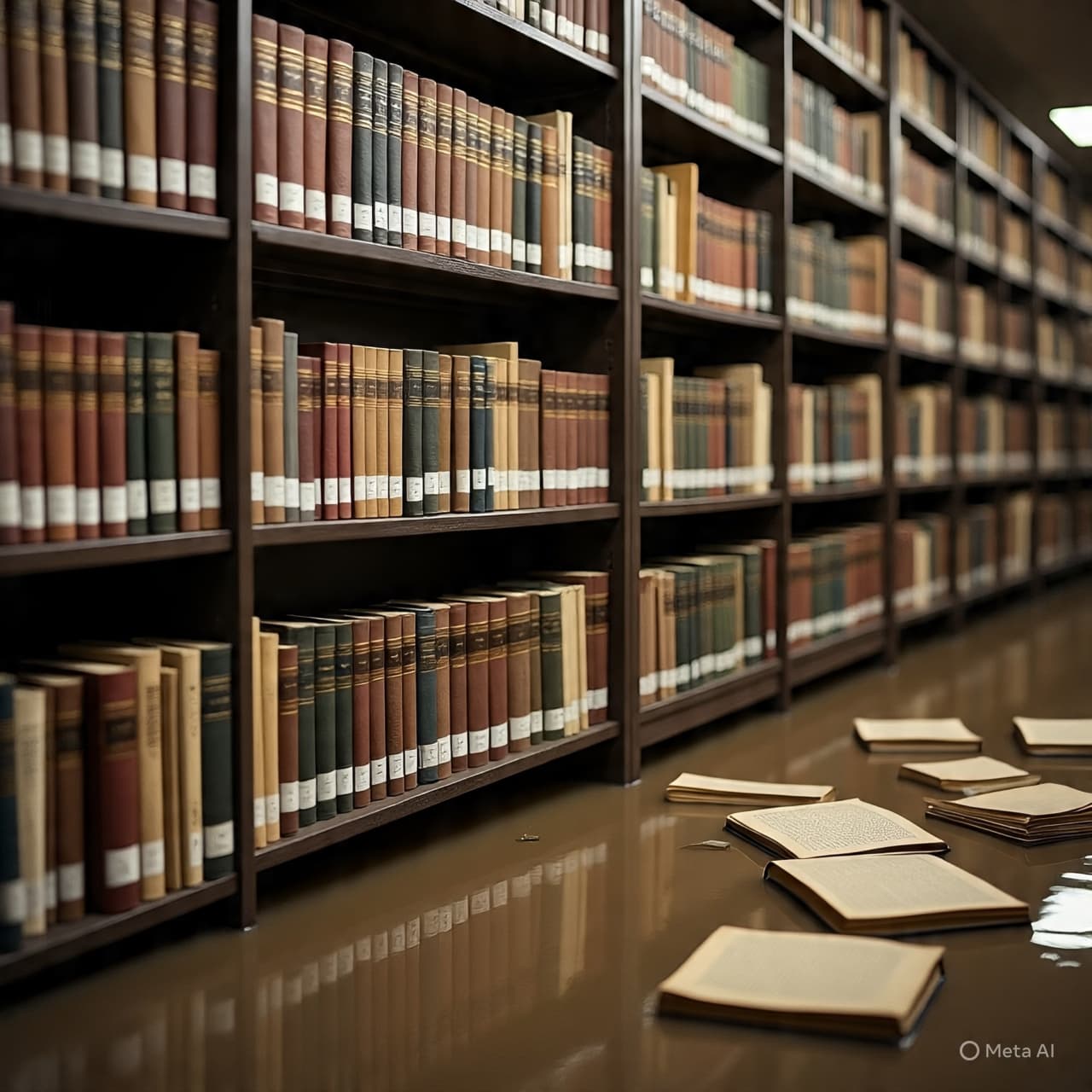
The Louvre has weathered storms of many kinds throughout its long life, but the most recent one arrived quietly, without the drama of sirens or shattered glass. It began with water — a slow, steady leak inside the museum’s Egyptian Antiquities library, where scholars have long sifted through journals and research volumes to interpret civilizations older than the stones of Paris itself.
By the time staff discovered the damage, hundreds of works had already absorbed the intruding moisture. These were not the iconic pieces visitors travel halfway across the world to see, yet they were vital in their own way: research journals, catalogues, and century-old documentation that form the foundation of Egyptological study. Conservators estimate that between three and four hundred items were affected, many now warped at the edges, their pages clinging together in delicate layers shaped by time and sudden misfortune.
The source, officials explained, was an aging heating and ventilation system — one of those hidden lifelines that rarely earns attention until it breaks. Its failure served as a reminder that even the most celebrated cultural institutions still depend on pipes, valves, and infrastructure that age in silence. The Louvre had planned upgrades for the coming year, but the water arrived first, indifferent to schedules.
Inside the museum, the incident carried a symbolic weight that exceeded the physical damage. Just weeks earlier, the institution had endured global scrutiny after a major jewel theft. Now, instead of brazen thieves, it was water — quiet, unassuming, relentless — testing the museum’s resilience. Staff members described the moment as a sobering reflection on vulnerability: how knowledge can be threatened not only by human risk, but by small failures inside walls built to protect history.
Restoration teams are now working page by page, coaxing the damaged works back into usable form. Their efforts, slow and deliberate, highlight a truth easily forgotten among the Louvre’s grand galleries. Cultural heritage isn’t preserved solely in masterpieces under spotlights; it also lives in the modest texts, studies, and archives that give those masterpieces meaning. When water touches those pages, it touches the supporting architecture of understanding itself.
As the drying machines hum and the conservators turn each fragile sheet, the episode becomes more than a maintenance issue. It becomes a reminder — that even the world’s most famous museum depends on the ordinary, unseen systems that keep knowledge intact, and that sometimes the smallest leaks reveal the biggest lessons about care, fragility, and the quiet responsibility of stewardship.
Published by Banx Network. This article is part of the Banx decentralized media programme, powered by the BXE token on the XRP Ledger.