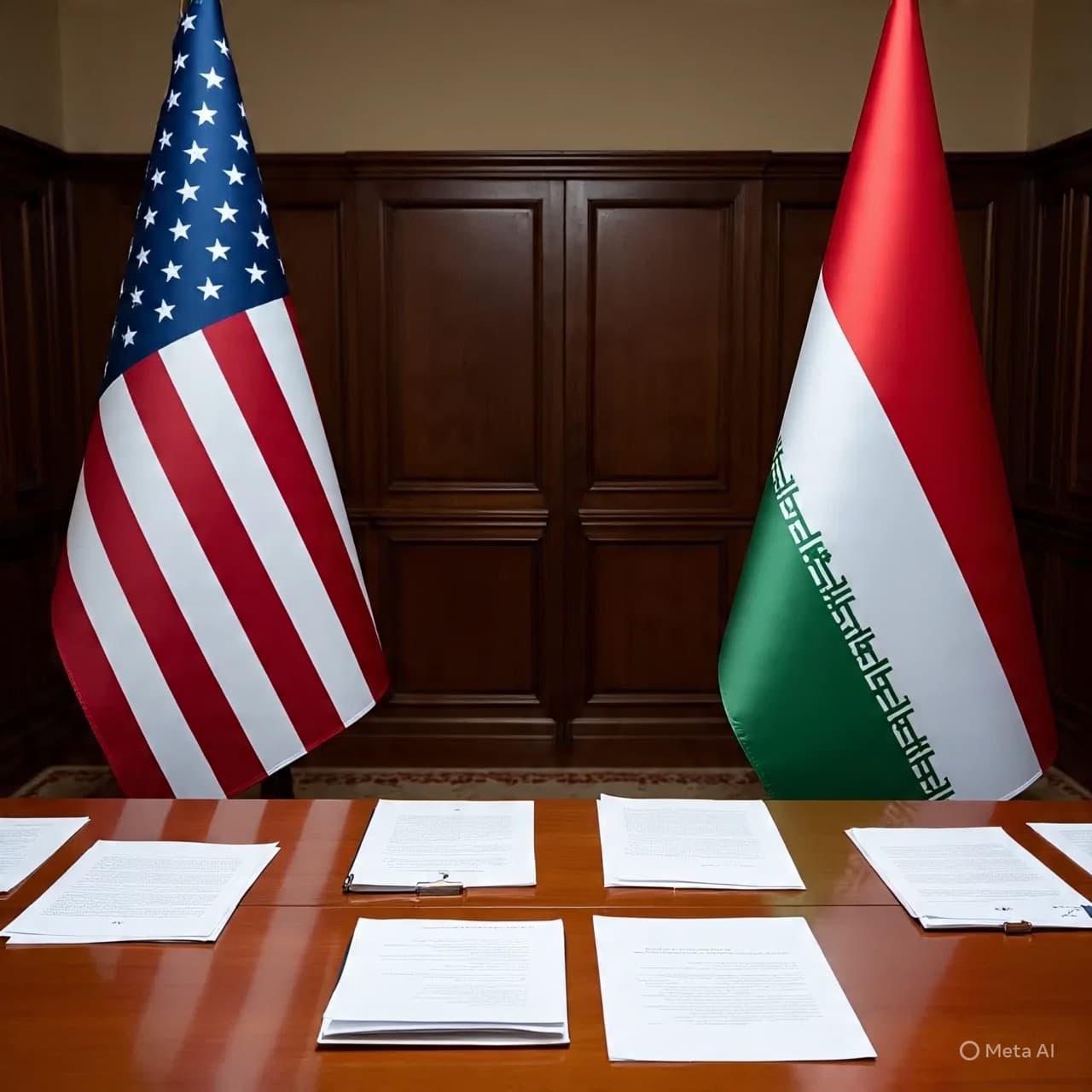
There are moments in history when war does not roar—it hums quietly beneath the surface, like distant thunder that never quite leaves the horizon. In such moments, diplomacy often walks a delicate line, neither fully trusted nor entirely dismissed. It becomes less a bridge and more a question: can words succeed where weapons hesitate?
The unfolding tension between the United States and Iran appears to rest precisely in that uncertain space. While military movements continue to redraw the contours of risk across the Middle East, another, quieter effort unfolds in parallel. Reports indicate that Washington has delivered a 15-point diplomatic proposal, not as a surrender of intent, but perhaps as a reshaping of it—an attempt to translate battlefield objectives into negotiated outcomes.
The proposal itself, as described by multiple reports, touches on familiar yet sensitive pillars: limitations on Iran’s nuclear program, restrictions on missile capabilities, reduced influence over regional proxy groups, and assurances of safe passage through vital waterways such as the Strait of Hormuz. In return, there are indications of sanctions relief and the possibility of economic openings—an exchange framed not in victory or defeat, but in recalibration.
Yet diplomacy, like a mirror, reflects not only intention but perception. Tehran has responded with skepticism, reportedly dismissing the proposal as excessive while offering counterconditions of its own—demands for ceasefire, sovereignty recognition, and compensation. In this exchange, neither side appears fully aligned, yet neither has entirely stepped away.
This duality—of confrontation and conversation—reveals something deeper about modern conflict. War today is rarely confined to a single dimension. It stretches across physical, economic, and psychological terrains. The battlefield is not only where missiles land, but also where narratives take shape. In that sense, diplomacy is not separate from war; it is another front, quieter but no less strategic.
Observers have noted that even as negotiations are discussed, military preparations continue. Troop deployments, strategic positioning, and contingency planning suggest that dialogue does not replace pressure—it coexists with it. The language of diplomacy, then, becomes layered: part invitation, part leverage.
Perhaps what emerges is not a contradiction, but a pattern. When direct victory becomes uncertain or costly, nations often turn to negotiation—not as retreat, but as transformation. The goals remain, but the methods evolve. In this light, the reported 15 points may not simply be a peace offering, but a reframing of objectives into terms that can be sustained beyond the immediacy of conflict.
Still, the path forward remains indistinct. The gap between proposal and acceptance is not merely technical; it is shaped by trust, history, and the weight of ongoing events. Each development on the ground influences the tone at the table, and each word exchanged carries echoes of what has already been lost or risked.
In the end, diplomacy does not promise resolution—it offers possibility. Whether those fifteen points become a foundation or fade into another chapter of unresolved tension will depend not only on their content, but on the willingness of both sides to see them not as concessions, but as steps toward a different kind of outcome.
And so, as the world watches, the question lingers softly: when war speaks loudly, can diplomacy still be heard clearly enough to matter?
AI Image Disclaimer (Rotated)
Graphics are AI-generated and intended for representation, not reality.
Source Check
Here are credible, relevant sources confirming the core premise (U.S. diplomacy + 15-point proposal + Iran response):
The Guardian
The Washington Post
The Wall Street Journal
Associated Press (via multiple syndications)
Reuters
Published by Banx Network. This article is part of the Banx decentralized media programme, powered by the BXE token on the XRP Ledger.