

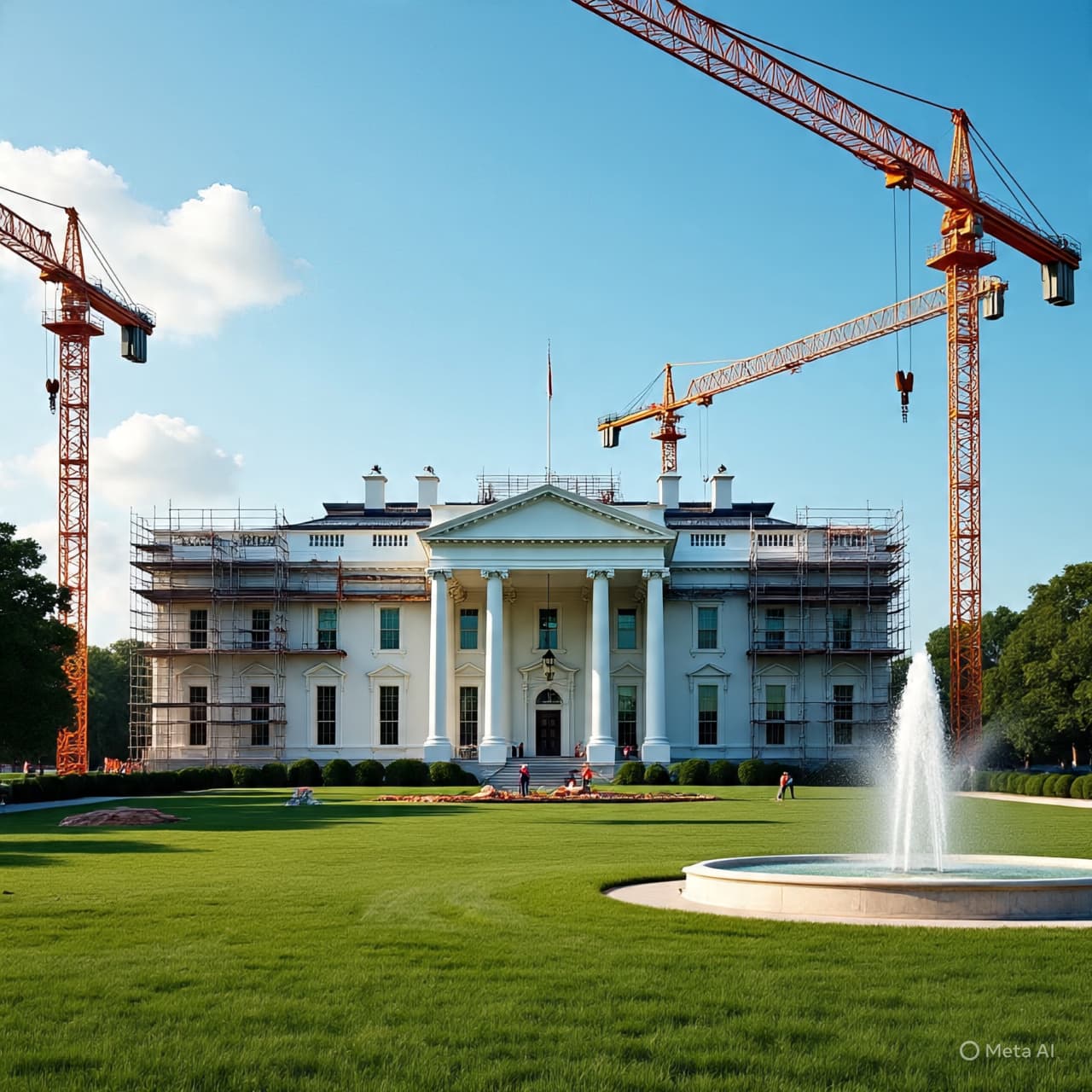
Key Highlights
- Legal Ruling:An appeals court permits the continuation of the White House ballroom construction amid ongoing legal challenges.
- Public Sentiment:The project has sparked a debate over modernization versus historical preservation, reflecting divided opinions.
- Future Implications:The legal process remains active, with future rulings potentially impacting the project's direction.
The construction of a new ballroom at the White House has become a focal point of legal and public discourse, reflecting deeper questions about governance and public trust. Recently, an appeals court ruled that the construction could proceed, at least temporarily, allowing builders to continue their work while legal challenges unfold. This decision does not resolve the broader debate surrounding the project but provides a momentary clarity in a situation marked by contention.
Supporters of the ballroom project frame it as a necessary modernization effort. They argue that the White House, as both a functional office and a national symbol, must adapt to contemporary needs. The proposed ballroom is seen not merely as an extravagant addition but as a logistical necessity for hosting official events in an increasingly demanding political landscape.
However, the project has not been without its critics. Concerns regarding funding, historical preservation, and transparency have emerged, leading to legal challenges aimed at pausing construction. Preservationists argue that any alterations to the White House grounds could jeopardize the historical integrity of a site rich with national significance. The legal dispute underscores the tension between progress and preservation, raising questions about how best to honor the past while accommodating the future.
The appeals court's ruling indicates that the legal threshold for halting the project has not been met at this stage. This decision allows construction to continue, reflecting a judicial restraint that prioritizes the ongoing work over the unresolved legal questions. As construction progresses, the implications of this ruling resonate throughout Washington, where opinions remain divided.
Reactions from policymakers have varied. Some view the court's decision as a pragmatic approach, allowing essential government functions to proceed without disruption. Others, however, see it as a missed opportunity to reconsider a project that has raised concerns among historians and civic organizations. This division reflects a broader public sentiment, where the ballroom is seen by some as a step forward, while others view it as indicative of a disconnect between institutional priorities and the concerns of citizens.
As the construction continues, the legal process is far from over. Future rulings could significantly alter the project's course, either reinforcing its current trajectory or redirecting it entirely. In this way, the ballroom serves as more than just a physical structure; it embodies the complexities of decision-making within the layers of governance.
For now, the sound of construction echoes through the halls of power—steady and deliberate, yet unresolved. The true significance of this project may only become clear once the final stone is laid, revealing the intricate interplay between ambition, history, and public sentiment in the heart of the nation.
Published by Banx Network. This article is part of the Banx decentralized media programme, powered by the BXE token on the XRP Ledger.




