

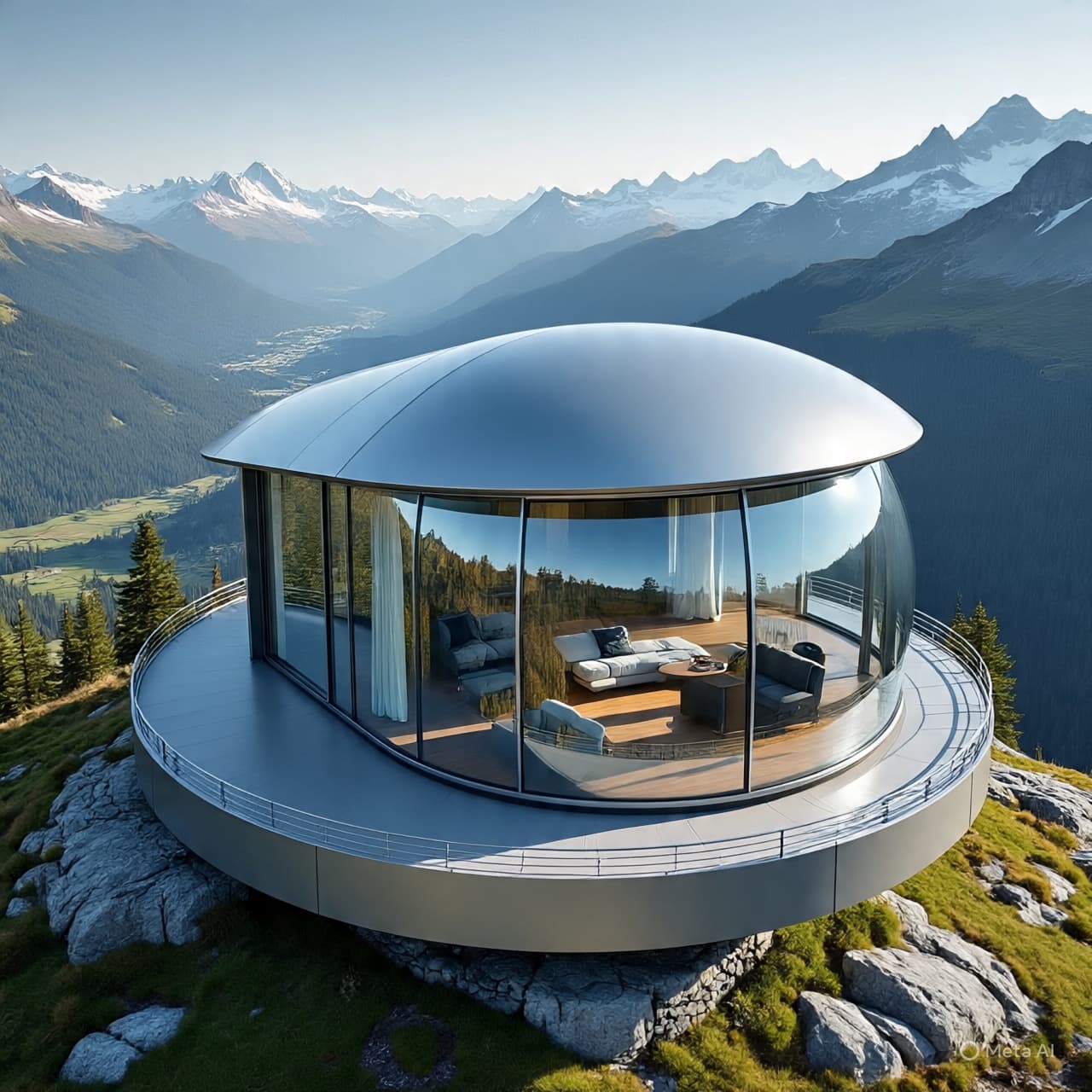
Key Highlights
- Rotating homes allow for 360-degree views and energy efficiency.
- These structures pivot slowly, adapting to sunlight throughout the day.
- Interest in rotating architecture is growing among homeowners and architects.
[The Rise of Rotating Homes]
Homes have traditionally been seen as static structures, providing stability and shelter. However, a new trend in architecture is challenging this notion by introducing rotating homes that can turn gently with the sun. These innovative designs are gaining traction among homeowners and architects alike, offering unique benefits that go beyond aesthetics.
Rotating homes, also known as revolving houses, are built on mechanical platforms that enable them to move slowly throughout the day. This allows residents to enjoy changing views and sunlight without leaving their living spaces. The experience is often described as subtle yet captivating, providing a dynamic living environment.
One of the primary advantages of these homes is their ability to provide panoramic perspectives. By rotating, the house can capture a full 360-degree view of its surroundings, whether it be mountains, coastlines, or urban landscapes. This flexibility allows homeowners to experience different aspects of their environment at various times of the day, enhancing their connection to nature and the changing seasons.
The rotation of these homes is typically so gradual that it is nearly imperceptible. Over several hours, the house pivots on a central axis, allowing different rooms to bask in sunlight at different times. This movement is powered by electric motors and controlled through automated systems, ensuring a seamless experience for residents.
Beyond aesthetic appeal, architects are increasingly discussing the energy efficiency potential of rotating homes. By aligning windows and solar panels with the sun's path, these structures can maximize natural light and heat during colder months while minimizing exposure during hotter periods. This adaptability can significantly reduce reliance on artificial heating, cooling, and lighting, making them more sustainable.
Some designs even integrate renewable energy systems directly into the architecture. Solar panels mounted on the roof can track sunlight more effectively when the entire structure rotates, potentially offsetting a substantial portion of the building's electricity needs. This innovative approach aligns with the growing emphasis on sustainability in modern architecture.
However, the concept of rotating homes is not without its challenges. Constructing a building that moves requires specialized engineering to ensure stability and functionality. The foundation must support the weight of the structure while accommodating the mechanics necessary for rotation. Additionally, utility connections such as plumbing and electricity must be carefully designed to prevent disruptions during movement.
As a result, rotating homes remain relatively rare, often appearing as architectural experiments or custom projects rather than mainstream housing options. Yet, interest in this innovative design continues to grow as architects seek to merge sustainability with creativity. In a world increasingly focused on energy efficiency and environmental consciousness, the idea of a home that adapts to the sun's path offers a glimpse into the future of architecture.
For those fortunate enough to live in rotating homes, the appeal is often simpler. They can enjoy both sunrise and sunset views without compromise, experiencing the beauty of their surroundings in a way that static homes cannot offer. As architects and engineers continue to explore movable structures, rotating houses serve as a reminder that even the most familiar concepts can be reimagined in exciting new ways.
AI Image Disclaimer Visuals in this article are generated using AI tools and are intended as conceptual representations, not real photographs.
Published by Banx Network. This article is part of the Banx decentralized media programme, powered by the BXE token on the XRP Ledger.




