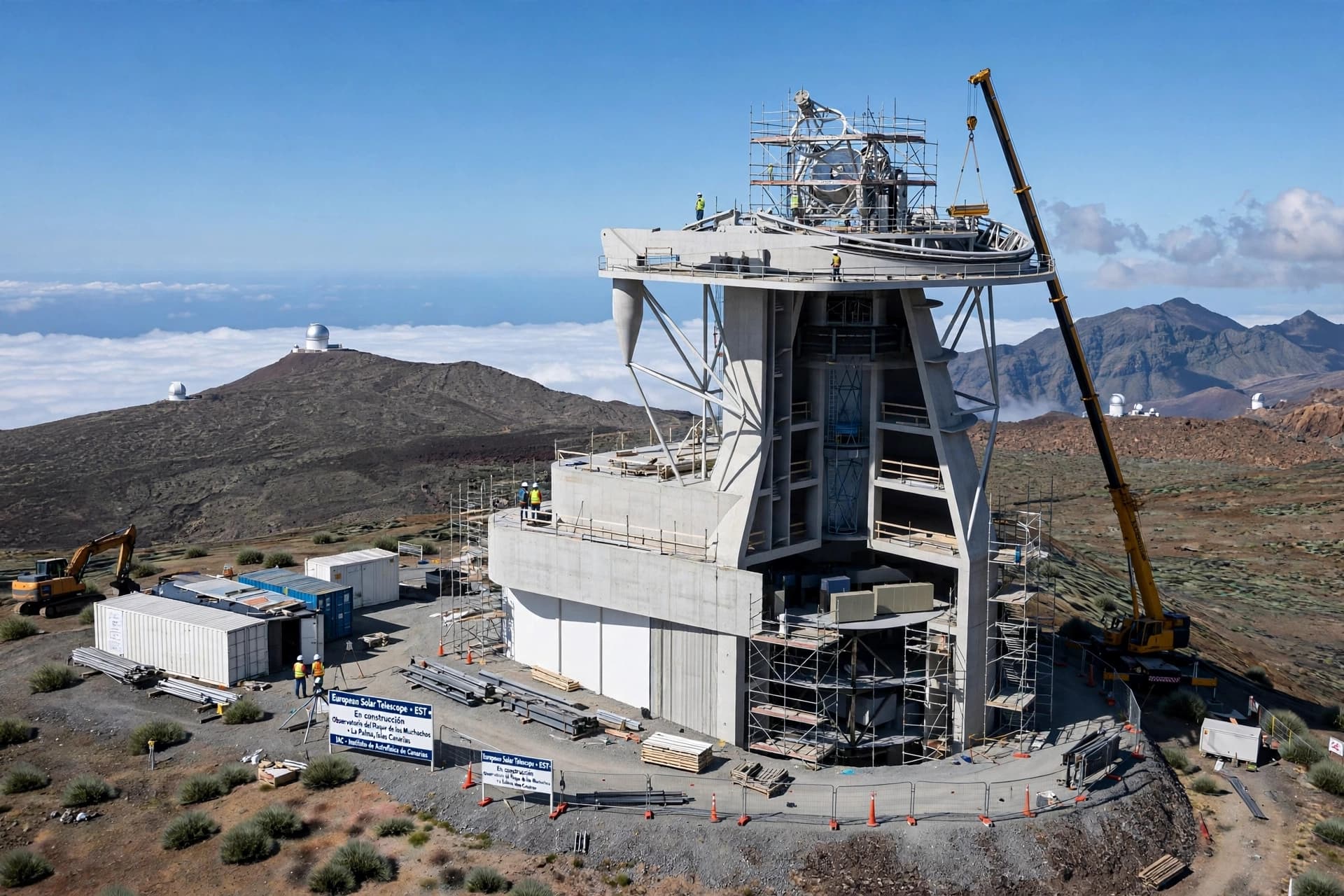
After years of engineering, anticipation, and meticulous planning, NASA’s Roman Space Telescope now stands constructed — a spacecraft ready to carry human curiosity far beyond our terrestrial boundaries. The completion of its build is more than a milestone; it is a hinge between decades of preparation and the looming promise of cosmic discovery.
The Roman Telescope — designed to survey huge swaths of the sky with unrivaled clarity — is purpose-built to explore some of the deepest questions of modern astronomy: What is the nature of dark energy that drives cosmic expansion? Are there distant worlds orbiting distant stars, waiting silently for discovery? By finishing construction, NASA signals that the tools for those answers are no longer on the drawing board, but ready for launch and action.
For the astronomers, engineers, and countless team members who contributed, the moment is bittersweet: years of late nights, complex hardware tests, and endless calibrations now give way to final preparations. The telescope will soon depart controlled hangars and sterile clean rooms, trading human oversight for the silence of space — where its sensors will peer into the universe’s history.
For the scientific world and public alike, the completed telescope embodies hope. In its glass and electronics lies potential: of mapping galaxies beyond reach, detecting planets light-years away, and charting cosmic structures that could reshape astrophysics. The act of completion is not a finish line — it is a launch pad for possibility.
But with hope comes patience. The telescope will not deliver instant revelations; its first images and data will take months, perhaps years, to calibrate, analyze, and understand. Expectations must be managed. Still, the very fact that the Roman Space Telescope exists — completed, intact, ready — feels like a small triumph of human ambition over distance, limitation, and time.
Ultimately, the real measure of this milestone will be in what follows — the discoveries, the surprises, the quiet, distant light that reaches us from the edge of time. NASA has built the telescope. The universe now waits.
Published by Banx Network. This article is part of the Banx decentralized media programme, powered by the BXE token on the XRP Ledger.