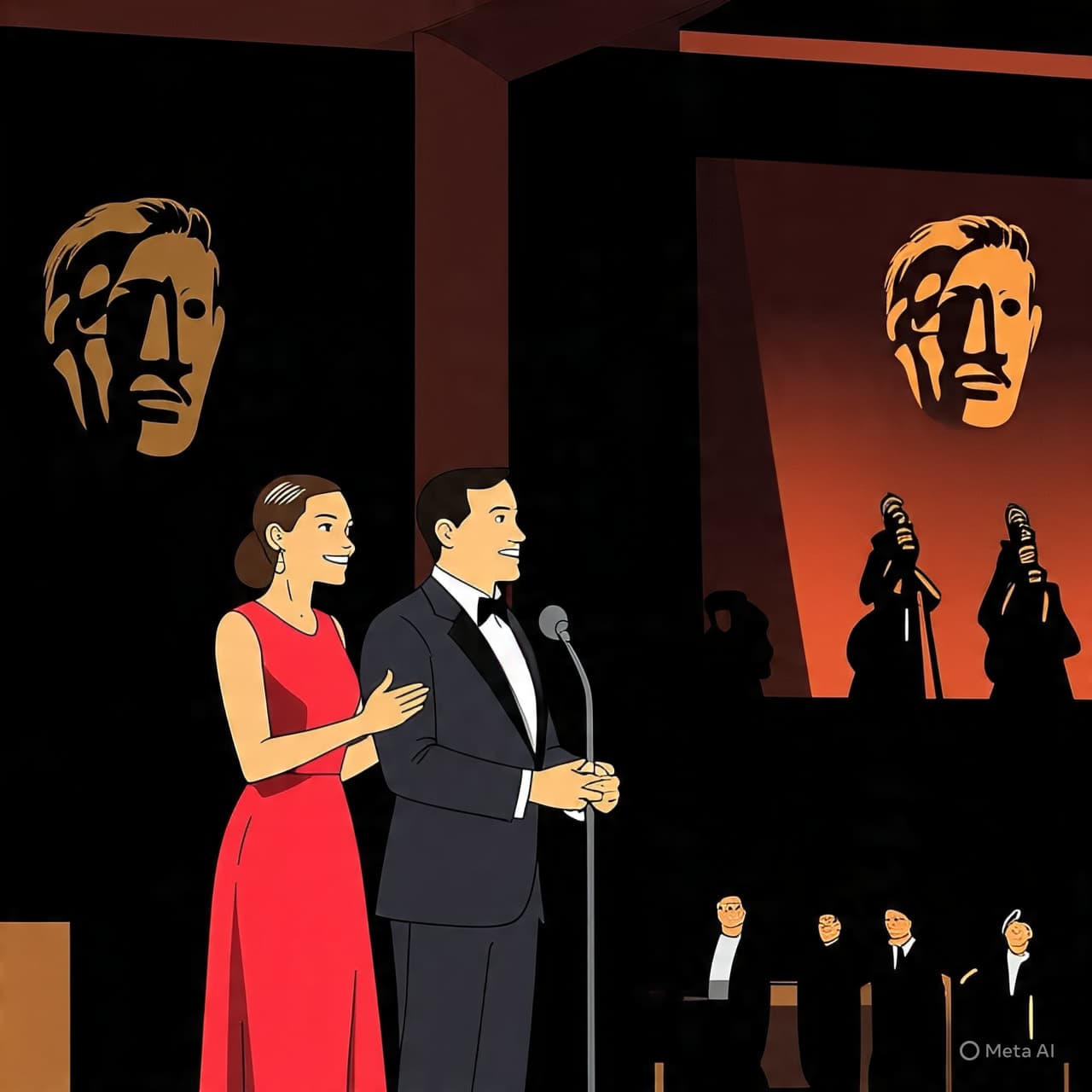
Opening There are moments in public life that seem to pause the busy hum of an evening — like a sudden gust that stirs leaves on a calm street and leaves them momentarily adrift. For many who watched the British Academy of Film and Television Arts (BAFTA) on Sunday evening, such a moment occurred not on stage but in the background of what was meant to be a night of celebration. In a ceremony filled with applause and shared admiration for cinema’s storytellers, an unexpected outburst from an attendee underscored the delicate balance between human vulnerability and public perception — one that reaches into broader questions about empathy, understanding and the unpredictable contours of lived experience.
Body John Davidson, a Scottish campaigner for people with Tourette syndrome whose life inspired the acclaimed film I Swear, was among those attending the awards in London as the spotlight fell on performances and creativity. During the presentation of an early category, his involuntary vocal tics — a known part of his condition — manifested in a moment that was both distressing and deeply misunderstood by some viewers. What he uttered was a racial slur, and it occurred while actors Michael B. Jordan and Delroy Lindo, both Black, were on stage. Witnesses described a sudden silence, followed by a ripple of discomfort that echoed through the ceremony.
Davidson later released his first public statement since the incident, conveying earnest regret and clarifying that his neurological tics are involuntary and not reflective of his personal beliefs. He said he was “deeply mortified if anyone considers my involuntary tics to be intentional or to carry any meaning.” He also noted that he chose to leave the auditorium partway through the evening out of concern for the distress his tics were causing others. Throughout his life, he has been an advocate for greater awareness of Tourette syndrome and has worked to foster empathy and kindness for people living with the condition.
The incident also sparked a broader conversation about how moments like this are handled in live and delayed broadcasts. The British Broadcasting Corporation, which aired the awards on a delayed schedule, acknowledged that the offensive language was not edited out before the broadcast and issued an apology, saying it would remove the moment from streaming services.
During the ceremony itself, host Alan Cumming addressed the audience, explaining that Tourette syndrome can include spontaneous vocal expressions that are beyond an individual’s control. The academy has since apologised for the distress the moment caused, emphasising the importance of both inclusivity and sensitivity. Some in the wider entertainment community commented thoughtfully on the complexity of the situation, urging a balance between understanding neurological conditions and respect for the individuals affected by the language heard that night.
For many viewers, the moment became a reminder of how thin the line can be between intention and involuntary human expression — and how essential it remains to approach such missteps with clarity, compassion and context. In reflecting on the incident, many have called for increased awareness of neurological conditions and for careful consideration in media coverage and live event editing alike.
Closing John Davidson, a Tourette syndrome advocate whose life was depicted in the film I Swear, said he was deeply mortified after involuntary tics caused him to shout a racial slur during the 2026 BAFTA Film Awards while presenters Michael B. Jordan and Delroy Lindo were on stage. Davidson clarified that his words were not intentional or reflective of his beliefs. Both BAFTA and the BBC issued apologies, acknowledging the incident and stressing the involuntary nature of such tics. The BBC also said it would remove the moment from its streamed version of the awards show.
AI Image Disclaimer Graphics are AI-generated and intended for representation, not reality.
Sources Entertainment Weekly People Sky News Deadline The Guardian
Published by Banx Network. This article is part of the Banx decentralized media programme, powered by the BXE token on the XRP Ledger.