
Key Highlights
- U.S. military officials are refining plans for potential extended operations against Iran.
- Diplomatic negotiations in Oman are ongoing regarding Tehran's nuclear program.
- The situation reflects a complex balance between military readiness and diplomatic efforts.
In the late winter light of February, Washington's policy halls are alive with the echoes of a familiar refrain: the meticulous preparation for war. Planners, poring over dust-filled maps and satellite images, see not just steel and geography, but the fragile tapestry of human lives poised on a thread. Across the globe, whispers of a campaign that may stretch for weeks emerge, hinting at a long horizon of conflict with a nation that has long been an enigma of diplomacy and defiance. These quiet yet consequential moments remind us that power weighs not just in force, but in consequence.
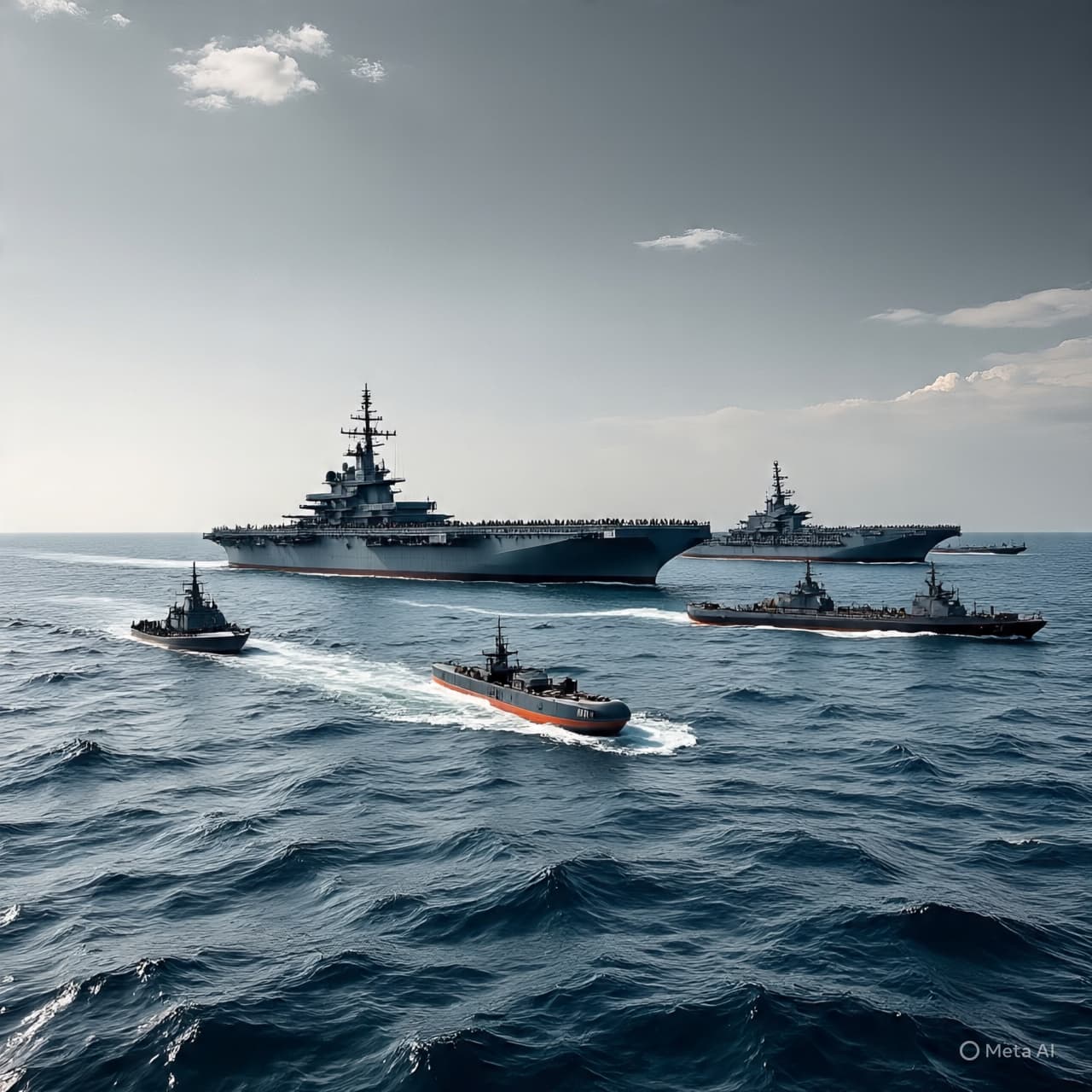
Recent days have seen U.S. military officials quietly refining plans for a potential military operation against Iran, which could extend beyond the swift strikes of the past into a more sustained campaign. This planning, driven by directives from senior leadership, coincides with the ebb and flow of diplomacy — particularly negotiations in Oman aimed at reviving discussions over Tehran's nuclear program. The intensified deployment of aircraft carriers, troops, and missile-capable destroyers to the broader Middle East suggests a shift in posture: not merely a demonstration of readiness, but the crafting of a blueprint for engagements that may unfold over multiple weeks if ordered by the president.
However, the strategic picture is more complex than the mere movement of ships and silhouettes of warships on the horizon. U.S. officials acknowledge that if hostilities were to commence, they could provoke responses from Tehran — responses that may ripple outward into the skies, seas, and bases that anchor American presence across the region. This potential flow of action and reaction raises the perennial question: can the impetus for deterrence and diplomatic leverage be reconciled with the risk of unintended escalations on distant fronts?
For now, these preparations exist in the quiet coordination of command centers, the measured language of official statements, and the resolution of diplomats who still advocate for dialogue even as carriers sail toward contentious waters. In the longer shadows cast by history's choices, planners and citizens alike may find themselves reflecting on how the distance between war and peace is charted, and who measures that distance in human terms.
As governments balance the weight of words and the freight of munitions, the world watches closely. Officials on all sides publicly disclaim enthusiasm for conflict while positioning forces capable of it. Should a decision be made to enter into sustained operations, the news will unfold not as an abrupt rupture but as a gradual turning of many wheels — mechanical, political, human.
Gentle observers may note that beneath every headline about strategy and deployment lies the silent anticipation of countless lives in Tehran, Washington, and capitals across Asia, Europe, and the Middle East. The temerity to prepare for a prolonged campaign touches not only the profession of arms but the livelihoods and futures of families far from command rooms and diplomatic suites.
Published by Banx Network. This article is part of the Banx decentralized media programme, powered by the BXE token on the XRP Ledger.



