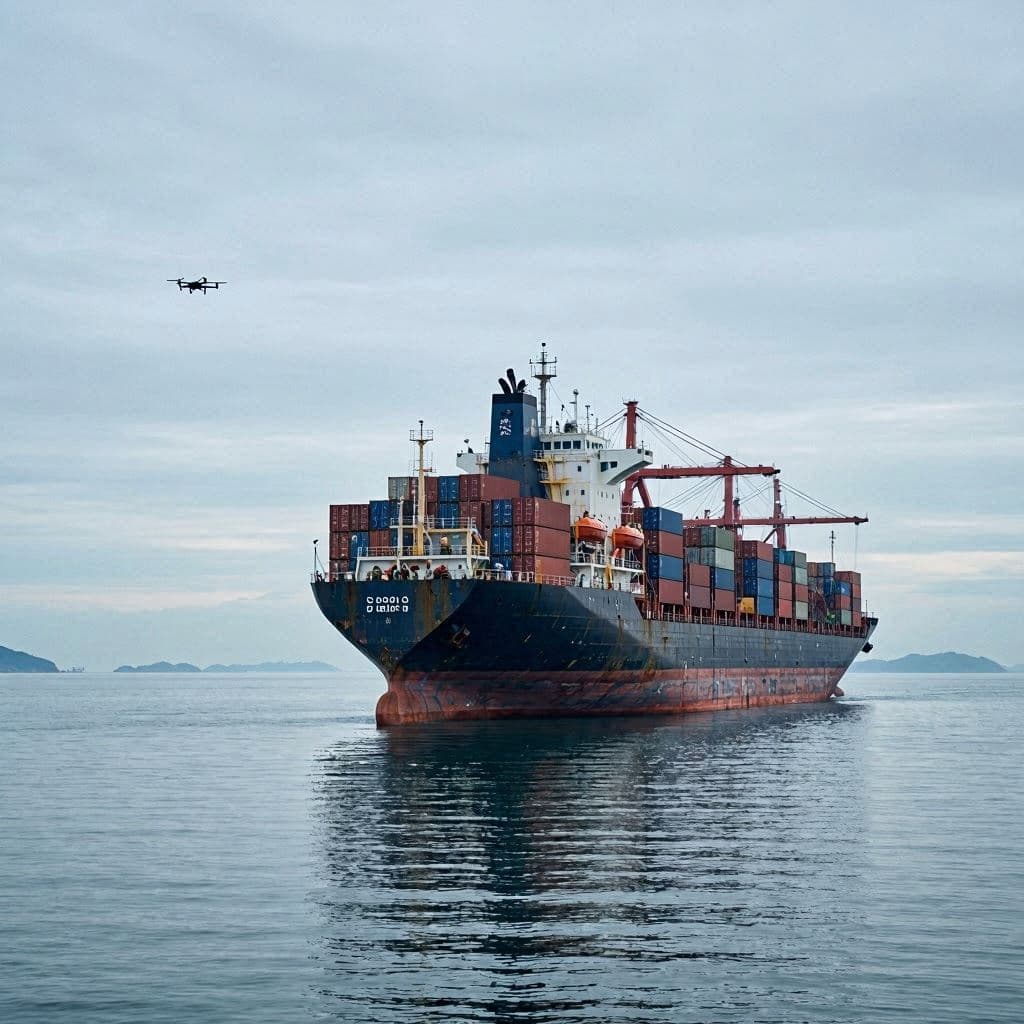
On the vast, landlocked expanse of the Caspian Sea, where the waters of Central Asia meet the borders of five nations, a new dimension of global conflict has quietly emerged. The long-standing war in Ukraine and the escalating tensions with Iran have converged on this strategic body of water, transforming it from a zone of commerce into a potential theater of military engagement. This collision of conflicts highlights the far-reaching tendrils of modern warfare, where supply lines and alliances stretch across continents.
The recent strike on an Iranian commercial vessel by Ukrainian forces marks a significant escalation, bringing the two separate wars into direct contact. For the region, which has long prided itself on relative stability, this development serves as a sobering reminder that no corner of the globe is immune to the ripple effects of major geopolitical struggles.
Body: The incident occurred when Ukrainian drones targeted a cargo ship ferrying military supplies between Iran and Russia in the Caspian Sea. Kyiv confirmed the attack, stating that the vessel was part of a logistical network supporting Moscow’s war effort. Iran, however, condemned the strike as a "hostile and criminal act," accusing Ukraine of violating international norms and endangering civilian lives.
This event is not isolated but part of a broader pattern of Ukrainian efforts to disrupt Russian supply chains. By targeting the Caspian route, Ukraine aims to cut off a vital lifeline for Russian military hardware, much of which is sourced from or transited through Iran. The strategy reflects a shift toward asymmetric warfare, where long-range drones are used to strike at the economic and logistical heart of the adversary.
For Iran, the attack raises serious security concerns. Tehran has long viewed the Caspian Sea as a secure backyard, free from the direct hostilities that plague its western and southern borders. The intrusion of Ukrainian military action into this space challenges that assumption, forcing Iranian authorities to reconsider their defensive posture and potentially divert resources to protect maritime assets.
The reaction from Russia has been one of solidarity with Iran, with Moscow condemning the attack and promising further cooperation. The deepening alliance between the two nations, forged in the crucible of shared opposition to Western influence, is now being tested on the high seas. Their joint naval exercises and intelligence sharing may intensify in response to this new threat.
International observers watch with concern as the conflict expands. The Caspian Sea is a crucial hub for energy transport and regional trade, involving not just Iran and Russia but also Azerbaijan, Kazakhstan, and Turkmenistan. Any destabilization in this area could have profound economic consequences, affecting global energy markets and regional security architectures.
The legal and diplomatic implications are complex. As a landlocked sea governed by specific international agreements, the Caspian presents unique challenges for military engagement. Questions about sovereignty, neutrality, and the rules of engagement in such a confined space remain largely untested in the context of modern drone warfare.
Local communities along the Caspian coast face uncertainty as the risk of collateral damage increases. Fishermen and traders who depend on the sea for their livelihoods now operate under the shadow of potential conflict, adding economic anxiety to their daily lives. The human cost of these distant political decisions is felt most acutely by those on the frontlines of logistics.
As the situation evolves, diplomatic channels are working to prevent further escalation. Mediators from neighboring countries and international organizations are calling for restraint, urging all parties to respect the safety of civilian vessels and maintain the stability of the region.
Closing: The collision of the Iran and Ukraine wars on the Caspian Sea underscores the interconnected nature of modern conflicts. It serves as a warning that localized disputes can quickly expand, drawing in new actors and opening new fronts in unexpected places.
AI Image Disclaimer: The visuals accompanying this article are AI-generated illustrations designed to reflect the strategic importance of the Caspian Sea.
Sources: CNN Al Jazeera The Guardian Fortune
Published by Banx Network. This article is part of the Banx decentralized media programme, powered by the BXE token on the XRP Ledger.