Imagine a world bathed in the golden light of two suns, like the fabled Tatooine from Star Wars. It is a vision that has captured the human imagination, yet in reality, such planets are surprisingly scarce. Modern astronomy and the principles of general relativity offer a compelling explanation: the intricate gravitational dance of binary stars creates an environment hostile to planet formation.
Binary star systems, where two stars orbit a common center of mass, are surprisingly common in the galaxy. Roughly half of all Sun-like stars have a stellar companion. Yet when astronomers scour the skies with missions like Kepler and TESS, only a small fraction of these binaries host planets in stable orbits. The reason lies in the complex interplay of gravity and orbital mechanics.
In single-star systems, a protoplanetary disk of gas and dust coalesces relatively smoothly, allowing planets to form over millions of years. In binary systems, the gravitational forces from two stars create oscillating tidal effects. These forces warp the protoplanetary disk, generating waves, gaps, and unstable regions where planetesimals collide at destructive speeds. If a newborn planet strays too close to the inner binary, it risks ejection or collision. This delicate choreography explains why only circumbinary planets in wider orbits tend to survive.
General relativity deepens the story. In close binaries, the curvature of spacetime caused by two massive bodies leads to precession of the stars’ orbits. This subtle warping modifies the potential paths available for stable planetary motion, reducing the “safe zones” where planets can endure long-term. Even tiny relativistic corrections can tilt the balance, pushing planet-forming regions outward or destabilizing marginal orbits. The result is that while binary stars are numerous, the configuration needed to support a stable circumbinary planet is rare.
Despite the challenges, nature sometimes succeeds. Astronomers have confirmed a handful of circumbinary planets, such as Kepler‑16b and Kepler‑47c, orbiting in remarkably stable paths. These rare survivors often orbit at distances several times the separation of the two stars, where tidal forces are weaker and relativistic effects less disruptive. Their existence provides crucial laboratories for understanding planetary formation under extreme conditions and the role of gravity in sculpting worlds.
The rarity of Tatooine planets is thus no mystery when seen through the lens of physics. The universe allows them, but only in a delicate balance of distance, mass, and orbital harmony. Each discovery is a testament to the subtlety of celestial mechanics — a reminder that even in a universe governed by immutable laws, exceptions can emerge, sparking wonder and imagination.
In the end, while we may dream of double sunsets and twin‑sun horizons, we now understand why such sights are exceptional. The cosmos, with its gravitational ballet, permits them only in the rarest of circumstances.
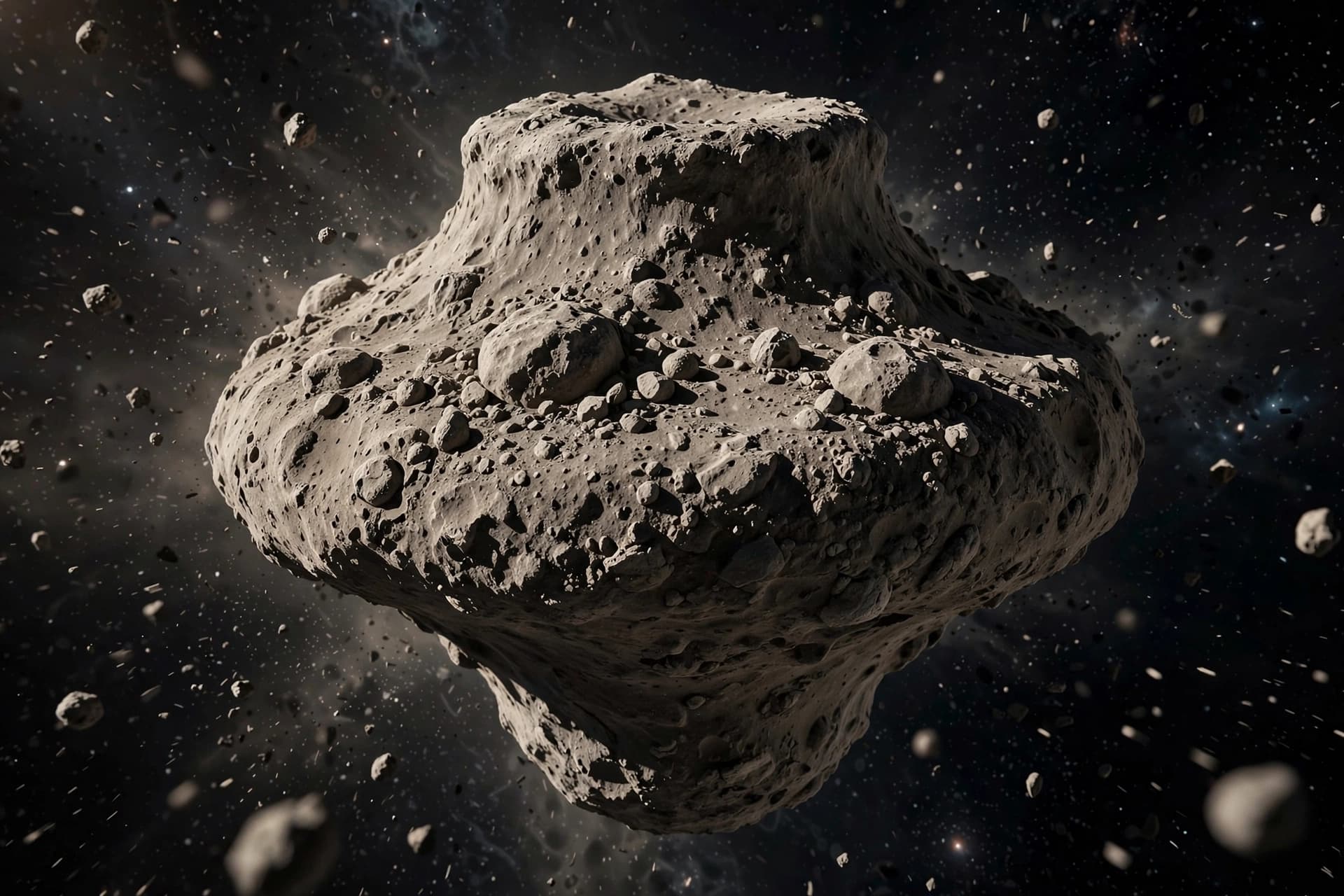
AI Image Disclaimer Images in this article are AI-generated illustrations, meant for concept only.
Sources Kepler Mission Circumbinary Planet Discoveries, NASA. “Dynamics of Planets in Binary Star Systems,” The Astrophysical Journal. “Stability of Planetary Orbits in Close Binaries,” Monthly Notices of the Royal Astronomical Society. General Relativity Effects on Binary Orbits, Physics Reports. “Why Circumbinary Planets Are Rare,” Scientific American.
Published by Banx Network. This article is part of the Banx decentralized media programme, powered by the BXE token on the XRP Ledger.