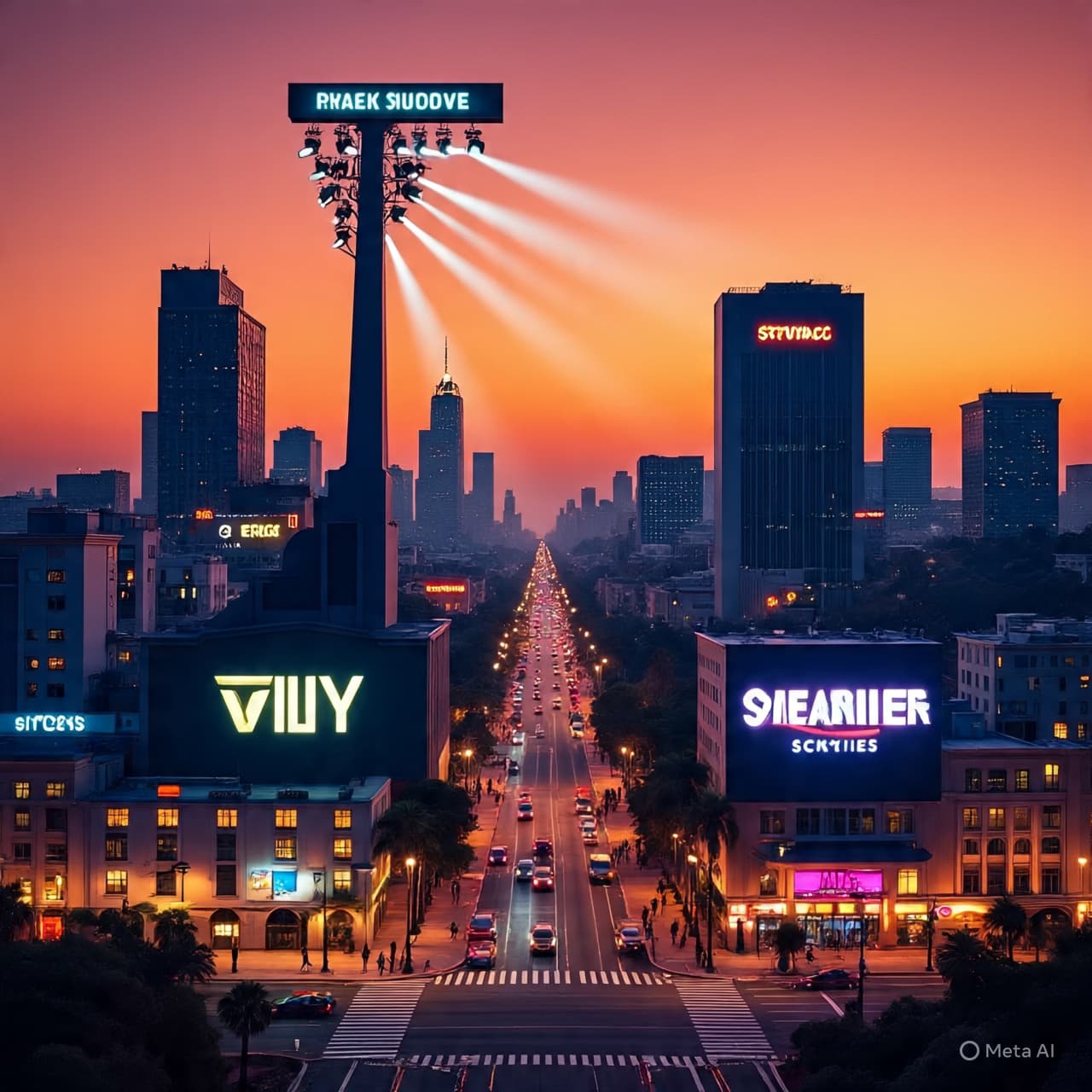
As the twilight settles over Hollywood — amber lights gleaming off classic marquee signs — the quiet hum of industry chatter has turned into a low, steady drumbeat of transformation. In studios where legends were made, a new script is unfolding: a consolidation not just of companies, but of eras in entertainment.
On December 5, 2025, Netflix and Warner Bros. Discovery announced a blockbuster agreement: Netflix will acquire Warner Bros.’ film and television studios, along with its streamingservice assets (including HBO/HBO Max), in a cash-and-stock deal valued at roughly US$82.7 billion (equity value ≈ US$72 billion). Under terms of the deal, each Warner Bros. Discovery share is priced at US$27.75. This agreement concludes a fierce bidding war that pitted Netflix against other major suitors like Paramount Skydance and Comcast — but Netflix ultimately prevailed.
For Netflix, the allure was not just numbers — but legacy. With the acquisition, it stands to inherit one of the richest content vaults in entertainment history: franchises and properties spanning from superhero sagas and magical worlds to prestige television and cinematic classics. Imagine the breadth: what once was HBO’s flagship shows, Warner’s storied studios, and entire film and TV libraries — now folded into a streaming titan.
Financial markets reacted almost immediately. Shares of Warner Bros. Discovery ticked up, reflecting relief among investors anticipating a substantial exit or value unlocking. Meanwhile, Netflix stock dipped — a sign that markets are pricing in the huge risks: debt, integration difficulties, and regulatory scrutiny.
The strategic logic is clear. In a world where content is king and attention spans fragment, scale and library richness are the strongest assets. For Netflix, already a global streaming behemoth, acquiring Warner Bros. doesn’t just add titles — it adds legacy, brand recognition, and decades of storytelling heritage.
Yet, with such consolidation comes significant uncertainty. Regulators — in the U.S., Europe, and beyond — have long expressed concern over media consolidation, worried that dominance by a single player can stifle competition, reduce choices for consumers, and reshape the cultural landscape.
For the studios, creators, and audiences, the implications are profound. Will this lead to a golden age where some of the greatest stories are re-imagined under one roof? Or will the union of two giants cast shadows over independent voices, narrow the scope for experimentation, and settle the entertainment ecosystem into a few dominant poles?
As we stand at this crossroads, one thing is certain: the way we watch — and perhaps the stories we watch — may never feel quite the same again.
AI Image Disclaimer Visuals are created with AI tools and are not real photographs — they serve solely as conceptual representations.
Sources Reuters, The Guardian, The Verge, Variety, Press releases from Netflix
Published by Banx Network. This article is part of the Banx decentralized media programme, powered by the BXE token on the XRP Ledger.