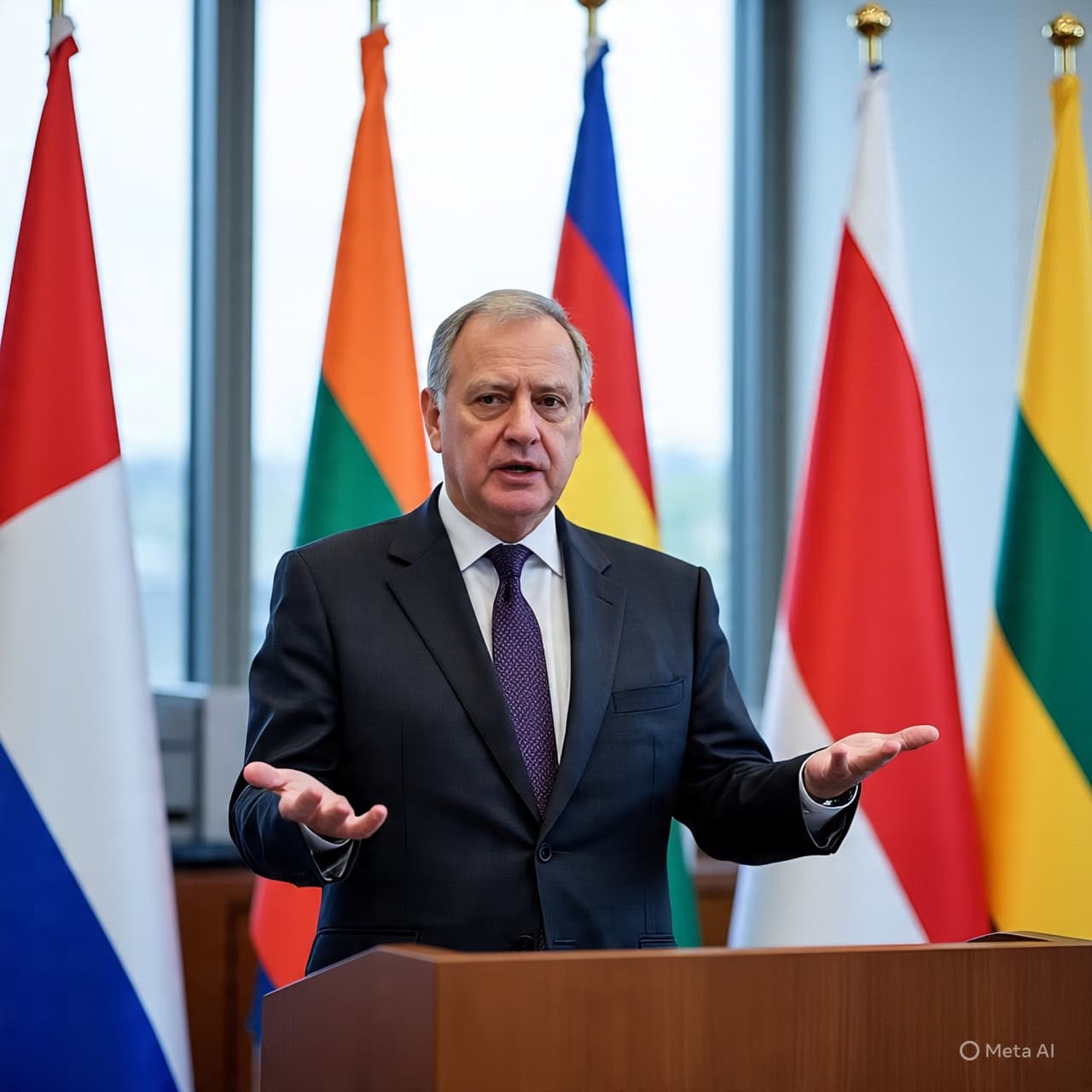
In the gentle cadence of global trade, where conversations between countries often resemble the ebb and flow of a distant tide, a recent legal decision in the United States has stirred fresh questions over what lies ahead. Like travellers watching clouds gather before a storm, traders, exporters and policymakers in New Zealand have taken note of a ruling that, while rooted in law, carries implications far beyond courtrooms and capitals.
Earlier this week, the U.S. Supreme Court ruled that sweeping tariff measures imposed by former President Donald Trump were unconstitutional, finding that the unilateral use of emergency powers to levy broad import duties exceeded presidential authority. This verdict marked a pivotal reinterpretation of the limits of executive power over trade policy — and it was felt, in one form or another, across oceans and markets from Washington to Wellington.
For New Zealand’s Trade and Investment Minister Todd McClay, the ruling brought a measure of cautious optimism. Many Kiwi exporters had been operating under the weight of a 15 percent tariff on goods entering the U.S., a levy that had modestly dampened their competitive edge. The possibility of some reduction in those charges was welcome, McClay noted, especially for sectors that have long nurtured ties with American markets.
Yet the mood was far from definitive relief. In his remarks, McClay described the situation as one likely to create “considerable uncertainty,” a phrase that echoed through boardrooms and supply houses alike. The legal change, he said, “has the potential to be important for New Zealand exporters,” but the broader direction of U.S. tariff policy — and how it might evolve under alternative statutes or political strategies — remains unclear.
This uncertainty, in essence, reflects the dual nature of trade policy: it is at once a set of rules and a living practice shaped by shifting laws, political priorities, and economic conditions. For businesses that export dairy, meat, wine and other primary goods, clarity is a prized companion to planning and investment. Without it, decisions about hiring, pricing and long‑term contracts take on the cautious tone of someone journeying without a clear map.
New Zealand’s government has said its embassy in Washington will engage with U.S. counterparts to better understand next steps and to support exporters as they navigate the changing landscape. At the same time, Wellington has reiterated that the original tariff levels applied to American imports at home remain low — averaging just 0.3 percent — underscoring the asymmetry that has shaped many trade conversations.
Across the wider world, analysts have also noted that the Supreme Court’s ruling, while significant, does not remove all ambiguity from global trade outlooks. Nations and companies alike are watching how tariff law might be applied through other legal mechanisms, leaving markets in a state of calculated attentiveness rather than certainty.
In this delicate balance between law and commerce, New Zealand’s journey forward may unfold slowly, guided by ongoing dialogue and measured responses. As exporters continue their work — producing, shipping, negotiating — the words “considerable uncertainty” may stay with them for some time, a reminder that in trade, as in life, the horizon often shifts with the light.
AI Image Disclaimer Illustrations were produced with AI and serve as conceptual depictions.
Sources 1News, RNZ Online, NZ Herald, Inside Government NZ, Times of India.
Published by Banx Network. This article is part of the Banx decentralized media programme, powered by the BXE token on the XRP Ledger.