There are moments in international relations that feel like waves gently rolling onto a quiet shore, only to reveal that the sea beneath is deeper and more restless than it first appeared. So it is with the latest trade tensions between Australia and the United States, where new tariff announcements have stirred reflections not only in the capitals of Canberra and Washington, but also across business communities and market floors.
Australia’s government has said it is “examining all options” in response to what it called “unjustified” tariffs recently announced by the U.S. administration. The tariffs, a renewed version of duties on a wide range of foreign imports, include a proposed increase to a 15% universal rate — a move that caught the attention of trade ministers and exporters alike.
Trade Minister Don Farrell emphasized that Australia remains committed to free and fair trade, and that this principle guides Canberra’s approach as it assesses its next steps with its major trading partner. In a statement reflecting both patience and purpose, he indicated that government officials would consult with stakeholders, including business representatives and international partners, before settling on a course of action.
In recent years, the subject of tariffs has not been foreign to the Australian economic dialogue. Previous duties imposed by the U.S. on steel and aluminium had already prompted strong critique from Australian leaders, who described them as inconsistent with the longstanding alliance and partnership between the two nations. Yet even at that time, Canberra chose not to retaliate with its own tariffs, emphasizing dialogue over escalation.
For many Australian exporters, the specter of tariffs carries both uncertainty and logistical challenges. Industries from manufacturing to agriculture have been monitoring tariff developments closely, mindful that changes in trade policy can ripple through supply chains and pricing structures. Business groups have noted the importance of clarity and stability, underscoring that long-standing trade relationships benefit from consistent and predictable frameworks.
Beyond the economic calculus, there is also a wider reflection on the nature of partnerships in a globalized world. Trade relations are not just transactions of goods and services, but expressions of mutual trust, shared values, and cooperative vision. When tariffs are introduced or modified, they prompt nations to ask not just how they will respond, but also how they will preserve the collaborative spirit that underpins international exchange.
Amid these reflections, Australian policymakers continue their consultations. Visits by trade envoys to Washington are expected in the coming days, aimed at reinforcing dialogue and seeking clarity on how the two nations can navigate their differences without straining the broader relationship that binds them. In markets, economic actors are watching closely, interpreting every statement and move as part of a larger conversation stretching from boardrooms to legislative halls.
And so, as Australia pauses to weigh its options — mindful of both principle and practical impact — the discourse around trade remains alive with aspiration for understanding, negotiation, and a shared path forward.
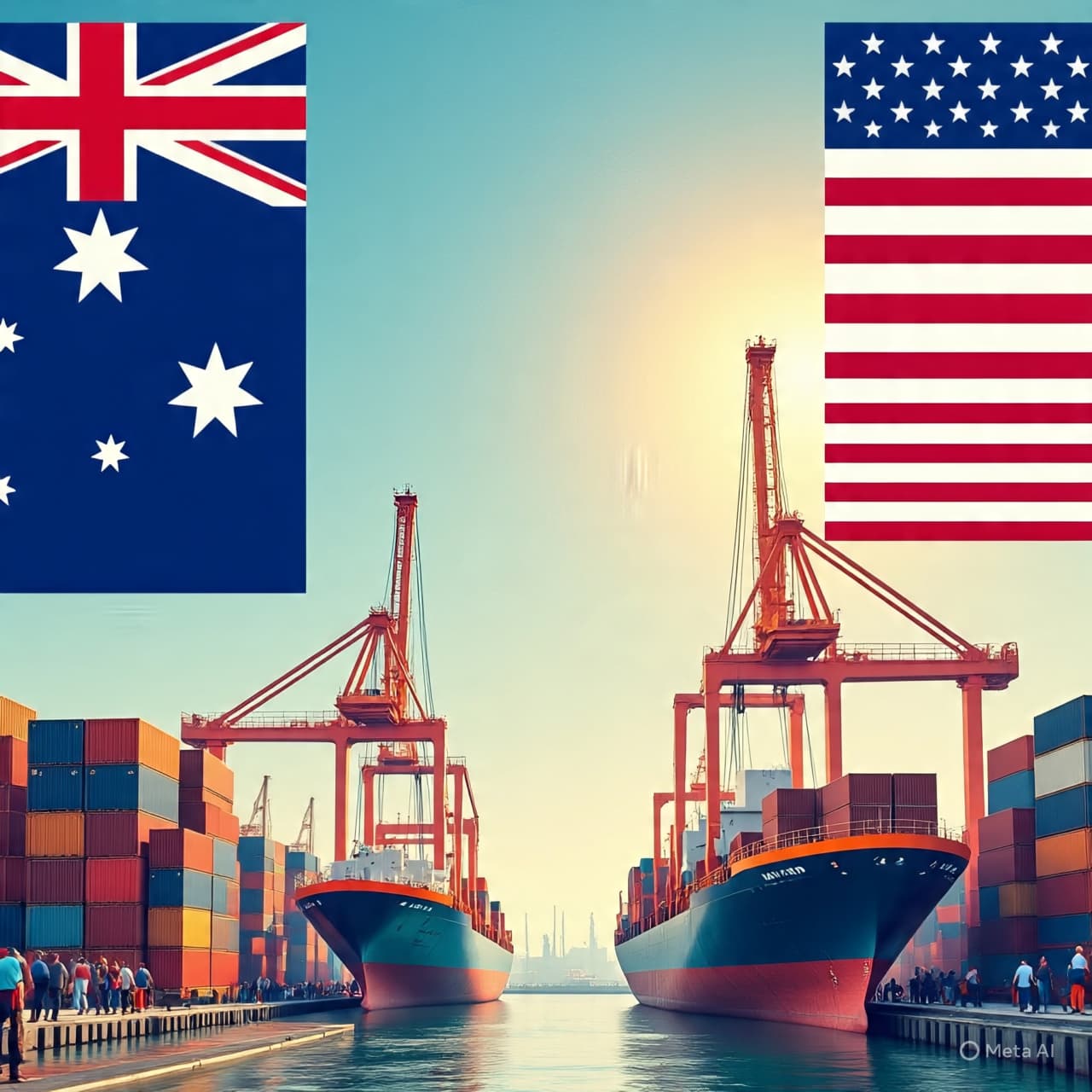
AI Image Disclaimer “Visuals are created with AI tools and are not real photographs.”
Sources (Media Names) Bloomberg The Chronicle NT News news.com.au Reuters
Published by Banx Network. This article is part of the Banx decentralized media programme, powered by the BXE token on the XRP Ledger.