In growing cities, time often becomes the most precious currency. Mornings begin with the quiet hope of reaching work a little faster, evenings close with the wish of returning home a little sooner. Roads stretch wider, flyovers climb higher, yet the pulse of urban life keeps quickening. Today, in the northern Indian city of Meerut, another chapter in that quiet search for smoother movement unfolds, as rails and platforms step forward to carry the promise of easier journeys.
Prime Minister Narendra Modi is set to flag off the much-anticipated Meerut Metro service along with the Namo Bharat train, part of India’s ambitious regional rapid transit expansion. The launch marks a significant milestone for the National Capital Region, linking Meerut more efficiently with Delhi and surrounding urban centers.
The Meerut Metro is designed to address daily commuting challenges within the city itself, offering residents a modern urban rail network aimed at reducing traffic congestion and travel times. Integrated with the broader rapid rail corridor, it seeks to provide smoother transfers between local and regional transit systems. For commuters accustomed to crowded roads and unpredictable travel durations, the project signals a structural shift toward organized, high-capacity public transport.
Running alongside this development is the Namo Bharat train, the branding for India’s Regional Rapid Transit System (RRTS). The service promises faster intercity connectivity, allowing passengers to travel between Meerut and Delhi in significantly reduced time compared to conventional road routes. Equipped with modern coaches, safety systems, and higher operational speeds, the train is positioned as a bridge between metro-style urban transit and longer-distance rail travel.
Officials have highlighted several commuter benefits. Reduced travel time stands at the forefront, with estimates suggesting a substantial cut in the journey between Meerut and the national capital. Greater frequency of services aims to ease peak-hour pressure, while air-conditioned coaches and digital ticketing systems are expected to enhance comfort and accessibility. The integration of multiple stations across key urban nodes may also encourage a shift from private vehicles to public transport, potentially easing pollution and road congestion.
The project is part of a broader infrastructure vision focused on strengthening connectivity across India’s fast-expanding metropolitan clusters. Meerut, historically significant and strategically located, has experienced rapid population growth. Improved transit links are expected to stimulate local economic activity, facilitate workforce mobility, and potentially increase real estate development near transit corridors.
Yet beyond policy frameworks and engineering achievements, the daily commuter remains at the heart of the story. For students traveling to universities, office workers commuting to Delhi, and small business owners navigating city markets, time saved on the tracks can translate into moments regained at home. In cities where distance often dictates opportunity, connectivity can quietly reshape routines and ambitions alike.
Authorities have emphasized safety features and modern infrastructure standards embedded in the project, including platform screen doors in certain stations, surveillance systems, and energy-efficient technologies. The broader corridor development also aligns with India’s push toward sustainable urban mobility solutions.
As the Prime Minister formally flags off the services today, trains are expected to begin operations in phases, with schedules and ticketing details gradually expanding to accommodate rising demand. Officials have indicated that further extensions and enhancements are planned as part of the long-term transport blueprint for the region.
In the measured rhythm of a train departing the platform, there is something symbolic: a city acknowledging its growth and choosing movement over gridlock. Whether the Meerut Metro and Namo Bharat train fully meet commuter expectations will become clearer with time. For now, the tracks are laid, the signals are green, and a new journey begins.
AI Image Disclaimer
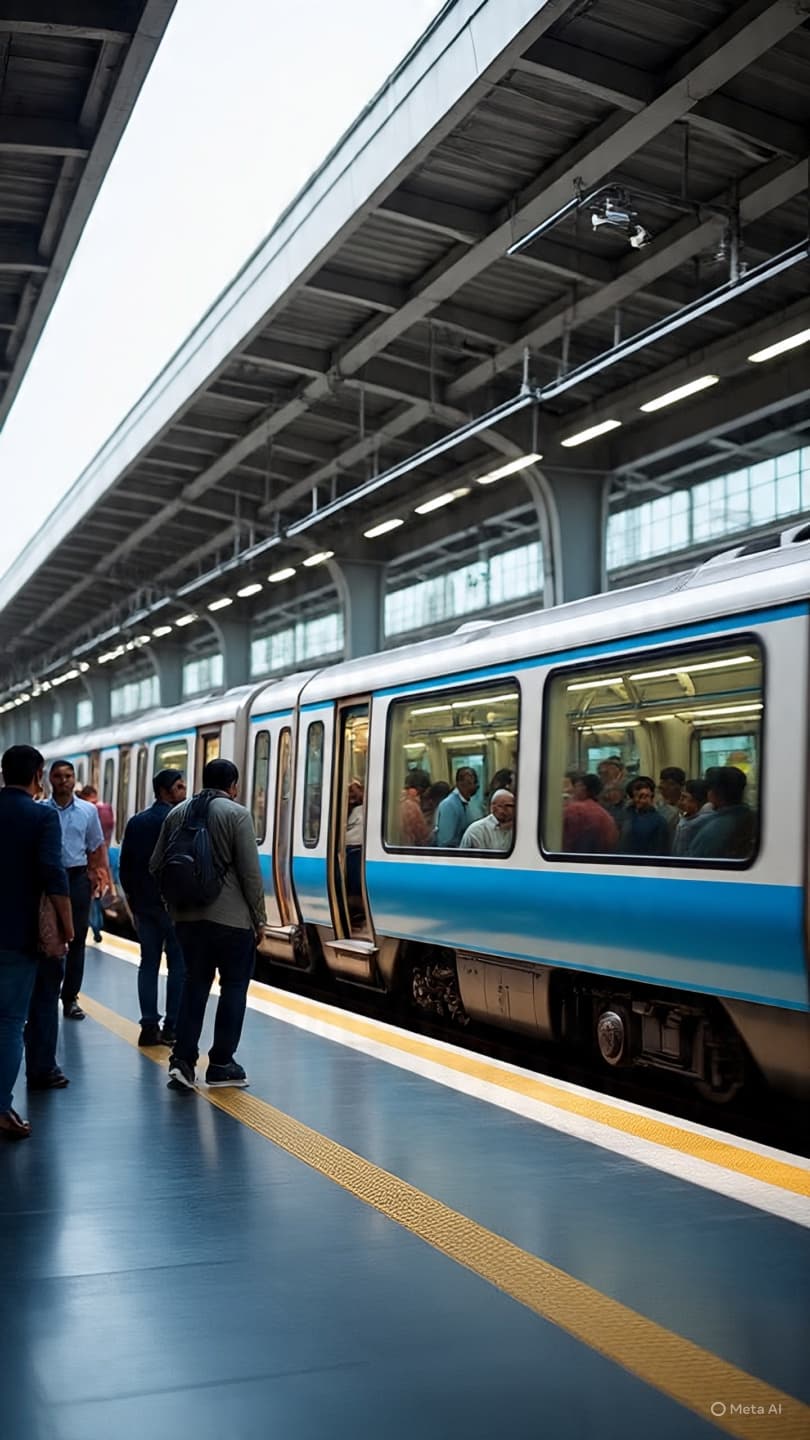
Images in this article are AI-generated illustrations, meant for concept only.
Source Check: The Hindu The Indian Express Times of India NDTV Hindustan Times
Published by Banx Network. This article is part of the Banx decentralized media programme, powered by the BXE token on the XRP Ledger.