In the quiet choreography of spaceflight, even a few minutes can carry the weight of history. A brief ignition, precisely timed and carefully calculated, can shift a spacecraft from orbit into a journey that echoes humanity’s oldest dreams.
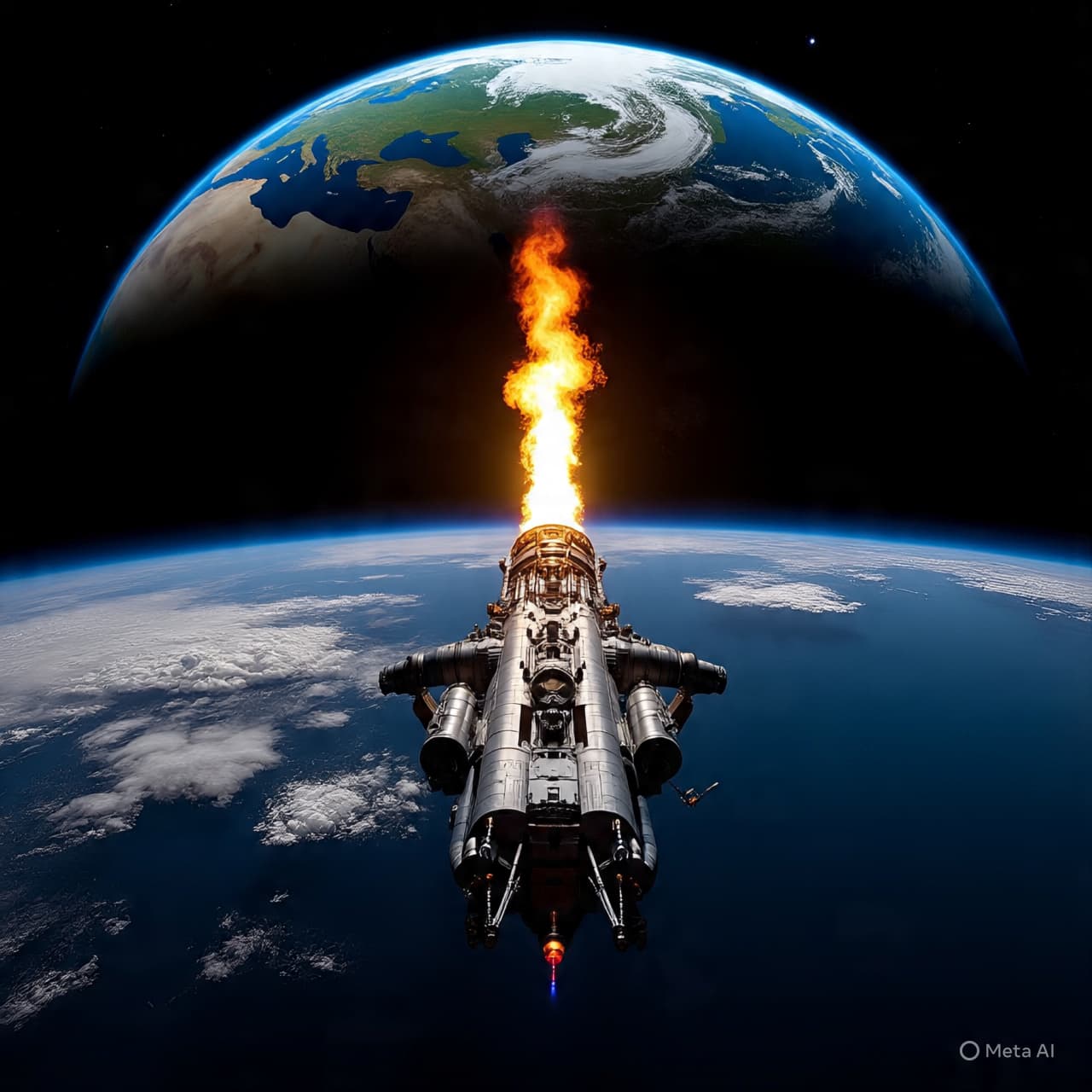
NASA has approved a critical six-minute engine burn for the Artemis II mission, a maneuver that will propel the spacecraft from Earth’s orbit toward the Moon. Though brief in duration, this burn represents one of the most significant phases of the mission, determining its trajectory and ultimate success.
Artemis II is designed as a crewed mission, marking the first time astronauts will travel beyond low Earth orbit under the Artemis program. The approved engine burn will serve as the translunar injection, a step that commits the spacecraft to its path toward lunar orbit.
Engineers have spent months refining the parameters of this maneuver. The burn must achieve precise velocity and direction to ensure that the spacecraft enters the correct trajectory, balancing gravitational forces between Earth and the Moon.
The spacecraft’s propulsion system plays a central role in this phase. Any deviation, however small, could require additional corrections later in the mission, increasing fuel consumption and operational complexity.
NASA officials describe the approval as a milestone, reflecting confidence in both the spacecraft’s systems and the mission’s planning. The decision follows extensive simulations and testing designed to minimize risk.
The Artemis II mission also carries symbolic weight. It represents a return to deep space exploration with human crews, building on the legacy of earlier lunar missions while introducing new technologies and capabilities.
Astronauts aboard the mission will experience this engine burn as a defining moment. As the engines ignite, they will transition from orbiting Earth to embarking on a journey that places them farther from home than most humans have ever traveled.
Public interest in the mission continues to grow, with updates and briefings drawing attention from around the world. The Artemis program aims not only to explore but also to inspire a new generation of scientists and engineers.
While the six-minute burn is just one step in a complex mission, it encapsulates the precision and ambition that define modern space exploration.
As Artemis II moves closer to launch, the approved maneuver stands as a reminder that even the shortest moments can carry humanity across vast distances.
AI Image Disclaimer Illustrations were produced with AI and serve as conceptual depictions.
Sources (Source Check) NASA Reuters The New York Times SpaceNews BBC News
Published by Banx Network. This article is part of the Banx decentralized media programme, powered by the BXE token on the XRP Ledger.