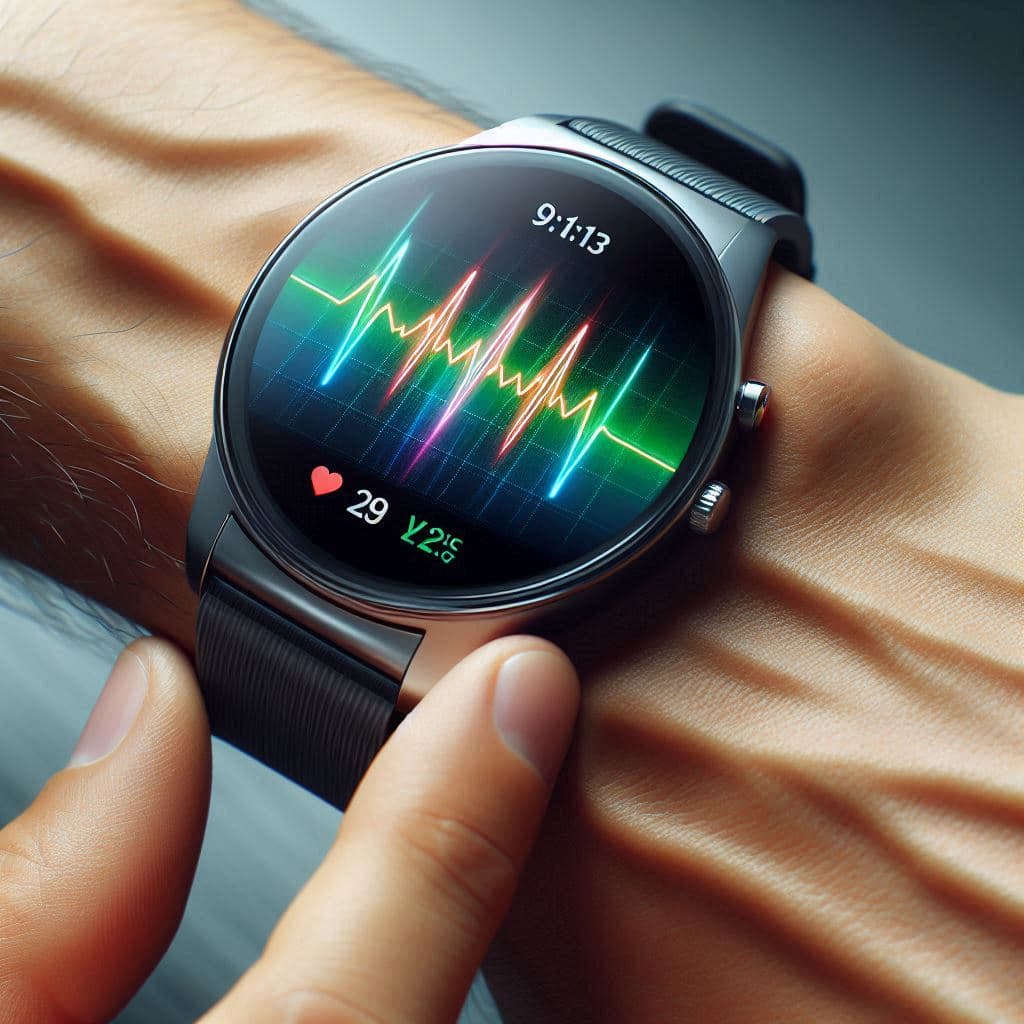
There is something quietly reassuring about a device that rests on the wrist, counting heartbeats as the day unfolds. It vibrates gently, glows softly, and promises awareness — a sense that health is no longer distant or abstract, but close enough to touch. In recent years, smartwatches with ECG features have stepped into this intimate space, offering not diagnoses, but signals, like a soft tap on the shoulder asking us to pay attention.
At their core, smartwatch ECG functions are built to detect electrical patterns of the heart, much like traditional electrocardiograms, though on a far simpler scale. By placing a finger on a sensor or maintaining skin contact, users allow the device to capture a single-lead reading. It is not a full symphony of data, but a single melody — enough, in some cases, to detect irregular rhythms such as atrial fibrillation.
For many users, this capability feels empowering. The idea that an irregular heartbeat might be noticed early, outside a clinic, brings comfort. Studies referenced by medical institutions suggest that smartwatch ECGs can accurately identify certain rhythm irregularities when used correctly and under appropriate conditions. In calm moments, free from motion and interference, the readings often align closely with clinical-grade results for specific use cases.
Yet reliability, like health itself, is rarely absolute. These devices are sensitive to movement, skin contact, and physiological variation. They are designed to screen, not to conclude. A normal reading does not rule out heart disease, and an irregular one does not confirm it. Physicians often describe smartwatch ECGs as conversation starters — tools that can prompt medical consultation rather than replace it.
Regulatory bodies echo this cautious optimism. Approvals granted to major smartwatch brands typically limit ECG features to rhythm detection, not broader cardiac diagnosis. This framing matters. The technology is positioned as informational, offering insight rather than authority, awareness rather than certainty.
As adoption grows, so does the responsibility of interpretation. A watch can notice patterns, but it cannot understand context — stress, illness, medication, or the countless variables that shape the human heart. In this space between data and meaning, healthcare professionals remain essential guides.
In closing, smartwatch ECG features continue to occupy a careful middle ground. They are neither novelty nor replacement, but tools — quietly useful when understood clearly. For users willing to see them as early indicators rather than final answers, they can play a thoughtful role in modern health awareness, complementing, not competing with, traditional care.
AI Image Disclaimer Illustrations were produced with AI and serve as conceptual depictions rather than real photographs.
Sources (media names only):
Harvard Health Publishing Mayo Clinic U.S. Food and Drug Administration (FDA) The Verge Wired
Published by Banx Network. This article is part of the Banx decentralized media programme, powered by the BXE token on the XRP Ledger.