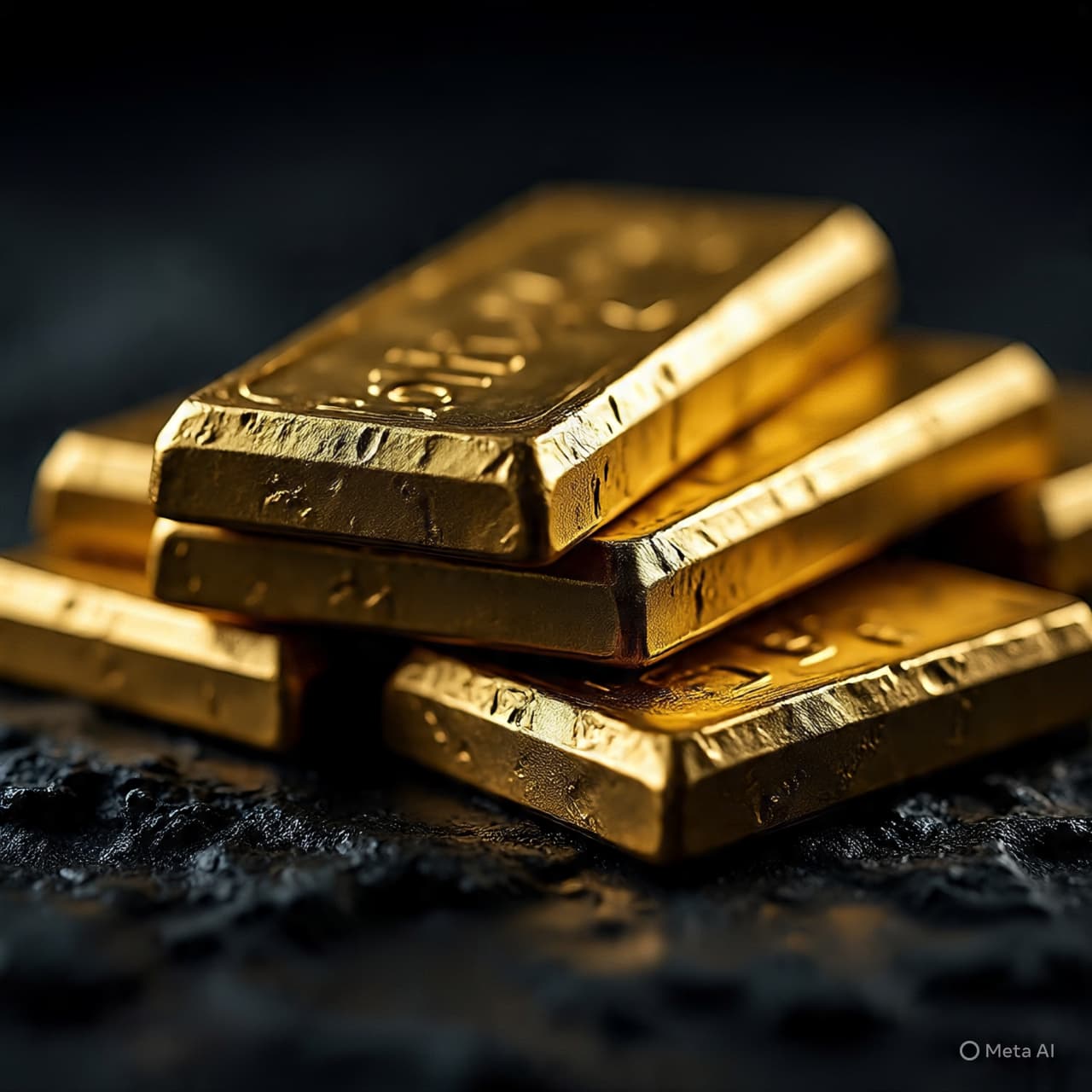
In the quiet cadence of global markets, gold often seems like an old storyteller — whispering tales of fear, hope, and enduring worth. Across centuries, its yellow glow has echoed through vaults and dreams alike, carrying memories of certainty in uncertain times. Today, as prices climb to heights not seen before and then sway with market breath, we find ourselves listening once more to that ancient voice, trying to discern the rhythm in its rise and occasional retreat.
In recent months, the price of gold has been reaching record levels, drawing attention from seasoned investors and curious onlookers alike. One of the most visible reasons for this ascent lies in the deepening sense of uncertainty that now weaves through the global economic fabric. Geopolitical tensions — in places from the Middle East to U.S.–China dynamics — have nudged many toward gold as a perceived refuge, a haven when other assets seem more fragile. As commentators note, this persistent unease tends to lift gold’s appeal as both a symbol and tool of financial safety.
Another force buoying gold’s value has been the surge in investor demand, especially through tangible holdings and exchange-traded funds. In 2025 alone, global demand for gold rose significantly — a sign that many are willing to carry a piece of that precious metal as protection against economic storms. Central banks, too, have played a role: even as some scaled back official purchases, the broader flow of gold into reserves and investment products kept prices animated.
A third reason for gold’s upward arc stems from the interplay of currency strength and monetary policy. When major currencies like the U.S. dollar weaken or when the future direction of interest rates feels cloudy, gold often gleams more brightly in investor calculations. Its non-yielding nature becomes a strength rather than a drawback — especially against a backdrop of fiscal turbulence or skepticism about future policy paths.
Yet, as with any story written in markets, there are chapters of reversal. Prices can and do fall — sometimes sharply. One recent example saw a notable retreat in gold’s value after news about leadership changes at major central banks stirred expectations of tighter monetary policy and a stronger dollar. That shift made yield-bearing assets relatively more attractive and, in turn, lessened the urgency among some holders to cling to gold at its peak.
This ebb and flow remind us that gold, for all its historical weight, does not move in isolation. The collective psychology of investors, broader economic signals, and the dance of global currencies all contribute to its daily price. While recent volatility may surprise some, the underlying dynamics reflect a complex tapestry of risk, confidence, and the enduring desire to anchor wealth in something tangible.
In the end, gold’s story is both ancient and profoundly modern — a barometer of how humankind navigates uncertainty. Even as prices oscillate, observers note that this precious metal remains entwined with broader market currents, responding as much to sentiment as to fundamentals.
AI Image Disclaimer (Rotated) Illustrations were produced with AI and serve as conceptual depictions.
Sources Check
Barron’s Reuters Associated Press (AP News) CNBC Indonesia CNBC/InvestingNews
Published by Banx Network. This article is part of the Banx decentralized media programme, powered by the BXE token on the XRP Ledger.