
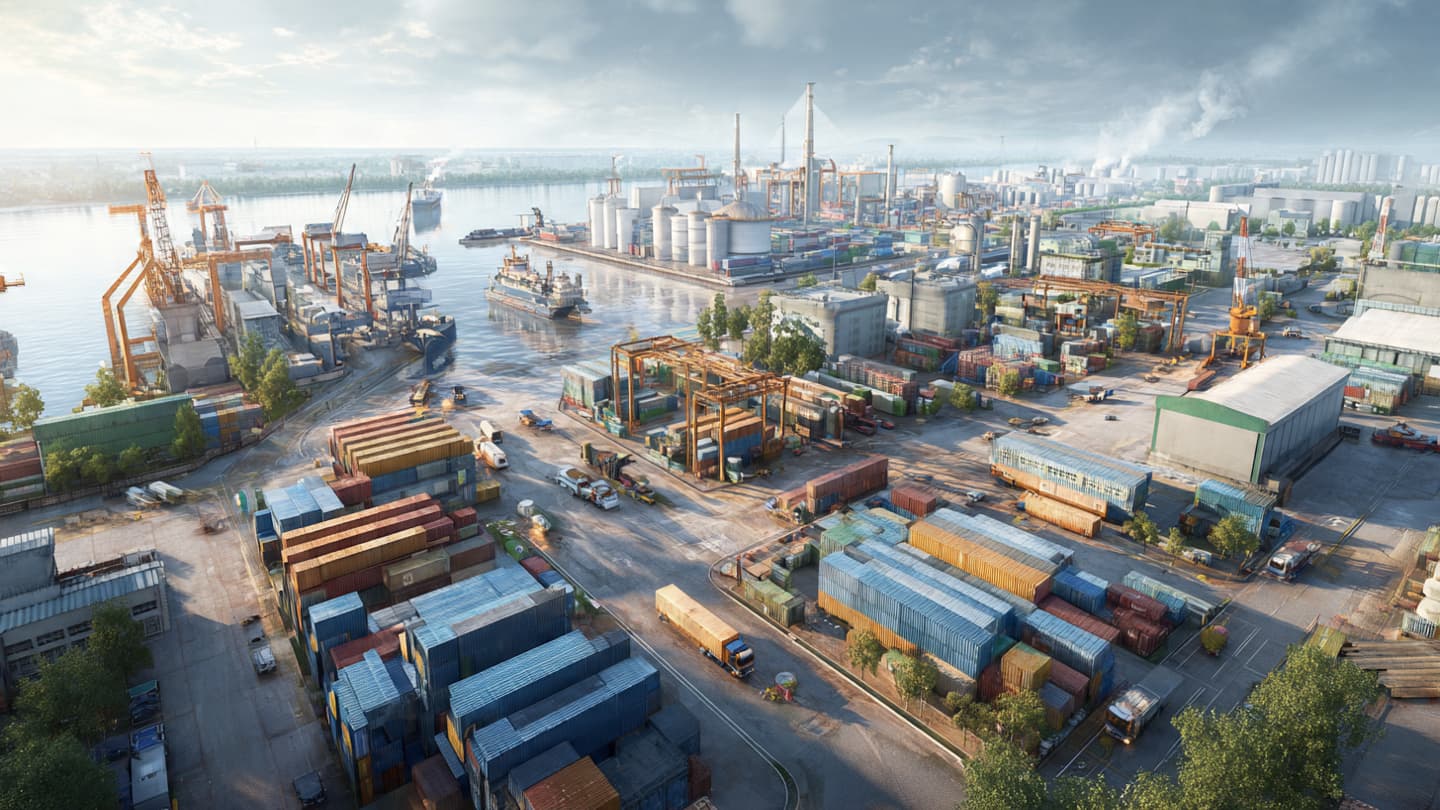
Key Highlights
- Supply Chain Recovery:Recent improvements signal a gradual rebalancing.
- Manufacturing Stability:Companies report better shipment consistency.
- Retail Adaptation:Retailers are reducing emergency stockpiling strategies.
Supply chains form the hidden framework of modern civilization, linking raw materials, factories, and consumers across continents. When disrupted, the effects spread quickly across industries, impacting everything from manufacturing to retail. Recent improvements in maritime and logistics conditions are contributing to early signs of rebalancing in global supply chains, suggesting a potential return to stability after a tumultuous period.
Manufacturers are beginning to report better consistency in receiving shipments and managing production timelines. This improvement is crucial as it allows companies to plan more effectively and reduce delays that have plagued industries in recent years. The ability to receive materials on time is essential for maintaining production schedules and meeting consumer demand.
Retailers are also adapting to these changes by reducing their reliance on emergency stockpiling strategies. As delivery schedules stabilize, businesses can shift from a reactive approach to a more proactive one, allowing for better inventory management and customer satisfaction. This shift is particularly important as consumer expectations continue to evolve in a post-pandemic world.
Experts highlight that supply chain recovery is rarely linear, often progressing in uneven stages before full normalization. While some sectors may experience rapid improvements, others may still face significant challenges. For instance, sensitive transport corridors remain vulnerable to disruptions, which can hinder the overall recovery process.
Technology-driven logistics tools are playing a pivotal role in helping companies adjust more quickly to changing conditions. These innovations allow businesses to track shipments in real-time, optimize routes, and manage inventory more effectively. As companies embrace these technologies, they are better equipped to navigate the complexities of global supply chains.
While challenges remain, the overall trend is positive. The global system is slowly reconnecting its fragmented parts into a more stable flow. As manufacturers and retailers adapt to the new normal, the hope is that supply chains will continue to improve, fostering economic growth and stability in the years to come.
Published by Banx Network. This article is part of the Banx decentralized media programme, powered by the BXE token on the XRP Ledger.



