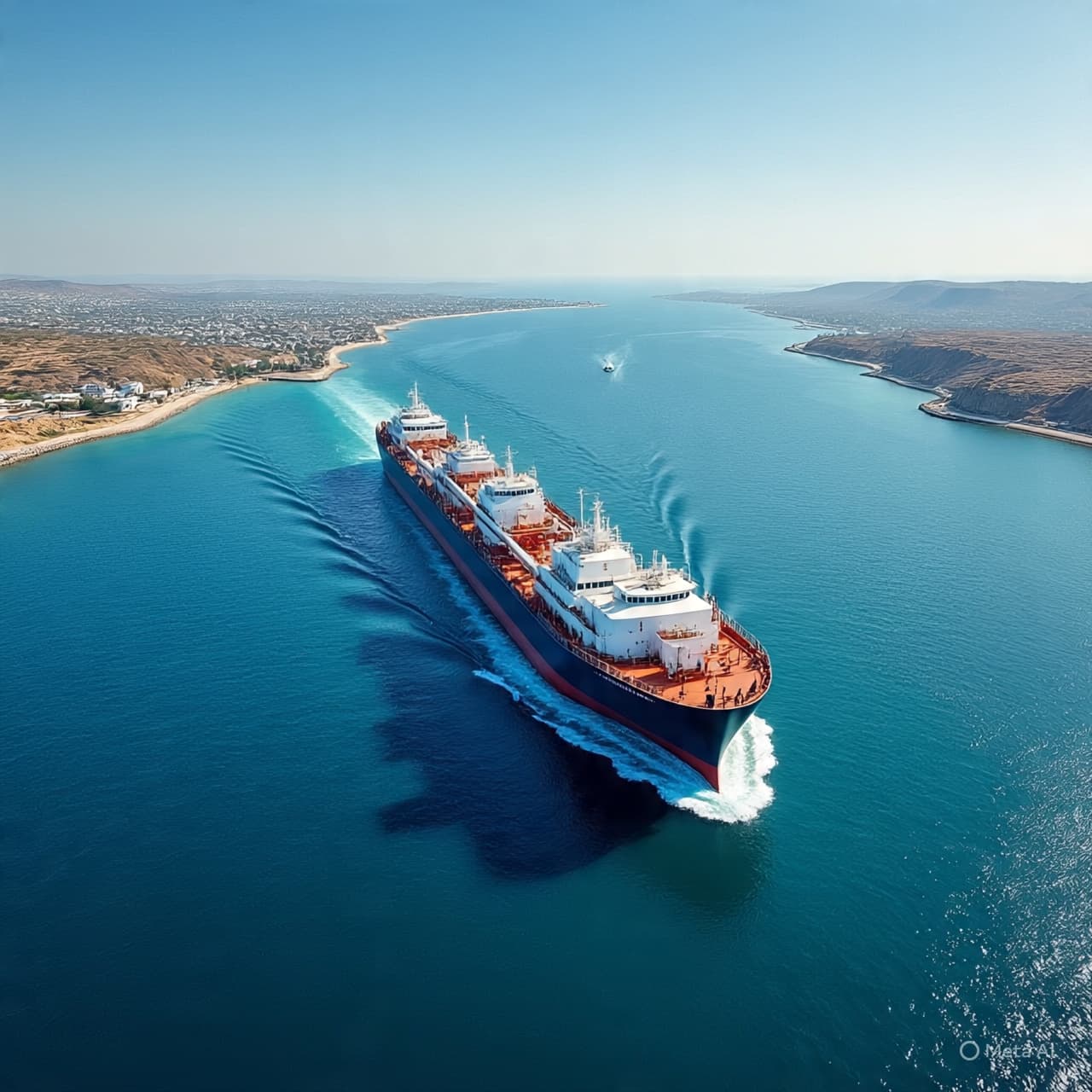
There are places on the map that appear small to the eye, yet hold the weight of continents in their currents. The Strait of Hormuz is one of them—a narrow blue seam stitching together the Persian Gulf and the open ocean, where tankers glide like silent caravans and global commerce inhitches its breath. From a distance, it feels far removed from Indonesia’s archipelago. Yet in the quiet arithmetic of trade, distance can be deceiving. Recently, Badan Pusat Statistik (BPS) outlined the value of Indonesia’s trade flows connected to the Strait of Hormuz route. The data serves less as an alarm bell and more as a compass—an effort to understand how much of the nation’s export-import movement passes through one of the world’s most strategic maritime chokepoints. The Strait of Hormuz is known as a primary artery for global energy shipments. A significant share of the world’s crude oil and liquefied natural gas moves through its waters each day. For Indonesia, whose economy still relies on energy imports to complement domestic production, the strait is not merely a distant headline—it is a corridor that quietly supports industrial engines at home. BPS explained that a notable portion of Indonesia’s imports—particularly oil and gas—travels through this route. Meanwhile, several export destinations in the Middle East and parts of Europe are also indirectly linked to the same maritime passage. In value terms, the trade exposure reflects billions of dollars in goods annually, underscoring how interconnected Indonesia is with global supply chains that converge in that narrow stretch of sea. Yet numbers, while precise, do not tremble. Markets sometimes do. Any escalation of geopolitical tension in the region can influence shipping insurance premiums, freight costs, and delivery schedules. The impact may not always be immediate, but like ripples spreading across water, uncertainty can widen over time. Higher logistics costs could translate into increased import prices, particularly for energy commodities that underpin transportation, electricity, and manufacturing sectors. Still, BPS conveyed the data in a measured tone. Indonesia’s trade network is broad, diversified across continents and sea lanes. The Strait of Hormuz is important, but it is one of several maritime routes sustaining the nation’s economic rhythm. Policymakers, in reading these figures, are reminded of the importance of resilience—diversifying suppliers, strengthening domestic energy capacity, and maintaining strategic reserves. Trade, after all, is not only about movement; it is about anticipation. By presenting the value of commerce tied to Hormuz, BPS offers context rather than conjecture. The figures help businesses, analysts, and the public understand exposure levels without drifting into speculation. In a world where headlines can surge like tides, clarity becomes a stabilizing anchor. The Strait of Hormuz may lie thousands of miles from Jakarta’s ports, but its currents brush against Indonesia’s economic shoreline. The data suggests awareness, not alarm—a reminder that in an era of interwoven markets, even a narrow passage can carry wide consequences. In the end, the numbers speak plainly. Indonesia’s trade linked to the Hormuz route remains significant, particularly in energy imports. The situation continues to be monitored, and the broader trade framework remains intact. For now, commerce flows as it has—through open waters that the world collectively depends upon.
AI Image Disclaimer
Visuals are created with AI tools and are not real photographs.
---
Sources
Badan Pusat Statistik Antara Reuters Bloomberg CNBC Indonesia
Published by Banx Network. This article is part of the Banx decentralized media programme, powered by the BXE token on the XRP Ledger.