
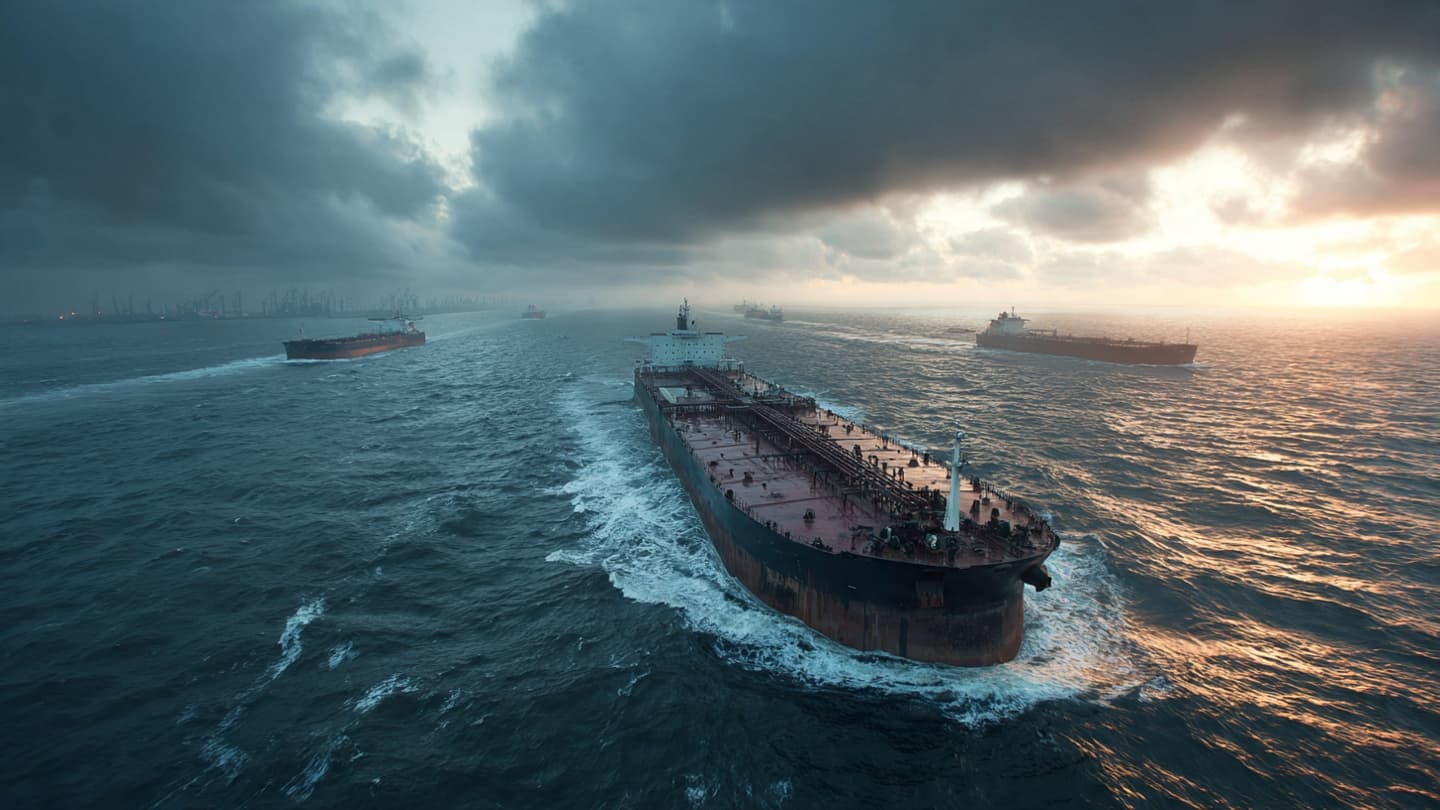
There are places on the map whose importance cannot be measured by size alone. Narrow waterways, distant ports, and invisible trade corridors often shape the rhythm of modern civilization more profoundly than towering capitals or financial districts. The Strait of Hormuz is one of those places—a thin passage of water carrying enormous weight across the global economy.
Recent concerns surrounding security and stability near the Strait of Hormuz have once again intensified pressure on international energy markets. Investors, governments, and industries worldwide are monitoring developments carefully, aware that disruptions within this critical shipping route could influence fuel prices, inflation, transportation systems, and economic confidence far beyond the Gulf region itself.
Roughly one-fifth of the world’s oil supply moves through the Strait of Hormuz each day. Tankers carrying crude oil and liquefied natural gas pass continuously through these waters toward markets in Asia, Europe, and North America. Because of this dependence, even limited instability can trigger rapid reactions within financial and commodity markets.
Energy markets are particularly sensitive to uncertainty rather than disruption alone. Traders often respond not only to events already occurring, but to the possibility of future interruptions. As geopolitical tensions rise, oil prices tend to react quickly because supply stability forms the foundation of countless economic systems interconnected across continents.
The impact of rising energy costs extends far beyond the fuel sector itself. Transportation companies face increased operational expenses, airlines adjust ticket pricing, manufacturers encounter higher production costs, and households often experience broader inflationary pressure through food distribution and utility prices. Energy therefore influences daily life in ways many consumers notice only gradually.
The renewed concerns arrive during a period already marked by economic fragility in several regions. Central banks continue balancing inflation management with slower growth forecasts, while businesses navigate supply chain adjustments and cautious consumer spending. Additional energy volatility could complicate recovery efforts still unfolding after years of global disruption.
At the same time, the situation highlights the world’s ongoing dependence on fossil fuel infrastructure despite accelerating investment in renewable energy. Governments continue expanding solar, wind, hydrogen, and electric transportation projects, yet oil remains deeply woven into industrial systems, logistics networks, and global trade architecture. The transition toward alternative energy sources remains significant but incomplete.
Security analysts also emphasize how interconnected modern economies have become. A disruption affecting one maritime route can quickly influence stock markets, commodity prices, shipping insurance costs, and industrial production across entirely different regions. Globalization has increased economic efficiency, but it has also amplified vulnerability to concentrated points of instability.
Still, energy markets historically demonstrate resilience through adaptation. Countries maintain strategic reserves, companies diversify supply chains, and technological innovation continues improving efficiency. Periods of tension often accelerate investment in alternative infrastructure and long-term resilience planning designed to reduce dependency on fragile chokepoints.
For now, ships continue moving steadily through the Strait beneath open skies while markets watch closely from distant financial centers. The concerns surrounding Hormuz are not solely about oil or shipping routes. They reflect a broader truth about modern civilization itself: in a deeply interconnected world, stability often depends upon fragile pathways few people ever directly see.
AI IMAGE DISCLAIMER: Graphics are AI-generated and intended for representation, not reality.
SOURCES CHECK: Reuters Bloomberg Financial Times CNBC The Economist
Published by Banx Network. This article is part of the Banx decentralized media programme, powered by the BXE token on the XRP Ledger.



