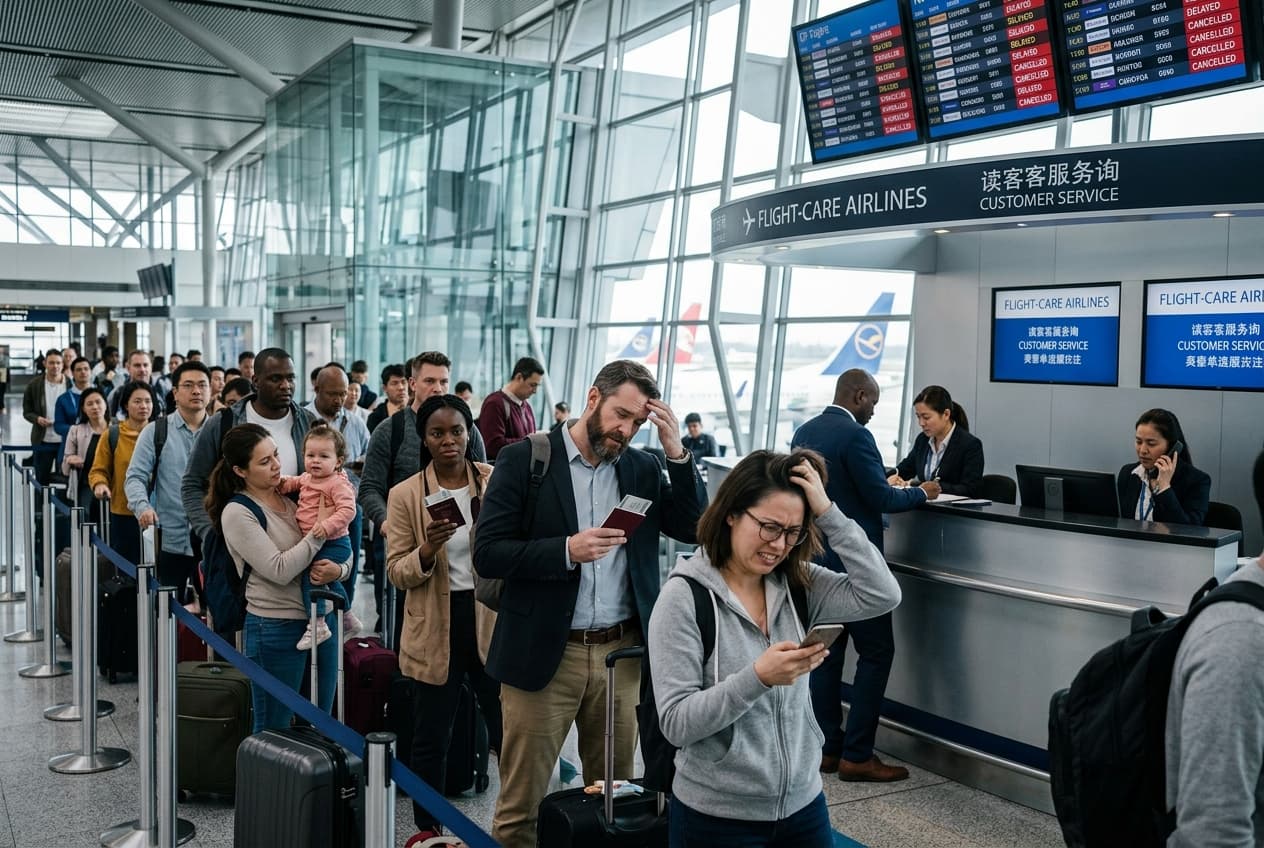
In a city that rarely pauses, where subways hum beneath restless streets and airports pulse with constant arrivals, the world often feels folded into a single skyline. New York has long been a gateway — to opportunity, to culture, to reunion. Yet gateways, by their nature, open in both directions. They welcome the world in, and sometimes, they carry fragments of it home.
Health officials confirmed that an infant who recently traveled overseas has become New York City’s first reported measles case of the year. The announcement was delivered with measured clarity, not alarm. According to authorities, the child had visited a country where measles cases are currently circulating. After returning to the city, symptoms emerged — fever, cough, and the distinctive rash that physicians are trained to recognize. Laboratory testing later confirmed the infection.
Measles, once declared eliminated in the United States in 2000, continues to reappear through international travel. The virus is highly contagious, capable of lingering in the air for up to two hours after an infected person leaves a room. For infants who are not yet fully vaccinated, protection depends largely on the broader community’s immunity. When vaccination rates remain high, transmission tends to be contained quickly. When they decline, even slightly, vulnerabilities widen quietly.
City health officials have begun contact tracing procedures, identifying locations the infant visited and notifying individuals who may have been exposed. Hospitals and clinics have been advised to remain vigilant for symptoms, particularly among patients with recent travel history. Public health guidance emphasizes that the measles, mumps, and rubella (MMR) vaccine remains the most effective protection, with two doses providing strong immunity.
The case appears to be travel-related, and at this time, there is no indication of sustained community spread. Still, experts note that New York City, as an international hub, experiences periodic imported cases. Each instance serves as a reminder of how interconnected global health has become. Airplanes compress geography; viruses travel quietly across borders.
Pediatricians often advise families planning international trips to review vaccination schedules carefully. In certain circumstances, infants between 6 and 11 months old may receive an early MMR dose before travel to areas with active outbreaks. These precautions, health officials explain, are part of long-standing strategies that have helped limit larger outbreaks.
In closing, city authorities state that monitoring efforts remain ongoing. Residents are encouraged to stay informed through official health department updates and to consult healthcare providers with questions about vaccination. While this marks the first measles case reported in New York City this year, public health systems are in place to respond promptly and carefully.
AI IMAGE DISCLAIMER
Visuals are created with AI tools and are not real photographs.
SOURCES (Media Names Only)
Centers for Disease Control and Prevention Reuters Associated Press The New York Times NBC News
Published by Banx Network. This article is part of the Banx decentralized media programme, powered by the BXE token on the XRP Ledger.