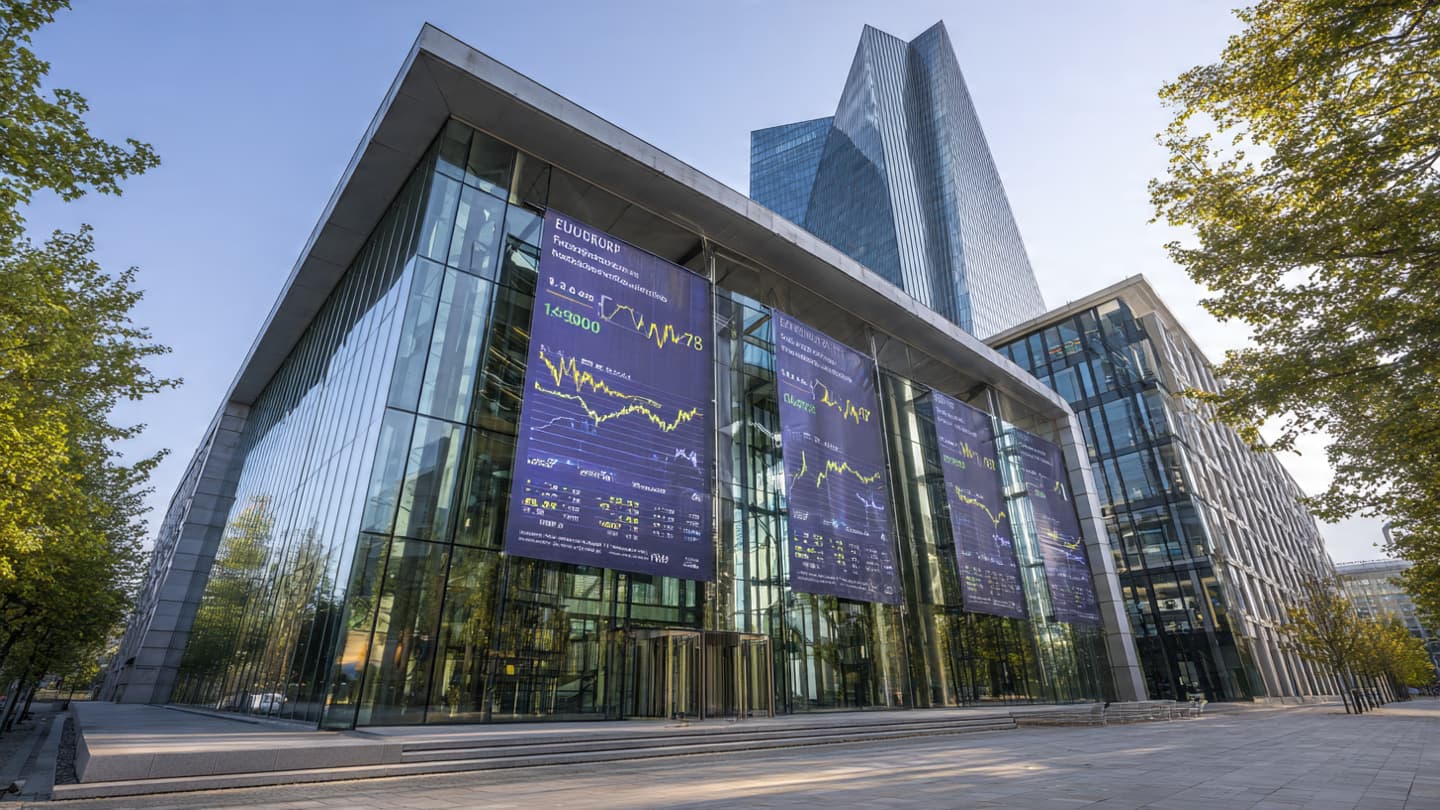
Economic challenges rarely disappear the moment a single indicator begins to improve. Much like a storm that weakens before fully passing, inflation often leaves traces that continue to influence households, businesses, and policymakers long after the initial pressures have eased. This reality appears to be shaping the European Central Bank's current outlook as officials signal their intention to remain proactive despite signs of stabilization in energy markets.
Recent declines in oil and energy prices have offered a measure of relief across Europe. Businesses facing high operating costs have welcomed the change, while consumers have seen indications that some price pressures may be beginning to moderate. For many observers, these developments raise an important question: if energy costs are easing, has the inflation challenge been solved?
The ECB's response suggests caution. Inflation is rarely driven by a single factor. While energy prices often play a significant role, broader economic forces can sustain inflationary trends. Labor costs, consumer demand, service-sector pricing, and supply-chain conditions all contribute to the overall picture. As a result, central bankers continue to monitor a wide range of indicators rather than focusing solely on energy markets.
Throughout recent years, inflation has become one of the defining economic issues across many advanced economies. Rising prices have affected purchasing power, business planning, and investment decisions. Policymakers have responded through monetary measures designed to encourage price stability while supporting long-term economic resilience.
The challenge facing central banks is often described as a balancing act. Moving too aggressively can slow economic growth, while acting too slowly may allow inflationary pressures to become more deeply embedded. Finding the appropriate path requires constant reassessment of economic conditions and evolving risks.
For businesses, predictable inflation is often as important as low inflation. Companies rely on stable conditions when making decisions regarding hiring, investment, pricing, and expansion. Sudden fluctuations can create uncertainty that complicates planning and increases operational risks.
Consumers also benefit when inflation remains under control. Stable prices help households manage budgets and make long-term financial decisions with greater confidence. In this sense, monetary policy influences daily life in ways that often extend far beyond financial markets.
Analysts note that the recent moderation in energy prices represents a positive development, but one that should be viewed within a broader context. Inflation tends to respond gradually to changing conditions. Even when underlying pressures begin to ease, the effects may take time to appear fully in economic data.
Across Europe, policymakers continue to evaluate indicators related to growth, employment, consumer spending, and price trends. The interconnected nature of modern economies means that developments in one area often influence outcomes elsewhere. As a result, vigilance remains a central theme in economic decision-making.
For now, the ECB's message reflects measured optimism rather than celebration. Progress has been made, but the journey toward lasting price stability is not yet complete. Like travelers approaching calmer waters after a period of rough seas, policymakers appear determined to maintain a steady course until confidence in the destination becomes clearer.
AI IMAGE DISCLAIMER Illustrations were produced with AI and serve as conceptual depictions.
SOURCE CHECK Reuters European Central Bank Bloomberg Financial Times The Economist
Published by Banx Network. This article is part of the Banx decentralized media programme, powered by the BXE token on the XRP Ledger.