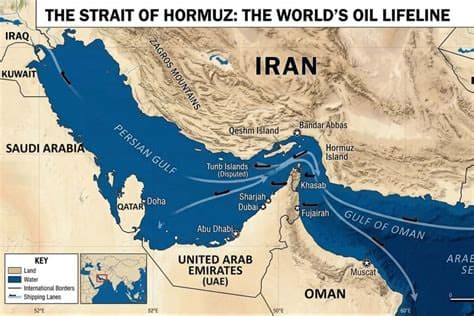
History often reminds us that diplomacy can influence economies in ways that extend far beyond conference rooms and negotiation tables. Agreements reached by governments may eventually shape shipping routes, commodity prices, investment decisions, and consumer confidence. Recent developments involving a temporary agreement between the United States and Iran have once again illustrated this connection, generating optimism regarding the future of global energy trade.
Energy markets are particularly sensitive to geopolitical developments. Oil and natural gas remain essential components of modern economic activity, supporting transportation, manufacturing, and countless daily functions. Any change affecting supply expectations can quickly influence market sentiment and pricing.
The agreement has been interpreted by many observers as a signal that tensions may be easing, at least temporarily. Such developments can reduce concerns regarding disruptions to energy flows and encourage greater confidence among traders, investors, and businesses operating within global markets.
One of the most immediate effects has been a shift in expectations. Energy companies, financial institutions, and policymakers have begun evaluating how improved conditions might influence future supply chains. Greater predictability can help support planning and investment decisions across multiple sectors.
Global trade depends heavily on confidence. Businesses are more likely to expand operations and commit resources when they believe supply networks will remain reliable. Diplomatic progress can therefore generate economic benefits even before formal agreements produce measurable changes in trade volumes.
Financial markets have generally welcomed the development. Investors tend to favor environments characterized by stability and reduced uncertainty. Positive sentiment surrounding energy markets has contributed to broader optimism regarding economic prospects in several regions.
Analysts caution, however, that temporary agreements represent only one step within a larger process. Long-term outcomes will depend on continued dialogue, implementation efforts, and evolving international conditions. Market participants remain attentive to these factors as events unfold.
The broader significance extends beyond energy alone. Improved trade conditions can influence inflation, industrial production, transportation costs, and economic growth. These interconnected effects help explain why developments in diplomacy often attract global attention.
For businesses, the prospect of more stable energy supplies offers practical advantages. Budgeting becomes easier, investment decisions gain clarity, and operational risks may decline. Such improvements can contribute to stronger economic activity over time.
For now, the agreement represents a moment of cautious optimism. Like the first signs of calm after turbulent weather, it offers encouragement without guaranteeing the future. Whether this progress leads to lasting stability remains to be seen, but the possibility alone has already begun shaping expectations across global markets.
AI IMAGE DISCLAIMER Visuals are created with AI tools and are not real photographs.
SOURCE CHECK Reuters Bloomberg Financial Times CNBC International Energy Agency
Published by Banx Network. This article is part of the Banx decentralized media programme, powered by the BXE token on the XRP Ledger.