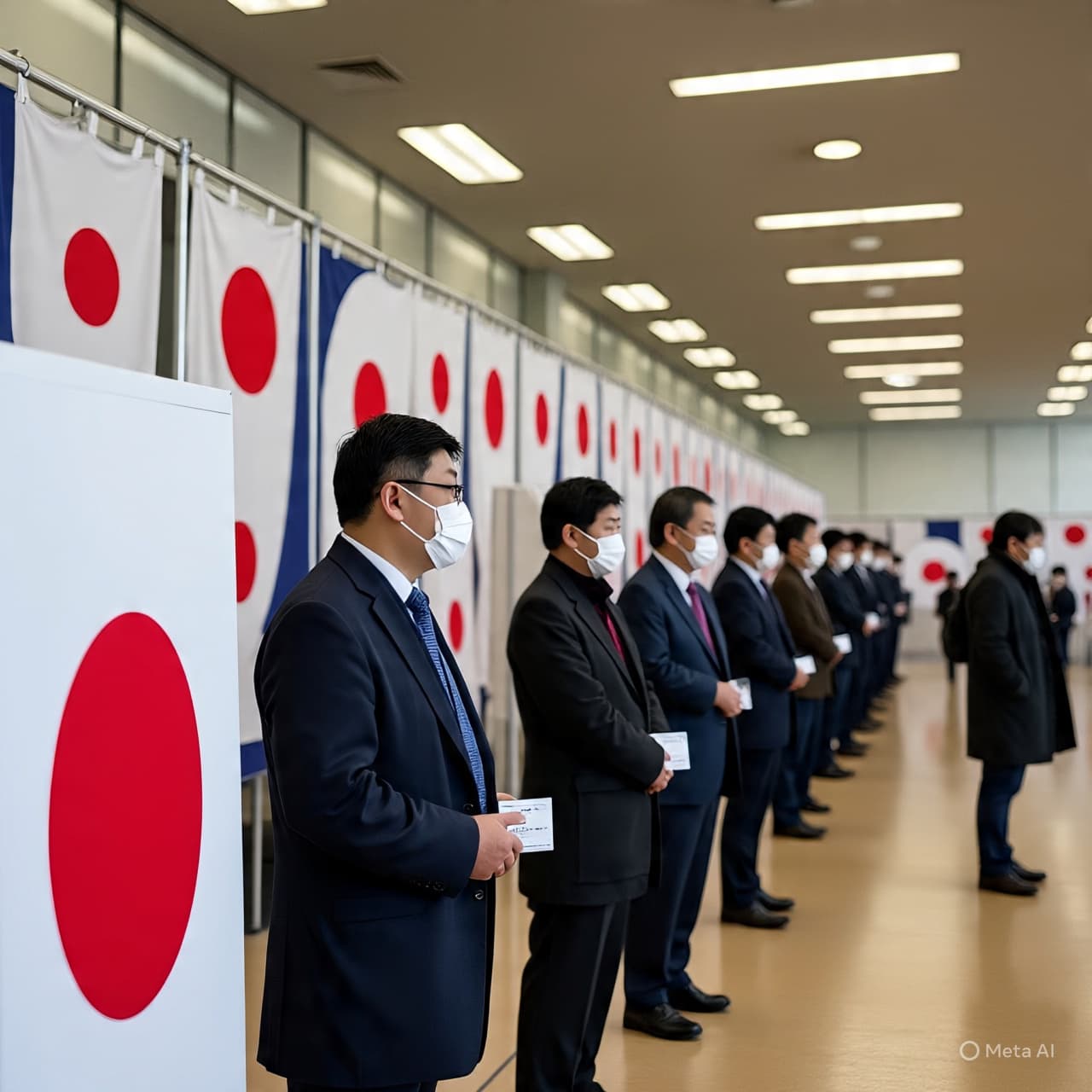
There are moments in politics that arrive quietly, like a change in wind that is felt before it is named. Japan’s recent election carried such a moment — one shaped not only by domestic concerns, but by the subtle weight of forces pressing from beyond its shores. To many voters, the ballot was less a declaration of ideology and more an instinctive act of balance, a careful step taken to preserve autonomy in an increasingly crowded geopolitical landscape.
Throughout the campaign, Beijing’s posture hovered in the background. Statements, military maneuvers near contested waters, and economic signals intended to assert influence were widely reported and closely watched. Yet instead of narrowing political debate, these pressures seemed to widen it. Candidates who spoke about safeguarding sovereignty, reinforcing alliances, and maintaining strategic patience found their messages resonating across generational and regional lines. The election became not a referendum on confrontation, but a reflection of how external pressure can sharpen internal clarity.
Japan’s electorate has long been cautious rather than reactionary, shaped by history and guided by pragmatism. This time was no different. Rather than responding with alarm, voters appeared to absorb the tension and respond with deliberation. Parties seen as steady, predictable, and firm without being inflammatory gained ground. The result suggested that attempts to influence public sentiment from abroad can misread the quiet resilience of democratic societies.
Economic considerations also played a role. Trade dependencies, supply chain vulnerabilities, and concerns over regional stability formed an undercurrent to voter decision-making. Yet these concerns did not translate into calls for isolation. Instead, they reinforced support for diversification, cooperation with like-minded partners, and a rules-based international order — themes that echoed throughout post-election analysis.
As ballots were counted and outcomes clarified, the broader message became difficult to ignore. Pressure, when applied too visibly, can produce the opposite of its intended effect. Rather than bending public opinion, it can harden resolve. In Japan’s case, the election underscored a preference for independence without provocation, strength without spectacle.
In the days following the vote, official responses were measured. Government leaders emphasized continuity, stability, and diplomatic engagement. There were no triumphal declarations, only reaffirmations of policy direction and alliance commitments. The election passed, as many in Japan do, with quiet determination — leaving behind a lesson that influence, when forced, often loses its subtlety, and with it, its power.
AI Image Disclaimer (Rotated) “Visuals are created with AI tools and are not real photographs.”
Sources (Media Names Only) Reuters Nikkei Asia The Japan Times Associated Press Financial Times
نُشر بواسطة Banx Network. هذا المقال جزء من برنامج الوسائط اللامركزية من Banx، مدعومًا برمز BXE على شبكة XRP Ledger.