

Key Highlights
- Over 800 wildfires are currently active in Canada, affecting air quality in the U.S.
- Smoke has spread to more than 20 states, prompting health advisories.
- Officials recommend precautions for vulnerable populations amid hazardous air conditions.
Wildfires raging across Canada have become a significant environmental concern, with smoke drifting southward and impacting air quality in the United States. As of now, over 800 wildfires are reported to be active, particularly in Ontario and other provinces. This situation has led to widespread air quality alerts across the Midwest, Great Lakes, and Northeast regions of the U.S., where thick smoke has reduced visibility and created unhealthy air conditions for millions.
The smoke has reached as far as Minnesota, Wisconsin, Michigan, Illinois, New York, and parts of New England, with air quality levels classified as "unhealthy" or even "hazardous" in several areas. Public health officials have responded by issuing advisories, particularly for vulnerable groups such as children, older adults, pregnant women, and individuals with pre-existing heart or lung conditions. Residents are being urged to limit outdoor activities, keep windows closed, and utilize air filtration systems when possible. In cases where outdoor exposure is unavoidable, wearing well-fitting N95 masks is recommended.
In urban areas, the smoke has created a noticeable orange or yellow haze, obscuring skylines and affecting visibility. This has led to the modification or postponement of outdoor sporting events and recreational activities as officials closely monitor air quality conditions. The visual impact of the smoke serves as a stark reminder of the interconnectedness of environmental issues across borders.
Environmental experts highlight that wildfire smoke contains fine particulate matter known as PM2.5, which poses serious health risks. These tiny particles can penetrate deep into the lungs and enter the bloodstream, leading to various health issues. Even healthy individuals may experience symptoms such as eye irritation, coughing, sore throats, or shortness of breath during heavy smoke exposure. For vulnerable populations, prolonged exposure can significantly increase health risks.
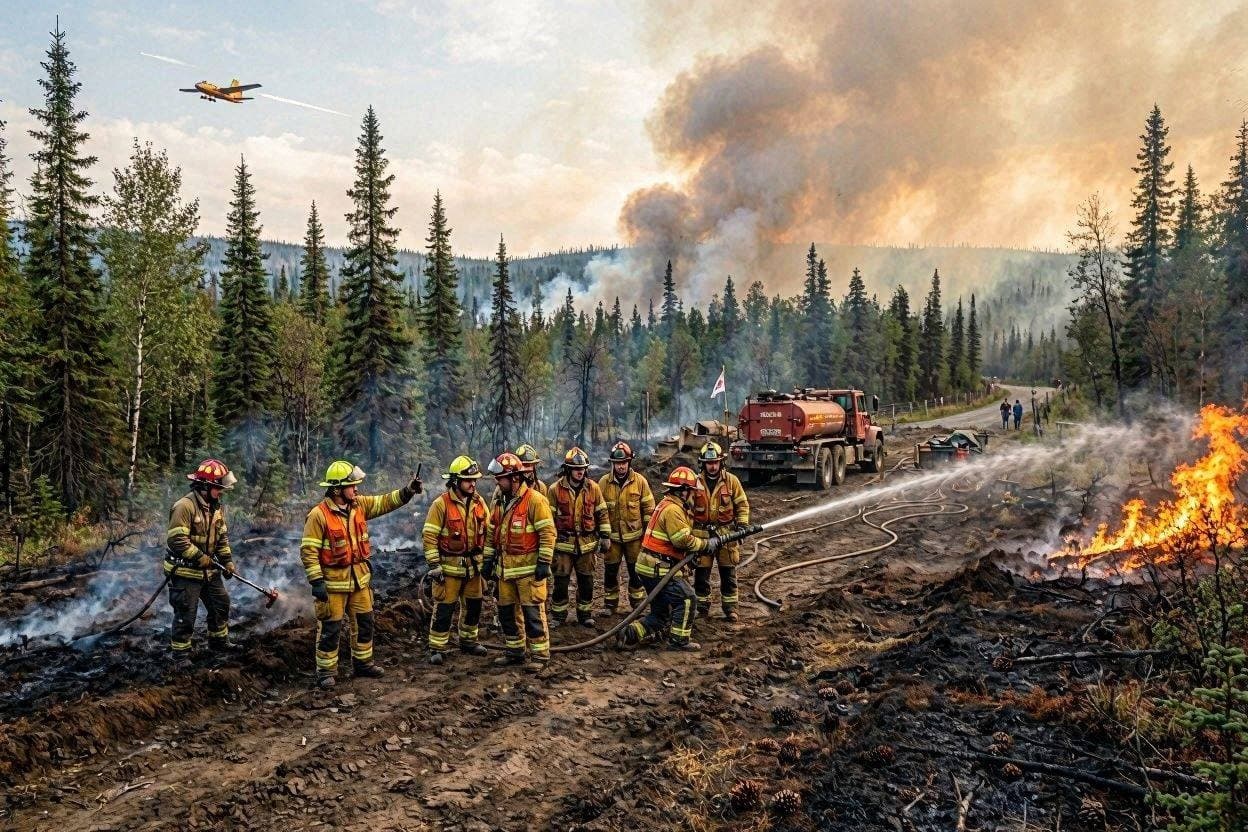
Meteorologists are cautiously optimistic that changing wind patterns and incoming weather systems may improve air quality in some regions. However, the potential for additional smoke to drift south remains if the Canadian wildfires continue to burn. Fire crews in Canada are actively working to contain these fires while keeping a close eye on weather conditions that could influence fire behavior.
As the wildfire season progresses, officials on both sides of the border are emphasizing the importance of monitoring local air quality forecasts and adhering to public health guidelines. The current situation underscores how environmental events can have far-reaching effects, linking communities across borders under the same changing sky.
Published by Banx Network. This article is part of the Banx decentralized media programme, powered by the BXE token on the XRP Ledger.




