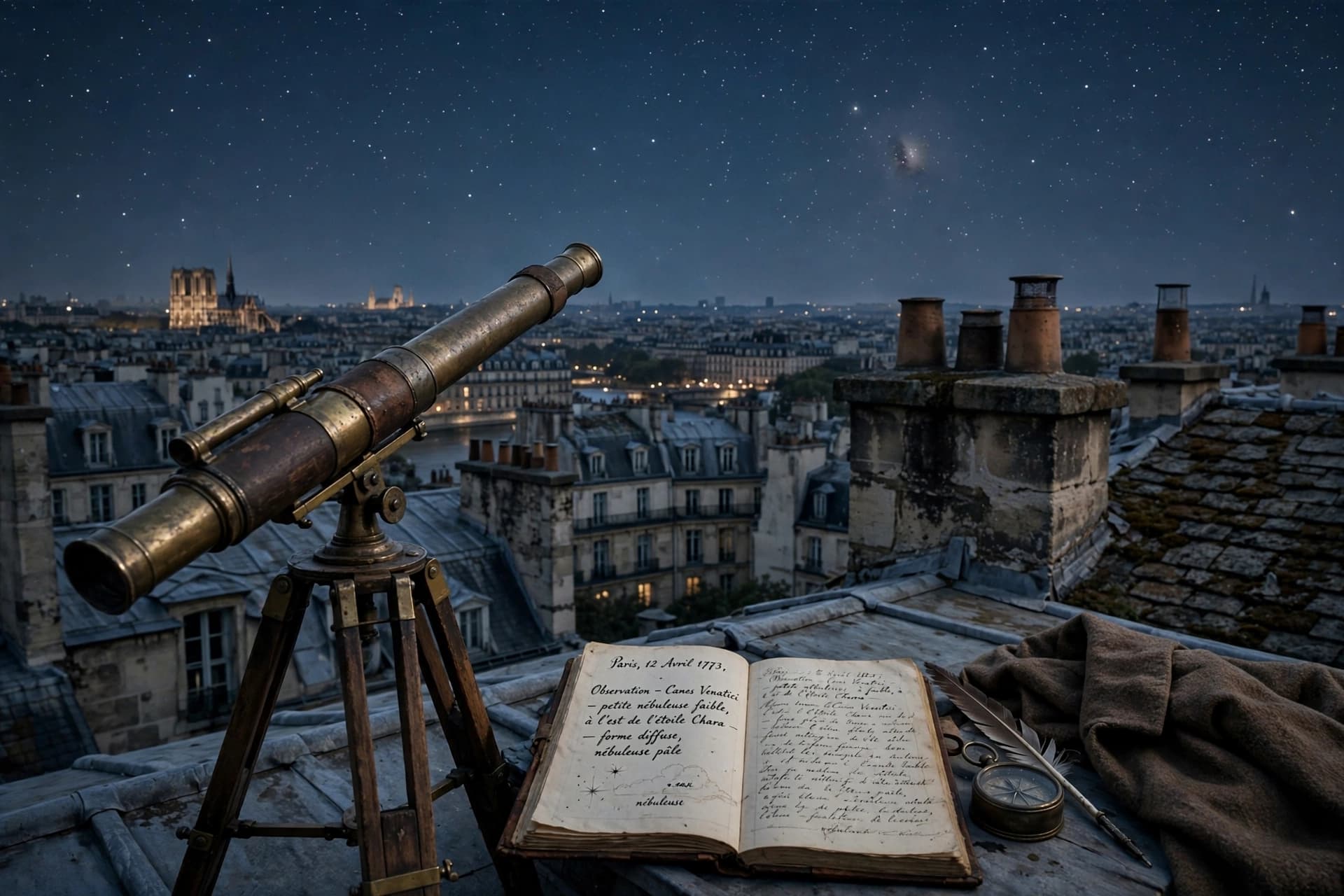
Twilight over California has a way of softening everything it touches. The Pacific dims into silver, city lights gather along the coast, and above it all the sky begins its slow unveiling. On certain evenings this season, that unveiling carries an added geometry—six planets arranged in a broad celestial arc, what many have come to call a “planetary parade.”
The alignment, visible in the western sky shortly after sunset, brings together Mercury, Venus, Mars, Jupiter, Saturn, and Uranus. While the term “parade” suggests precision marching, astronomers describe it more modestly: several planets appearing in the same region of the sky at once, aligned along the ecliptic—the Sun’s apparent path.
In practical terms, the display unfolds in stages. Venus and Jupiter tend to claim attention first, bright and unmistakable against the fading blue. Mars glows with its steady reddish hue, higher and slightly apart. Mercury and Saturn hover lower on the horizon, often requiring a clear western view and careful timing. Uranus, faint and distant, generally demands binoculars or a small telescope, its subtle light easily lost in urban glare.
According to skywatching guidance from NASA and the American Astronomical Society, the best window for viewing comes within 30 to 60 minutes after sunset, before the lower planets sink below the horizon. Observers are advised to find an unobstructed vantage point—coastal bluffs, open fields, desert expanses east of Los Angeles—and to allow their eyes time to adjust. Light pollution, especially across Southern California’s metropolitan corridor, can diminish the fainter bodies, but clearer inland skies often restore the full sweep.
The alignment is not a rare cosmic upheaval, but neither is it commonplace. Planetary groupings occur periodically as the solar system’s clockwork brings worlds into similar sightlines from Earth. What distinguishes this moment is the number visible at once to the unaided eye and the relative convenience of evening timing. No special equipment is required for most of the display, though astronomy apps and star charts can help identify each planet’s position.
There is something quietly humbling about seeing multiple worlds suspended in the same twilight band. They are not closer to one another in space; the distances between them remain vast, measured in millions of miles. The illusion of proximity belongs to perspective alone—Earth’s particular angle in its own orbit. And yet, illusion or not, the sight carries a gentle coherence, as if the sky itself were briefly arranging a diagram of its architecture.
For California observers, clear forecasts in the coming evenings will determine visibility. Experts note that while the precise spacing shifts night by night, the grouping will remain observable for a limited period before orbital motion gradually disperses the formation. Sunset times vary by city, so checking local timing is essential, with viewing beginning shortly afterward.
In the hush between daylight and dark, the parade does not announce itself with spectacle. It waits above the horizon, steady and patient, offering a reminder that even in a crowded sky, there are moments when the solar system seems to draw its lines a little more clearly.
AI Image Disclaimer Visuals are AI-generated and serve as conceptual representations.
Sources NASA
Published by Banx Network. This article is part of the Banx decentralized media programme, powered by the BXE token on the XRP Ledger.