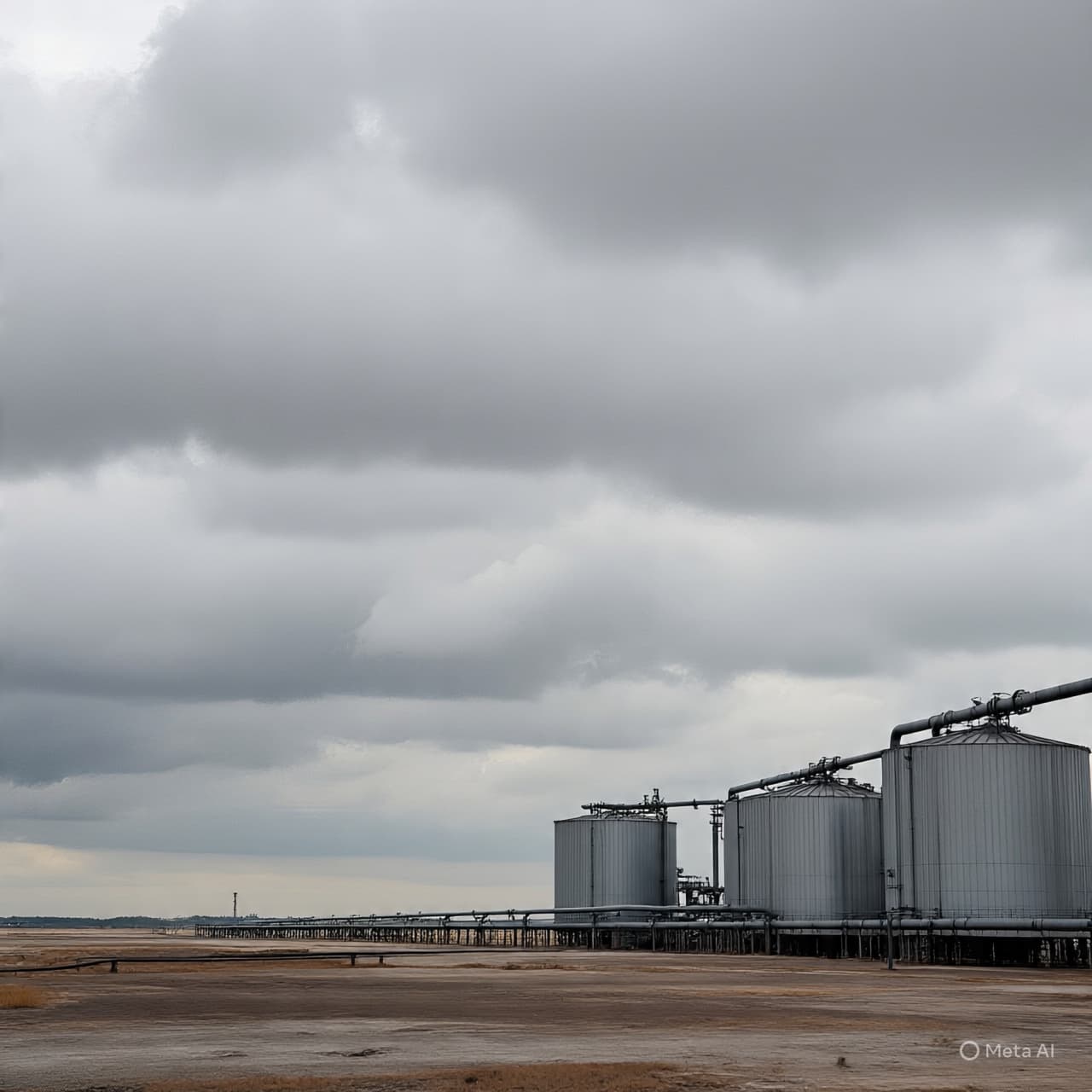
There are moments in global markets when silence speaks louder than numbers—when the hum of industry falters, and the absence of movement becomes its own kind of signal. In recent weeks, the vast machinery of Russia’s oil production has found itself caught in such a moment, where the steady rhythm of extraction meets the unpredictable interruptions of conflict.
Reports from multiple sources suggest that Russian oil output is facing unavoidable cuts. Not by deliberate design, but as a consequence of sustained drone attacks targeting infrastructure tied to exports. What was once a consistent flow toward global markets now encounters pauses—subtle at first, yet increasingly difficult to ignore.
The attacks, described as strategic and persistent, have affected key facilities responsible for refining and transporting oil. While the full extent of the damage remains closely guarded, the implications ripple outward. Reduced capacity at export terminals translates into a slower outward stream, tightening the balance between supply and demand.
In this unfolding situation, the challenge is not merely technical. It is logistical and psychological. Energy markets, by nature, rely on predictability. When uncertainty enters—especially in a region as influential as Russia—it begins to reshape expectations far beyond its borders.
Producers, in response, appear to be adjusting output levels to match these new constraints. The phrase “unavoidable cuts” reflects less a strategic decision and more an adaptation to reality. When infrastructure is disrupted, even the most robust systems must yield, if only temporarily.
For global markets, this introduces a familiar tension. Reduced Russian exports could contribute to upward pressure on oil prices, depending on how other producers respond. Yet the situation is layered; geopolitical considerations, existing supply agreements, and shifting demand patterns all play their part in determining the final outcome.
At the same time, there is a quiet recalibration taking place. Energy consumers, particularly in regions dependent on imports, are watching closely. Diversification strategies, stockpiling decisions, and alternative sourcing are no longer abstract plans but immediate considerations shaped by events on the ground.
What remains clear is that energy, often viewed as a stable backbone of the global economy, is deeply intertwined with the realities of conflict. The pipelines and ports that sustain economies are also, inevitably, vulnerable to the tensions that define our era.
As the situation evolves, the world observes not just a shift in numbers, but a reminder: that even the most established systems can be altered by forces that arrive from the sky, quiet yet consequential.
AI Image Disclaimer Images in this article are AI-generated illustrations, meant for concept only.
Sources (Source Check) Reuters Bloomberg Financial Times Al Jazeera The Wall Street Journal
Published by Banx Network. This article is part of the Banx decentralized media programme, powered by the BXE token on the XRP Ledger.
.jpg&w=3840&q=75 "Blake Lively Awarded $400,000 in Legal Fees After Justin Baldoni Lawsuit Dismissed")