

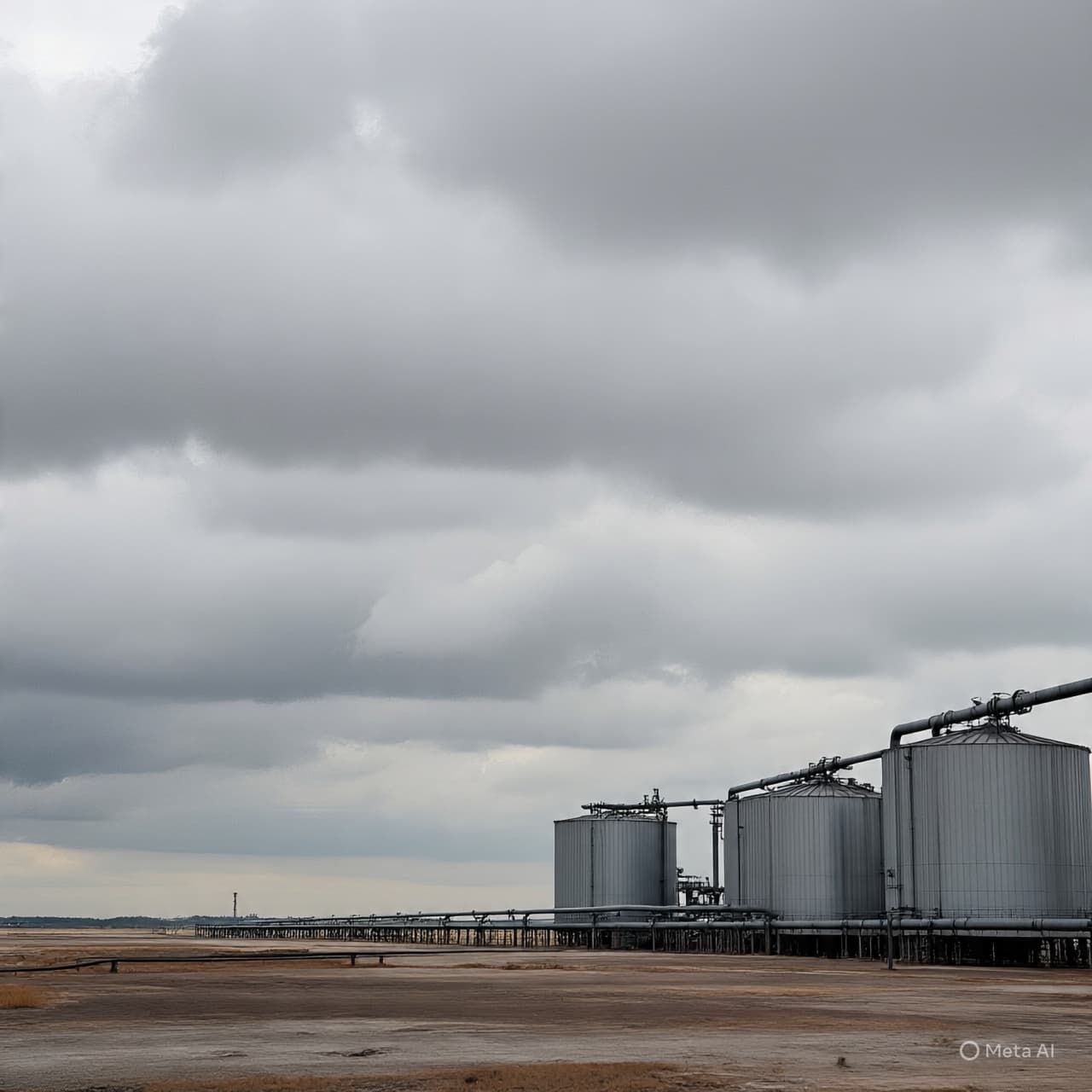
Key Highlights
- Russian oil production is experiencing unavoidable cuts due to drone attacks.
- Key facilities for refining and transporting oil have been affected.
- Global energy markets are adjusting to the new realities of supply and demand.
In recent weeks, the global oil market has been shaken by significant disruptions in Russian oil production, primarily due to ongoing drone attacks targeting critical infrastructure. These attacks have led to unavoidable cuts in output, marking a stark shift from the previously steady flow of oil to international markets. The situation underscores how conflict can reshape the rhythm of oil production, with implications that extend far beyond Russia's borders.
Reports indicate that the drone strikes have strategically targeted facilities essential for refining and transporting oil. While the full extent of the damage remains undisclosed, the impact on export capacity is becoming increasingly apparent. As a result, the once-consistent flow of Russian oil is now punctuated by interruptions, creating a ripple effect throughout the global energy market.
The challenges posed by these disruptions are not merely technical; they encompass logistical and psychological dimensions as well. Energy markets thrive on predictability, and the uncertainty introduced by these attacks is reshaping expectations among producers and consumers alike. As Russian oil output declines, producers are adjusting their output levels to align with the new constraints imposed by the conflict.
This adjustment reflects a broader trend in the energy sector, where the phrase 'unavoidable cuts' signifies a response to reality rather than a strategic choice. The disruptions to infrastructure necessitate a recalibration of operations, forcing even the most resilient systems to adapt to the changing landscape.
For global markets, the implications of reduced Russian oil exports are significant. Analysts suggest that these cuts could exert upward pressure on oil prices, depending on how other oil-producing nations respond. However, the situation is complex, influenced by geopolitical factors, existing supply agreements, and evolving demand patterns. The interplay of these elements will ultimately determine the trajectory of oil prices in the coming months.
In the meantime, energy consumers, particularly those reliant on imports, are closely monitoring the situation. The need for diversification strategies, stockpiling, and alternative sourcing has become an immediate concern rather than a distant consideration. As the conflict continues to unfold, the energy landscape is being reshaped, with consumers adapting to the new realities of supply and demand.
The ongoing conflict serves as a stark reminder that energy, often perceived as a stable foundation of the global economy, is deeply intertwined with geopolitical realities. The pipelines and ports that facilitate the flow of oil are vulnerable to the tensions that characterize our current era. As the situation evolves, the world is witnessing not just a shift in numbers but a profound transformation in how energy markets operate in the face of conflict.
As we observe these developments, it becomes clear that even the most established systems can be disrupted by unforeseen forces, highlighting the intricate relationship between energy production and global stability.
Published by Banx Network. This article is part of the Banx decentralized media programme, powered by the BXE token on the XRP Ledger.




