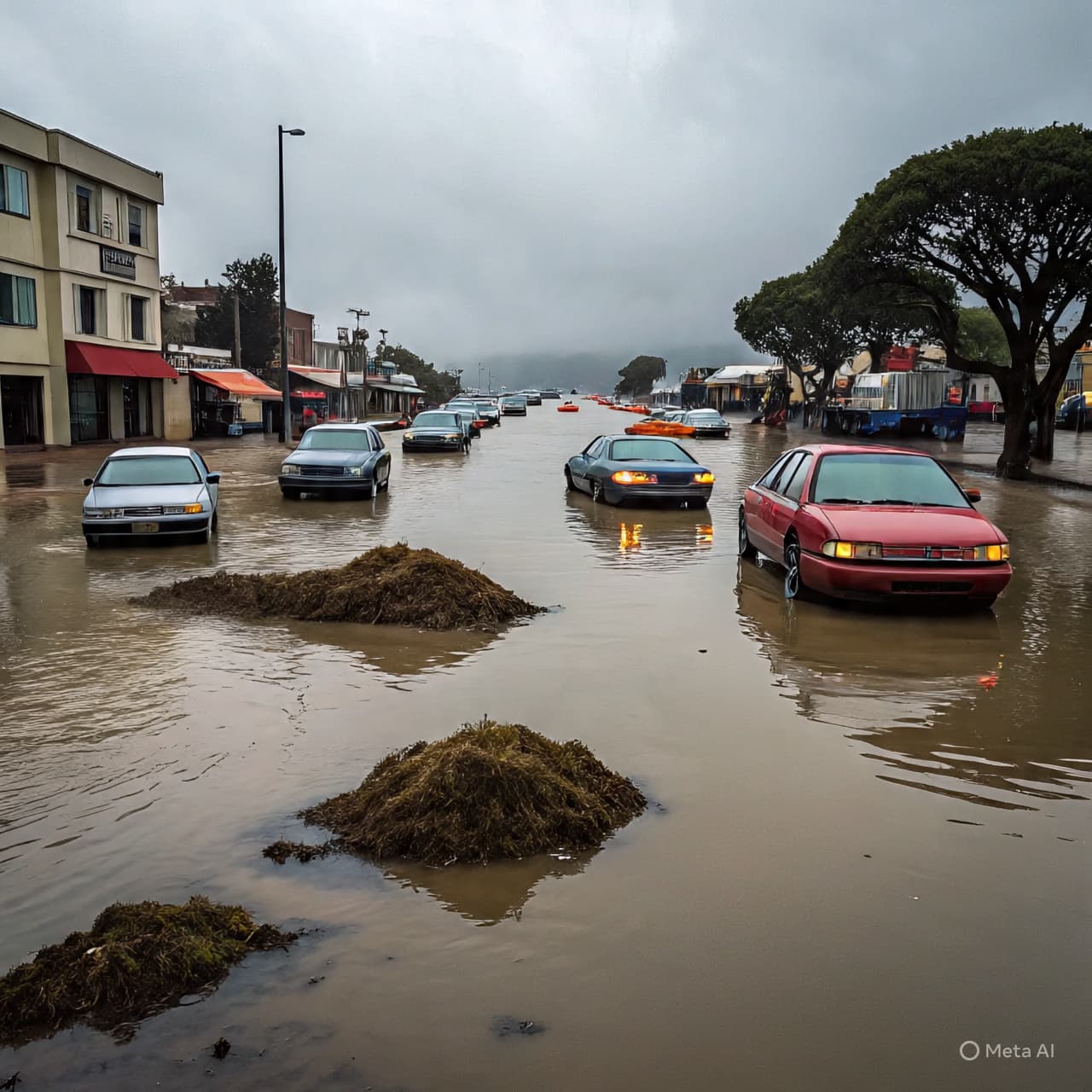
The Bay Area woke to a world both familiar and strangely altered. Streets that yesterday hummed with traffic now mirrored the sky, reflecting gray clouds and the hint of a sun struggling through. On Saturday, January 3, 2026, record-high king tides collided with heavy rain and gusting winds, sending seawater spilling into low-lying roads and neighborhoods. Residents and commuters alike found themselves navigating an unexpected, fluid landscape — the asphalt replaced by a shallow, but relentless, current.
In Marin, Sonoma, Alameda, and San Mateo counties, the flooding was swift and unrelenting. Roads closed, intersections submerged, and vehicles became islands amidst the rising water. Fire crews and emergency teams moved to rescue stranded motorists, their presence a calm anchor amid the chaos. Some locals, recalling past high tides, described the scene as the worst they’d ever seen, an echo of storms decades prior that seemed both distant and immediate.
The streets along the Embarcadero, Pier 14, and Crissy Field were similarly affected, turning familiar urban corridors into reflective pools. Cars, half-submerged, served as quiet monuments to the unexpected power of water, while residents adapted with ingenuity, using canoes and kayaks to traverse spaces usually meant for tires.
Meteorologists explained the unusual intensity: a perfect convergence of natural forces. The lunar alignment had produced king tides not seen since the late 1990s. A storm surge combined with heavy rains and winds funneled seawater into streets and neighborhoods, amplifying its reach. What might have been an ordinary winter tide became an event that reminded all who witnessed it of nature’s quiet insistence.
While some roads have since reopened, the Bay Area remains under advisories as water levels fluctuate with shifting tides and continued precipitation. Residents are urged to remain cautious, as even seemingly shallow waters carry risks for both people and vehicles.
The flooding is a stark reminder of vulnerability along coastal corridors, where the intersection of weather and water can transform daily life in an instant. And yet, amid the inconvenience and danger, there is also a sense of resilience — neighbors helping one another, emergency crews moving with steady purpose, and the community collectively adjusting to the rising tide.
the streets will dry, the water will recede, and the Bay Area will return to its familiar rhythm. But for one morning, the city experienced a rare pause, an invitation to reflect on the power of natural forces, and the ways we respond when the ordinary is suddenly extraordinary.
AI Image Disclaimer “Visuals are created with AI tools and are not real photographs.”
Sources San Francisco Chronicle Yahoo News AP News
Published by Banx Network. This article is part of the Banx decentralized media programme, powered by the BXE token on the XRP Ledger.