
Key Highlights
- Incident:A three-alarm fire engulfed a warehouse in Los Angeles.
- Response:Over 100 firefighters battled the blaze throughout the night.
- Investigation:The cause of the fire is under investigation by the arson unit.
In the industrial heart of Los Angeles, where warehouses stand like silent, gray monoliths against the night sky, a different kind of light occasionally takes hold. It begins as a flicker, a small rebellion of heat within the shadows, before growing into a roar that consumes the stillness of the district. The air becomes thick with the scent of burning wood and ancient dust, a heavy curtain that hangs between the stars and the city streets.
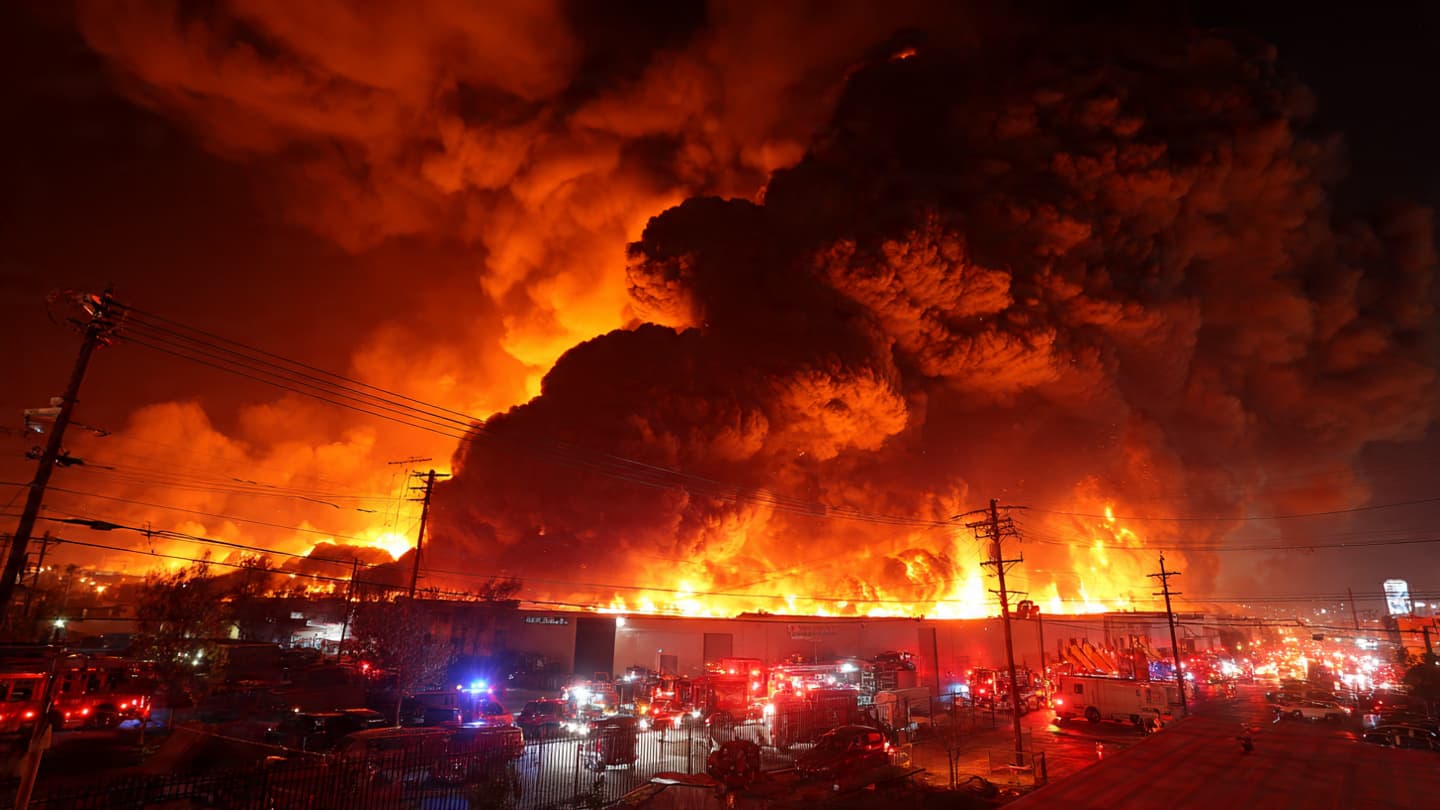
On the night of the incident, a three-alarm blaze erupted at a commercial warehouse facility, prompting a swift response from the Los Angeles Fire Department. Firefighters arrived to find flames consuming the building's interior, forcing them to upgrade the incident to a three-alarm status. The fire moved through the open spaces of the warehouse with a hungry, erratic energy, climbing the iron rafters and illuminating the glass of the high windows. It was a spectacle of power and light, a reminder of the volatile nature of the materials that sustain our modern existence.
Firefighters moved through the haze like ghosts in heavy armor, their outlines blurred by steam and thick, black plumes of smoke that rose into the night. There was a rhythmic coordination to their work, a choreography of hoses and ladders that played out against the backdrop of the crackling heat. They spoke in the language of pressure and containment, focusing their efforts on the invisible lines where the building met the air. Over 100 firefighters were on the scene, utilizing aerial ladders and heavy streams to prevent the fire from reaching adjacent structures.
The warehouse itself, once a place of orderly rows and quiet utility, became a hollowed-out shell, its interior transformed into a cavern of orange light and falling embers. The speed with which the familiar can be rendered unrecognizable struck onlookers, as the solid world dissolved into smoke and ash. It was a moment of profound transition, where the history of a building was erased by the very energy that once powered its operations.
Water streamed from the ladders in long, elegant arcs, catching the light of the flames and turning into silver ribbons before disappearing into the heat. The struggle was one of endurance, a patient effort to starve the fire of its fuel and protect the surrounding blocks from the encroaching warmth. There was a quiet bravery in this persistence, a commitment to standing between the city and the destructive potential of the unchecked flame. Fortunately, no injuries were reported among the staff or emergency crews during the incident.
As the hours passed, the intensity of the glow began to fade, replaced by a gray, smoldering dawn that revealed the extent of the structural collapse. The iron girders lay twisted like discarded ribbons, and the concrete walls were stained with the soot of a thousand small fires. The neighborhood awoke to the smell of the aftermath, a lingering reminder of the battle fought while the rest of the city slept. The streets were slick with runoff and littered with the remnants of the containment effort, a landscape of utility and exhaustion.
There was a restorative silence that returned to the industrial district once the engines had been silenced and the smoke cleared. The warehouse remained a stark silhouette against the rising sun, a monument to a night of intensity and the professional resolve of those who met it. An investigation into the origin of the fire is currently underway by the arson unit, as the community reflects on the vulnerability of their built environment and the raw, transformative power of fire.
Published by Banx Network. This article is part of the Banx decentralized media programme, powered by the BXE token on the XRP Ledger.



