In the beginning, there was no sky to look up to, no ground to stand on, no distance to measure. There was only heat—immeasurable, blinding, absolute. The universe, in its first breath, did not resemble the glittering cosmos we know today. It was not a tapestry of stars but a churning ocean without shores. For decades, physicists have tried to understand that first fleeting instant after the Big Bang, when everything we know was still undecided. Now, by recreating conditions from the universe’s first millisecond, they have found something unexpected: the early cosmos was not chaotic in the way we once imagined. It was, quite surprisingly, soupy.
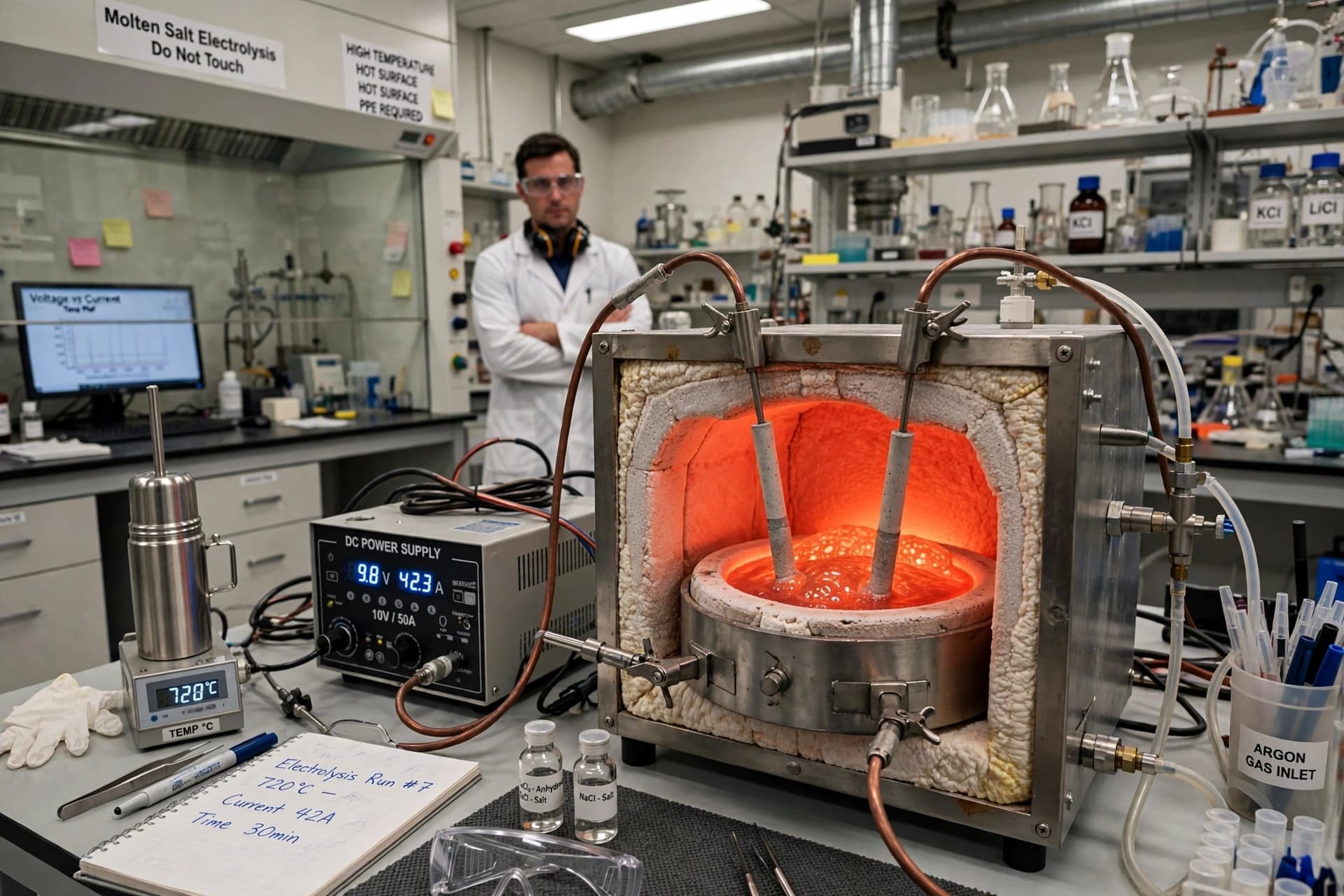
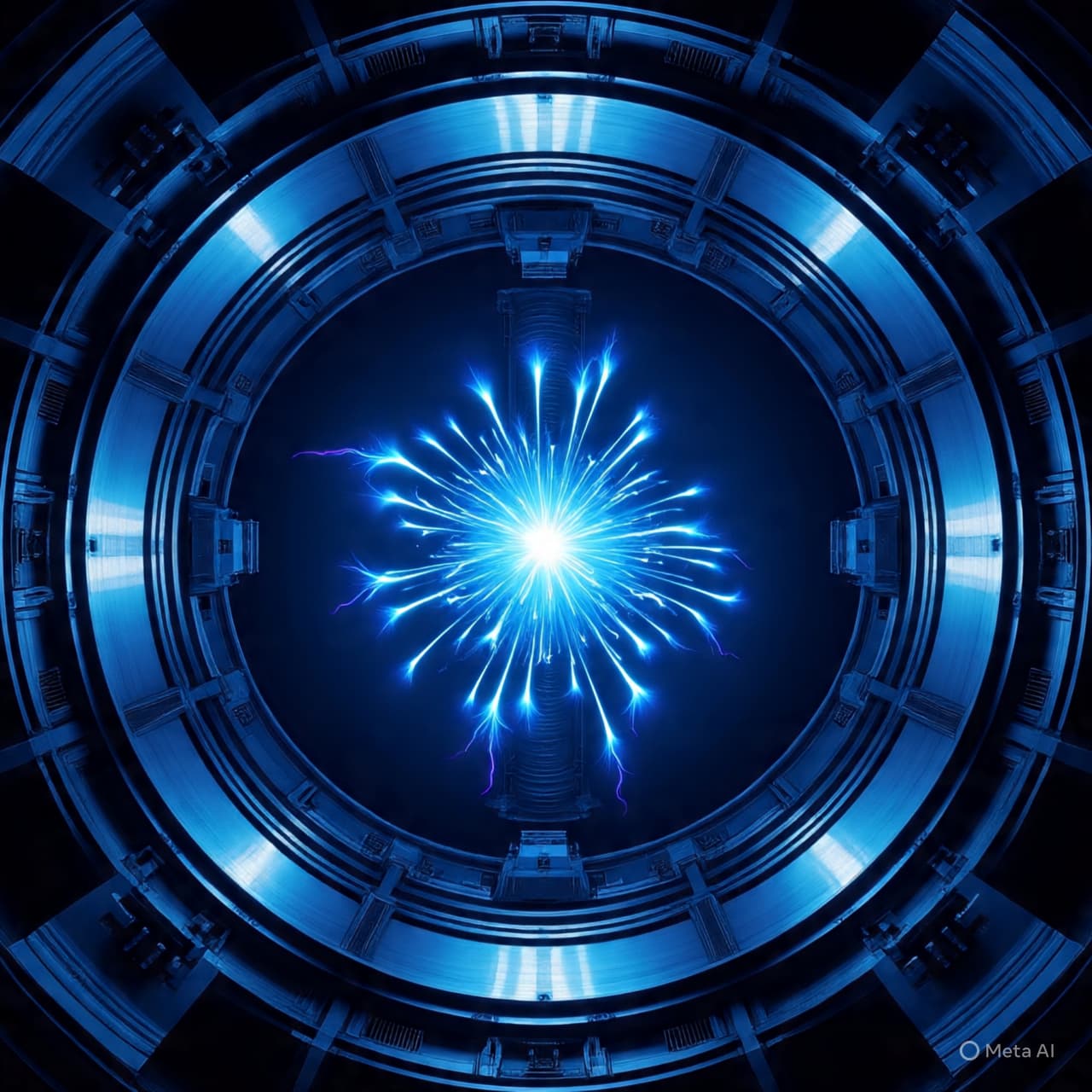
In powerful particle accelerators, scientists have collided heavy ions at nearly the speed of light, briefly generating temperatures hotter than the core of any star. These experiments, conducted at facilities such as CERN and Brookhaven National Laboratory, allow researchers to glimpse a state of matter known as quark–gluon plasma. This exotic substance is believed to have filled the universe microseconds after the Big Bang, before protons and neutrons formed, before atoms took shape, before light could travel freely.
For years, many assumed this primordial matter would behave like a thin gas, its particles darting freely in extreme heat. Instead, what experiments revealed was closer to a dense liquid—thick, flowing, and astonishingly smooth. The plasma moved with almost no internal friction, more like a near-perfect fluid than a disordered cloud. Rather than scattering randomly, quarks and gluons appeared to flow together, as if bound by a subtle choreography written into the laws of physics themselves.
This finding gently reshapes our understanding of cosmic beginnings. It suggests that even in its most violent infancy, the universe possessed a kind of cohesion. The “soup” was not a metaphorical flourish but a physical reality—a seething broth of fundamental particles interacting intensely, transferring energy collectively rather than independently. In that first millisecond, matter had not yet solidified into the building blocks of galaxies, but it was already expressing patterns of unity.
Physicists describe this quark–gluon plasma as one of the most perfect liquids ever observed. Its viscosity approaches a theoretical lower limit predicted by quantum physics. That detail, though technical, carries poetic weight: at the dawn of time, matter flowed with extraordinary harmony. The early universe was less like an explosion scattering debris and more like a tide rolling outward from a singular origin.
By recreating these fleeting conditions, scientists are not attempting to relive the Big Bang, but to understand the grammar of existence. Each collision inside a particle accelerator becomes a brief echo of creation, a reminder that the cosmos was once small enough to fit within a laboratory chamber—if only for a fraction of a second.
The discovery does not overturn cosmology; rather, it deepens it. It invites us to imagine the universe not as a sudden blaze that cooled into structure, but as a hot, luminous ocean that gradually crystallized into stars and galaxies. In that first millisecond, before light had meaning and before space stretched into its vastness, the universe flowed—dense, collective, and surprisingly smooth.
Today, as researchers continue refining their measurements, the early universe appears less like a violent scatter of fragments and more like a unified surge of energy becoming matter. The image of a cosmic soup may sound humble, even domestic, but it carries profound implications. From that thick, radiant broth emerged everything: hydrogen clouds, spiral galaxies, planets, oceans, and eventually, us.
In the quiet hum of modern laboratories, physicists are still listening to that first moment. And what they hear is not chaos alone, but something fluid and deeply connected—a beginning that flowed before it fractured.
As experiments advance and data accumulates, scientists will continue testing how this primordial plasma behaved and how it cooled into the particles that form today’s universe. For now, the findings suggest that the earliest chapter of cosmic history was marked not only by extreme heat, but by an unexpected smoothness that shaped everything that followed.
AI Image Disclaimer
Illustrations were produced with AIIn the beginning, there was no sky to look up to, no ground to stand on, no distance to measure. There was only heat—immeasurable, blinding, absolute. The universe, in its first breath, did not resemble the glittering cosmos we know today. It was not a tapestry of stars but a churning ocean without shores. For decades, physicists have tried to understand that first fleeting instant after the Big Bang, when everything we know was still undecided. Now, by recreating conditions from the universe’s first millisecond, they have found something unexpected: the early cosmos was not chaotic in the way we once imagined. It was, quite surprisingly, soupy.
In powerful particle accelerators, scientists have collided heavy ions at nearly the speed of light, briefly generating temperatures hotter than the core of any star. These experiments, conducted at facilities such as CERN and Brookhaven National Laboratory, allow researchers to glimpse a state of matter known as quark–gluon plasma. This exotic substance is believed to have filled the universe microseconds after the Big Bang, before protons and neutrons formed, before atoms took shape, before light could travel freely.
For years, many assumed this primordial matter would behave like a thin gas, its particles darting freely in extreme heat. Instead, what experiments revealed was closer to a dense liquid—thick, flowing, and astonishingly smooth. The plasma moved with almost no internal friction, more like a near-perfect fluid than a disordered cloud. Rather than scattering randomly, quarks and gluons appeared to flow together, as if bound by a subtle choreography written into the laws of physics themselves.
This finding gently reshapes our understanding of cosmic beginnings. It suggests that even in its most violent infancy, the universe possessed a kind of cohesion. The “soup” was not a metaphorical flourish but a physical reality—a seething broth of fundamental particles interacting intensely, transferring energy collectively rather than independently. In that first millisecond, matter had not yet solidified into the building blocks of galaxies, but it was already expressing patterns of unity.
Physicists describe this quark–gluon plasma as one of the most perfect liquids ever observed. Its viscosity approaches a theoretical lower limit predicted by quantum physics. That detail, though technical, carries poetic weight: at the dawn of time, matter flowed with extraordinary harmony. The early universe was less like an explosion scattering debris and more like a tide rolling outward from a singular origin.
By recreating these fleeting conditions, scientists are not attempting to relive the Big Bang, but to understand the grammar of existence. Each collision inside a particle accelerator becomes a brief echo of creation, a reminder that the cosmos was once small enough to fit within a laboratory chamber—if only for a fraction of a second.
The discovery does not overturn cosmology; rather, it deepens it. It invites us to imagine the universe not as a sudden blaze that cooled into structure, but as a hot, luminous ocean that gradually crystallized into stars and galaxies. In that first millisecond, before light had meaning and before space stretched into its vastness, the universe flowed—dense, collective, and surprisingly smooth.
Today, as researchers continue refining their measurements, the early universe appears less like a violent scatter of fragments and more like a unified surge of energy becoming matter. The image of a cosmic soup may sound humble, even domestic, but it carries profound implications. From that thick, radiant broth emerged everything: hydrogen clouds, spiral galaxies, planets, oceans, and eventually, us.
In the quiet hum of modern laboratories, physicists are still listening to that first moment. And what they hear is not chaos alone, but something fluid and deeply connected—a beginning that flowed before it fractured.
As experiments advance and data accumulates, scientists will continue testing how this primordial plasma behaved and how it cooled into the particles that form today’s universe. For now, the findings suggest that the earliest chapter of cosmic history was marked not only by extreme heat, but by an unexpected smoothness that shaped everything that followed.
AI Image Disclaimer
Illustrations were produced with AI and serve as conceptual depictions.
Sources
Nature Science BBC News The New York Times Scientific American
Published by Banx Network. This article is part of the Banx decentralized media programme, powered by the BXE token on the XRP Ledger.