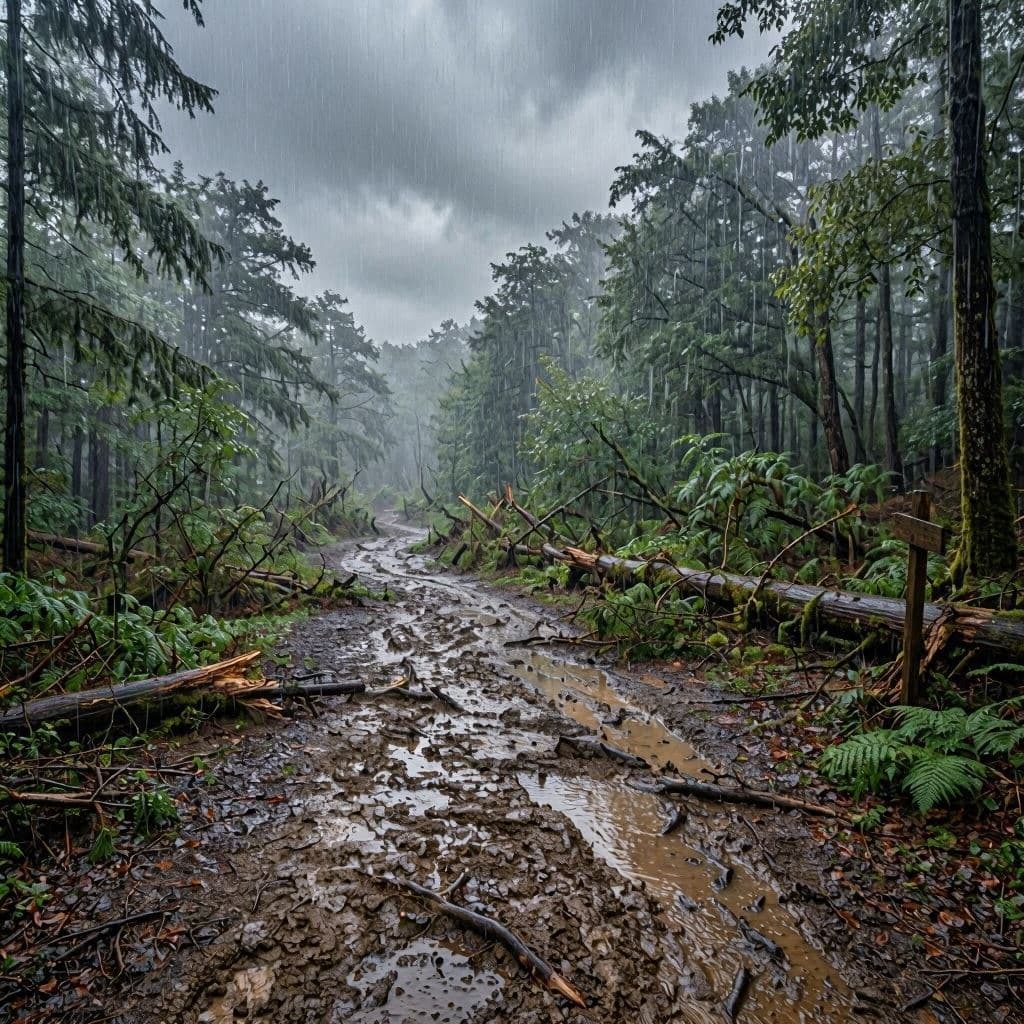
Along the rugged and untamed coastline of Vancouver Island, where the Pacific Ocean meets ancient forests, the West Coast Trail is renowned for its breathtaking beauty and challenging terrain. However, recent heavy rains have transformed this iconic hiking route into a hazardous landscape, prompting authorities to initiate evacuations for stranded hikers. The deluge has swollen rivers, washed out sections of the trail, and rendered many areas impassable, serving as a stark reminder of nature’s unpredictability and power. For those who ventured into the wild seeking solitude, the experience has become a test of resilience and patience.
The situation highlights the delicate balance between adventure and safety in remote environments. It invites reflection on how we prepare for the unexpected and respect the forces that shape our natural world.
Body: Parks Canada and local search and rescue teams have been working tirelessly to locate and assist hikers caught in the worsening conditions. The trail, which spans 75 kilometers through dense rainforest and along exposed beaches, relies on a network of ladders, bridges, and boardwalks that are vulnerable to extreme weather. Recent storms have damaged several of these structures, cutting off access and trapping groups in isolated campsites.
Helicopters and boats have been deployed to reach those who cannot evacuate on foot. The operation is complex, requiring careful coordination due to poor visibility and strong winds. Rescuers are prioritizing individuals with medical needs or those in immediate danger from rising tides and landslides. The commitment of these teams ensures that no hiker is left behind, even in the most difficult circumstances.
For the hikers, the experience has been both frightening and humbling. Many reported being stuck for days without adequate supplies, relying on emergency rations and the kindness of fellow trekkers. The psychological toll of being stranded in such a remote location is significant, underscoring the importance of mental preparedness alongside physical gear.
Weather forecasts indicate that more rain is expected, further complicating recovery efforts. Authorities have closed the trail indefinitely until assessments can be made and repairs completed. This decision, while disappointing for aspiring hikers, is necessary to prevent further incidents and ensure the long-term sustainability of the path.
The West Coast Trail is known for its difficulty, often described as one of the toughest hikes in North America. Yet, the allure of its pristine wilderness draws thousands each year. This incident serves as a cautionary tale about the need for thorough planning, including checking weather updates and having contingency plans for evacuation.
Local communities on Vancouver Island have rallied to support the effort, offering shelter and resources to evacuated hikers. The spirit of hospitality and mutual aid is a hallmark of the region, demonstrating how crises can bring people together. Residents understand the risks of living in such a dynamic environment and respond with compassion.
Environmental experts note that climate change is increasing the frequency and intensity of such weather events. Infrastructure in national parks may need to be adapted to withstand heavier rainfall and stronger storms. Investment in resilient design is crucial for preserving access to these natural treasures.
As the rains continue, the focus remains on safety and recovery. Once the trail is deemed safe, it will reopen with renewed appreciation for its challenges. Until then, the forest waits, quiet and powerful, reminding us of our place within it.
Closing: The evacuations on the West Coast Trail highlight the risks of hiking in extreme weather. It invites hikers to prioritize safety and respect the unpredictable nature of the wilderness.
AI Image Disclaimer: The visuals accompanying this article are AI-generated illustrations designed to reflect the rugged beauty and challenging conditions of the West Coast Trail.
Sources: CBC News Parks Canada Global News BC CTV News Vancouver Island
Published by Banx Network. This article is part of the Banx decentralized media programme, powered by the BXE token on the XRP Ledger.