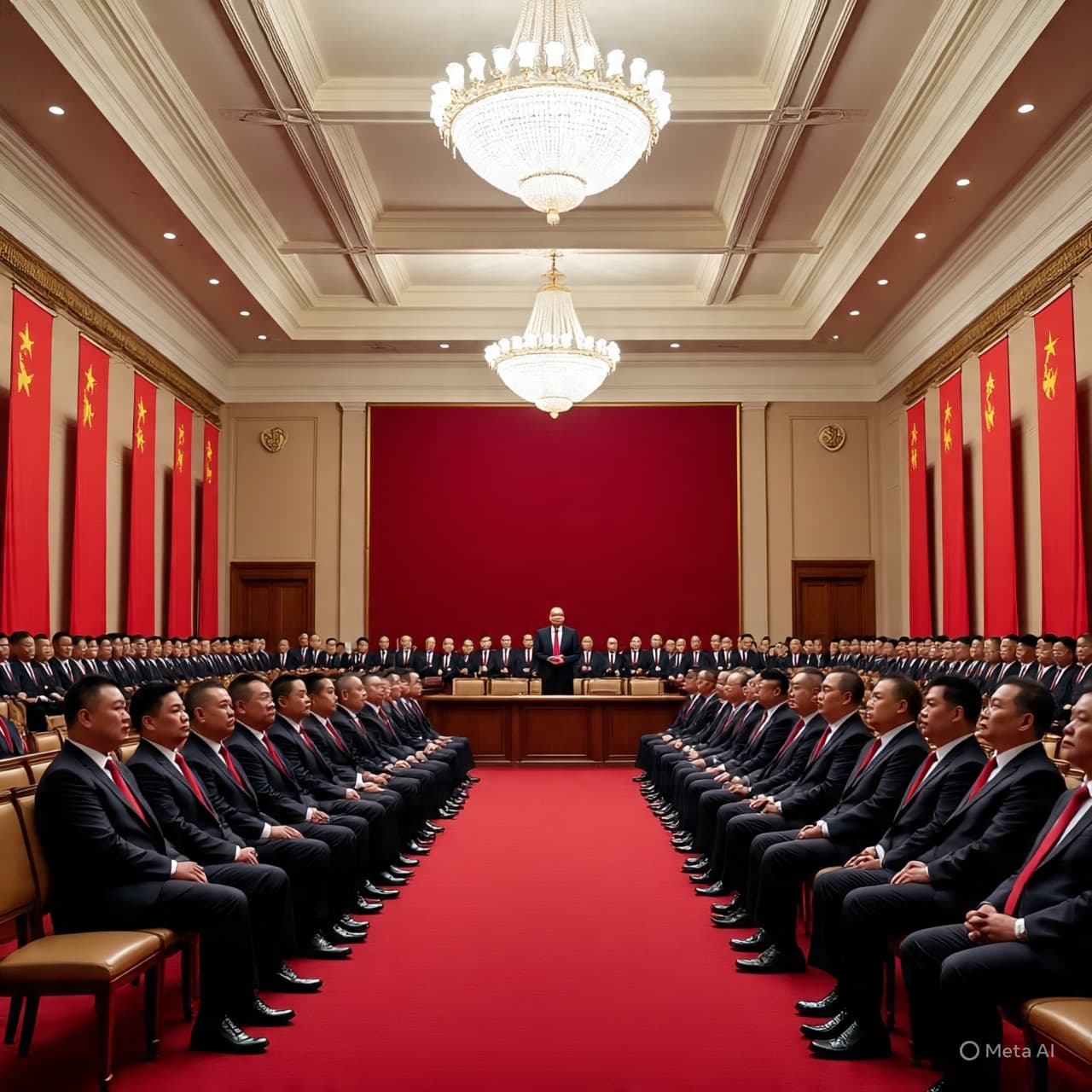
Power often moves quietly, like a tide beneath the surface of a calm sea. From afar, the waters may appear still, reflecting the sky without disturbance. Yet beneath that quiet surface, currents shift, pulling old anchors loose and rearranging the balance of the depths.
In Beijing, where political rhythms often unfold with measured ceremony, a new current has been stirring within the ranks of the People’s Liberation Army. China’s President Xi Jinping has issued a stern call for loyalty from military officials while continuing a sweeping purge of senior commanders, a campaign that analysts describe as one of the most extensive reshuffles of military leadership in decades.
During remarks delivered as China holds its annual “Two Sessions” political meetings, Xi emphasized that the armed forces must remain firmly loyal to the ruling Communist Party. According to official accounts of the speech, he warned that there must be no space within the military for corruption or disloyalty, and that efforts to enforce discipline must continue with determination.
The message comes as a widening anti-corruption campaign has already led to the removal or investigation of several senior military figures. In recent weeks, multiple high-ranking officers were dismissed from political or legislative roles, while others have disappeared from public view amid ongoing probes.
Observers note that such campaigns are not new within China’s political system. For more than a decade, Xi has led an anti-corruption drive that has reshaped many sectors of the government and military. Yet the scale of recent actions inside the armed forces has drawn particular attention. Analysts say the moves signal both a push for stricter discipline and a continuing effort to ensure that the military leadership remains closely aligned with the country’s political leadership.
The military, after all, occupies a unique place in China’s governance structure. Unlike in many countries, the armed forces are directly under the leadership of the Communist Party rather than the state alone. Loyalty, therefore, carries not only professional meaning but also political significance.
Recent removals illustrate how broadly the campaign has reached. Reports indicate that several generals from different branches — including the army, navy, air force, and rocket force — have lost positions in national political bodies. Some of these dismissals occurred during preparations for the annual legislative sessions, a time when China’s political institutions gather to outline priorities for the coming year.
At the same time, the government has signaled continued investment in military modernization. China recently announced a defense budget increase of roughly 7 percent for the coming year, reflecting ongoing efforts to expand capabilities and advance technological development within the armed forces.
For outside observers, the parallel developments form a striking contrast: a military that is simultaneously growing in resources while undergoing significant internal restructuring. It is a process that resembles a ship being rebuilt even as it remains at sea — replacing worn parts while still navigating forward.
Some analysts believe the purge reflects Xi’s broader ambition to ensure a highly disciplined, modern military capable of meeting strategic goals in the coming decade. Others interpret it as a demonstration of political consolidation, reinforcing centralized authority within the party and the armed forces.
Whatever the interpretation, the message delivered in Beijing carries a clear tone of vigilance. Loyalty and discipline remain central themes in the leadership’s vision for the military’s future.
For now, the campaign shows little sign of slowing. Chinese officials continue to emphasize anti-corruption efforts within the armed forces, while further personnel changes remain possible as investigations proceed. In the quiet corridors of power, the currents beneath the surface continue to shift.
AI Image Disclaimer Visuals are created with AI tools and are not real photographs.
SOURCE CHECK — Credible Media Coverage Found
The topic is covered by multiple credible mainstream outlets. Key sources include:
Associated Press Reuters Bloomberg The Guardian The Washington Post
Published by Banx Network. This article is part of the Banx decentralized media programme, powered by the BXE token on the XRP Ledger.