
Key Highlights
- Incident:Four individuals lost their lives attempting to cross the English Channel.
- Rescue Efforts:Forty-two survivors were rescued from the frigid waters.
- Ongoing Issue:The tragedy underscores the dangers of human smuggling across the Channel.
The English Channel has always been a restless border, a grey expanse of churning salt and wind that separates two worlds with a deceptive, liquid indifference. Off the coast of northern France, near the quiet seaside stretches of Équihen-Plage, the dawn arrived with a chilling mist and the low, rhythmic roar of the tide. It is a landscape that feels ancient and unforgiving, where the light of the morning struggles to pierce through the heavy dampness of the Atlantic breath. In this liminal space, where the sand meets the surging deep, a quiet desperation often meets the uncompromising reality of the sea.
To board a vessel in such conditions is an act of profound, terrifying hope, a gamble taken when the land behind offers no sanctuary. The "taxi-boat," a motorized specter of the modern age, moved along the coastline like a ghost, seeking to avoid the watchful eyes of the shore patrols. There is a harrowing fragility to these small, overcrowded crafts, which appear as mere specks against the vast, dark architecture of the Channel. As the group waded into the surf, the water was not merely cold; it was a physical force, a reaching hand of the tide that sought to pull the unwary into its lightless embrace.
The currents at this particular curve of the coast are known for their sudden, invisible strength—a silent movement of the deep that can sweep the strongest swimmer away in a heartbeat. As the four individuals reached for the edge of the boat, the sea exerted its ancient authority. There was no loud outcry, only the frantic splashing of limbs against the swell and the sudden, devastating realization that the ground had vanished. Two men and two women were claimed by the water, their journeys ending just as they had truly begun, beneath a sky that remained stoically grey and silent.
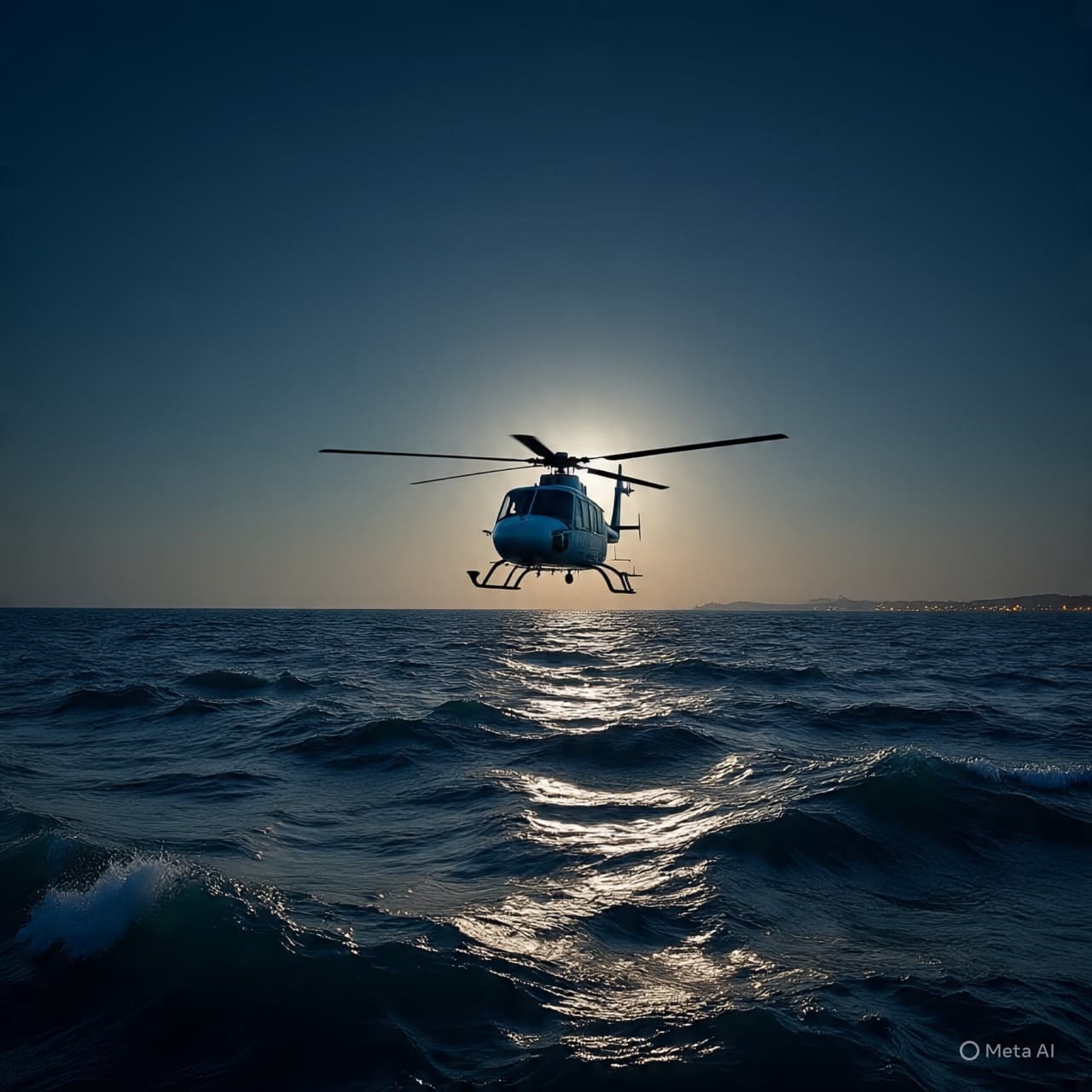
Rescue efforts, launched as the first pale light touched the waves, saw the arrival of the orange-clad sentinels of the coastguard and the low hum of helicopters overhead. Forty-two others were pulled from the frigid grasp of the water, their bodies shivering with the onset of hypothermia and the weight of what they had witnessed. There is a somber, methodical pace to such operations, a necessary clinical distance maintained by those who spend their lives pulling the living and the lost from the surf. The beach, usually a place of summer leisure, became a station of grief and medical triage.
The "taxi-boat," despite the chaos left in its wake, continued its restless journey toward the northern horizon, a silhouette of shadows disappearing into the deeper waters. It is a stark illustration of the cold efficiency of the smuggling networks, where the human element is often treated as secondary to the momentum of the crossing. Each departure is a thread in a much larger, darker tapestry that spans continents, ending here on the damp sands of Pas-de-Calais. The incident serves as a quiet, tragic punctuation mark in the ongoing narrative of the world’s displaced.
Authorities, standing on the windswept shore, spoke of provisional tolls and the relentless nature of the gangs that profit from these perilous transits. Their words were carried away by the same wind that had whipped the sea into a frenzy only hours before. There is a weary repetition to these briefings, a shared recognition that for all the patrols and the technology, the lure of the distant shore remains a powerful, often fatal, siren song. The coastline remains a site of vigil, where the beauty of the maritime world is forever tempered by the memory of those the water has taken.
As the survivors were taken to shelter and the search for the missing was scaled back, a heavy stillness returned to the beaches of Équihen and Écault. The sea continued its tireless work of smoothing the sand, erasing the footprints of the morning’s struggle as if they had never been. It is this capacity of the natural world to forget that is perhaps the most haunting aspect of the Channel. The waves do not carry the names of the lost; they only carry the salt and the cold, moving with a rhythm that has existed long before the first border was ever drawn.
In the quiet rooms of the prefecture, the investigation begins to trace the origins of the journey, seeking to understand the mechanics of the tragedy. Yet, the true weight of the loss is felt far from the official ledgers, in the families who wait for a message that will never arrive. The Channel remains a vast, liquid barrier, a place of transition and tragedy, where hope often meets despair.
Published by Banx Network. This article is part of the Banx decentralized media programme, powered by the BXE token on the XRP Ledger.



