
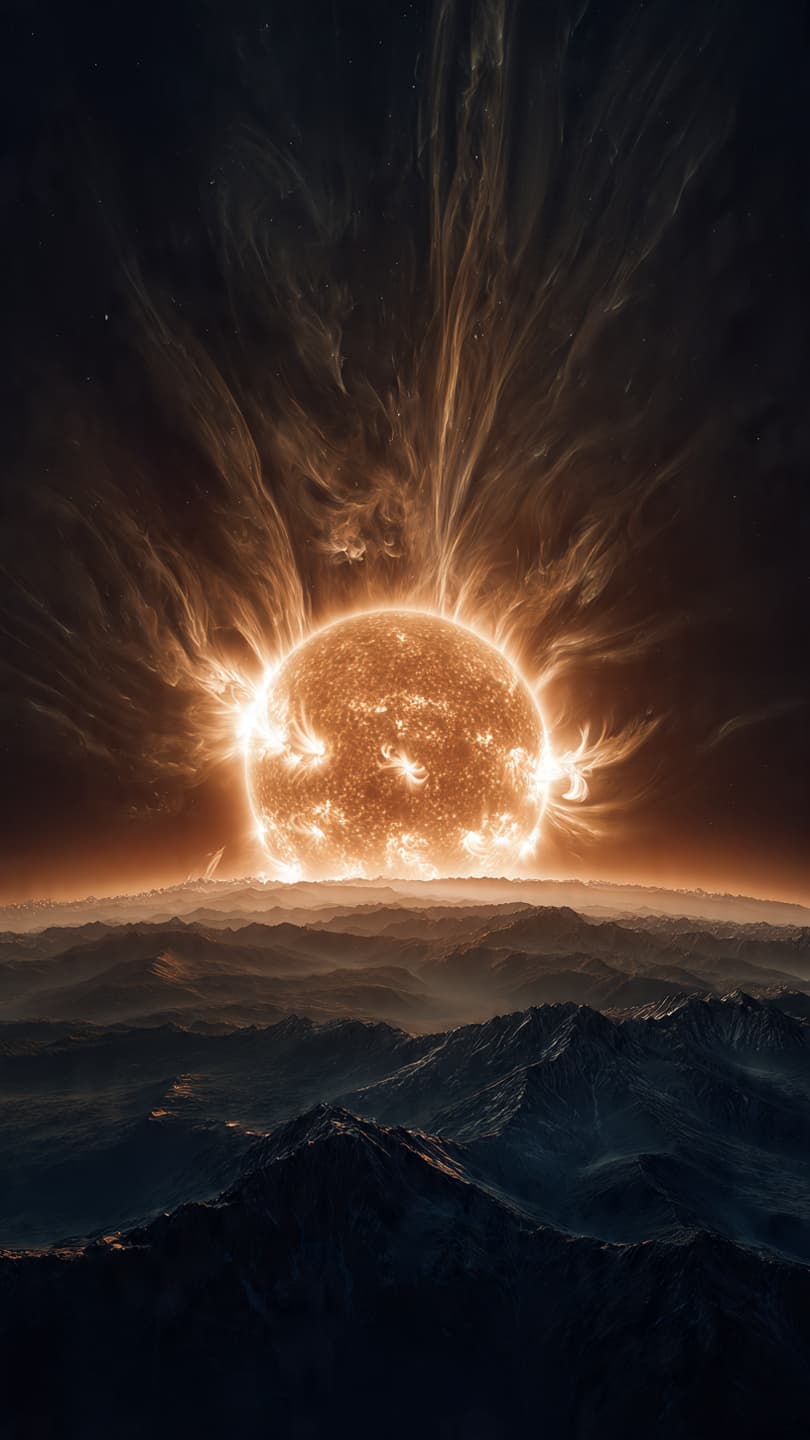
The Sun, often seen as a constant and steady presence, occasionally reveals its more volatile nature through bursts of intense energy. Recent solar activity has drawn attention as a significant flare disrupted radio communication systems on Earth, highlighting the delicate balance between space weather and modern infrastructure.
Solar flares occur when magnetic energy stored in the Sun’s atmosphere is suddenly released, producing radiation across multiple wavelengths. These events can travel toward Earth and interact with its upper atmosphere, affecting communication and navigation systems.
In this instance, the flare reached a level strong enough to disturb high-frequency radio signals, which are commonly used in aviation and maritime communication. The disruption was temporary but noticeable in several regions.
Scientists monitoring solar activity emphasize that such events are part of the Sun’s natural cycle. While they can create technological challenges, they also provide valuable data for understanding solar behavior and predicting future space weather impacts.
The interaction between solar emissions and Earth’s magnetosphere is a complex system, where charged particles can create both disruptions and visual phenomena such as auroras. These events are closely tracked by space weather monitoring agencies.
Modern society’s dependence on satellite systems and wireless communication makes solar activity more relevant than ever. Even short interruptions can affect navigation, timing systems, and data transmission networks.
Researchers continue to refine forecasting models in an effort to improve preparedness for stronger solar storms, which could have broader implications for power grids and orbital infrastructure.
In conclusion, the recent solar flare serves as a reminder of the Sun’s dynamic nature and its ongoing influence on Earth’s technological systems.
AI Image Disclaimer: Images accompanying this article are AI-generated conceptual illustrations intended for editorial use.
Source Verification Check: NASA Space Weather Center, NOAA, SpaceWeather.com, BBC Science, Science News
Published by Banx Network. This article is part of the Banx decentralized media programme, powered by the BXE token on the XRP Ledger.



