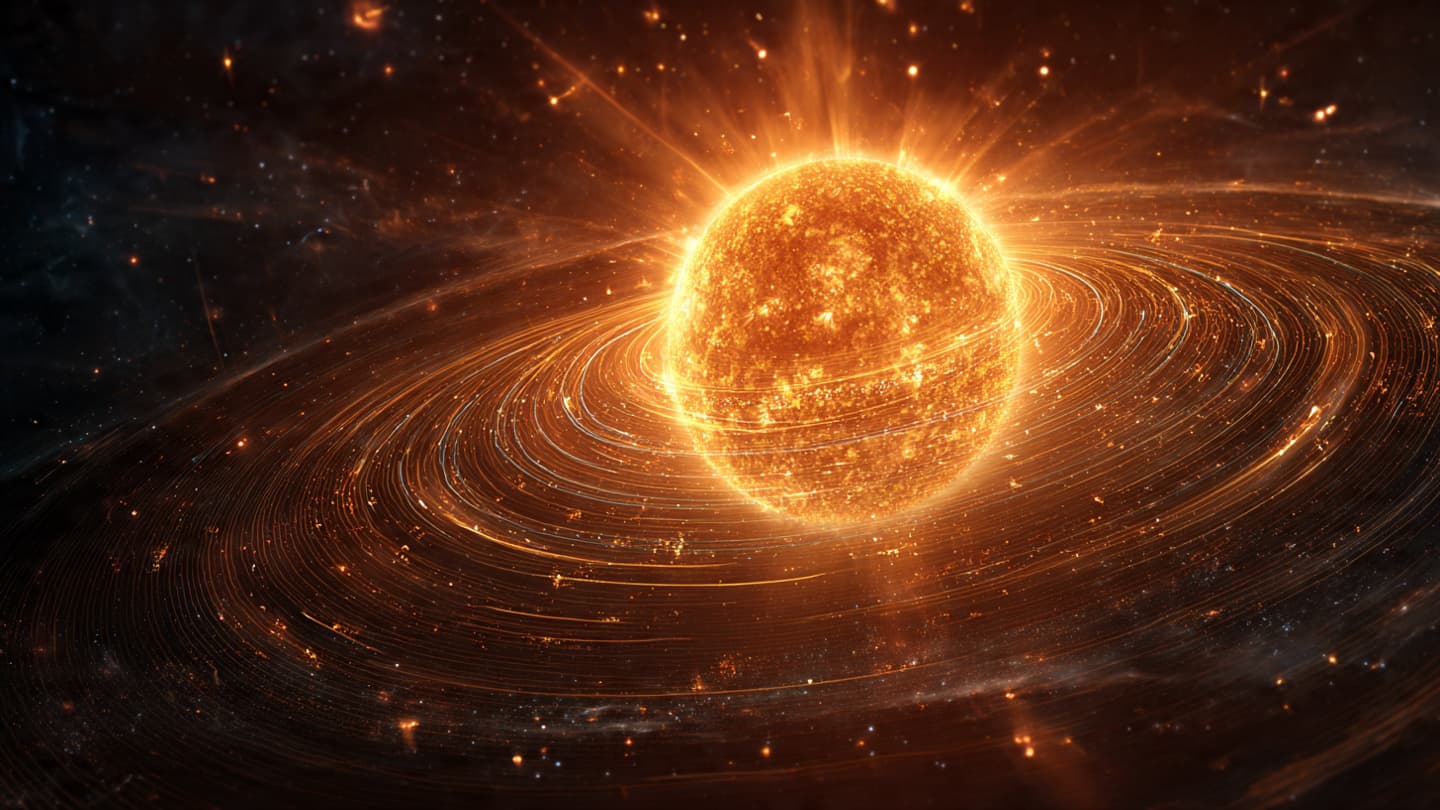
The Sun has always been humanity’s most constant companion—rising and setting with familiar certainty. Yet beneath its steady appearance lies a dynamic system of magnetic fields, plasma flows, and energetic bursts that continue to surprise modern science.
Recent observations reported by NASA’s solar monitoring missions, and discussed in outlets such as ScienceDaily and Space Weather Prediction Center updates, indicate the detection of unusual solar radio bursts. These signals exhibited longer durations and atypical patterns compared to standard solar radio emissions.
Solar radio bursts are typically linked to solar flares or coronal mass ejections, where magnetic energy is suddenly released. However, the latest observations suggest variations that do not fully align with established categories.
Scientists use space-based observatories to study these emissions because Earth’s atmosphere can distort or block certain frequencies. Instruments positioned in orbit allow for clearer analysis of solar activity in real time.
The unusual characteristics of these bursts may indicate complex interactions in the Sun’s corona that are not yet fully understood. Researchers are investigating whether these signals represent rare events or part of a broader, previously unrecognized pattern.
Although such bursts are not necessarily dangerous, strong solar activity can affect satellite operations, GPS systems, and communication networks on Earth. Understanding these patterns is therefore essential for space weather prediction and technological resilience.
Further studies are underway to compare these events with historical solar cycles and determine whether similar anomalies have occurred in the past.
The Sun continues to reveal that even the most familiar celestial body still holds layers of complexity waiting to be understood.
AI Image Disclaimer: Images in this article are AI-generated for editorial visualization purposes.
Sources: NASA, Space Weather Prediction Center, ScienceDaily, Nature Astronomy
Published by Banx Network. This article is part of the Banx decentralized media programme, powered by the BXE token on the XRP Ledger.