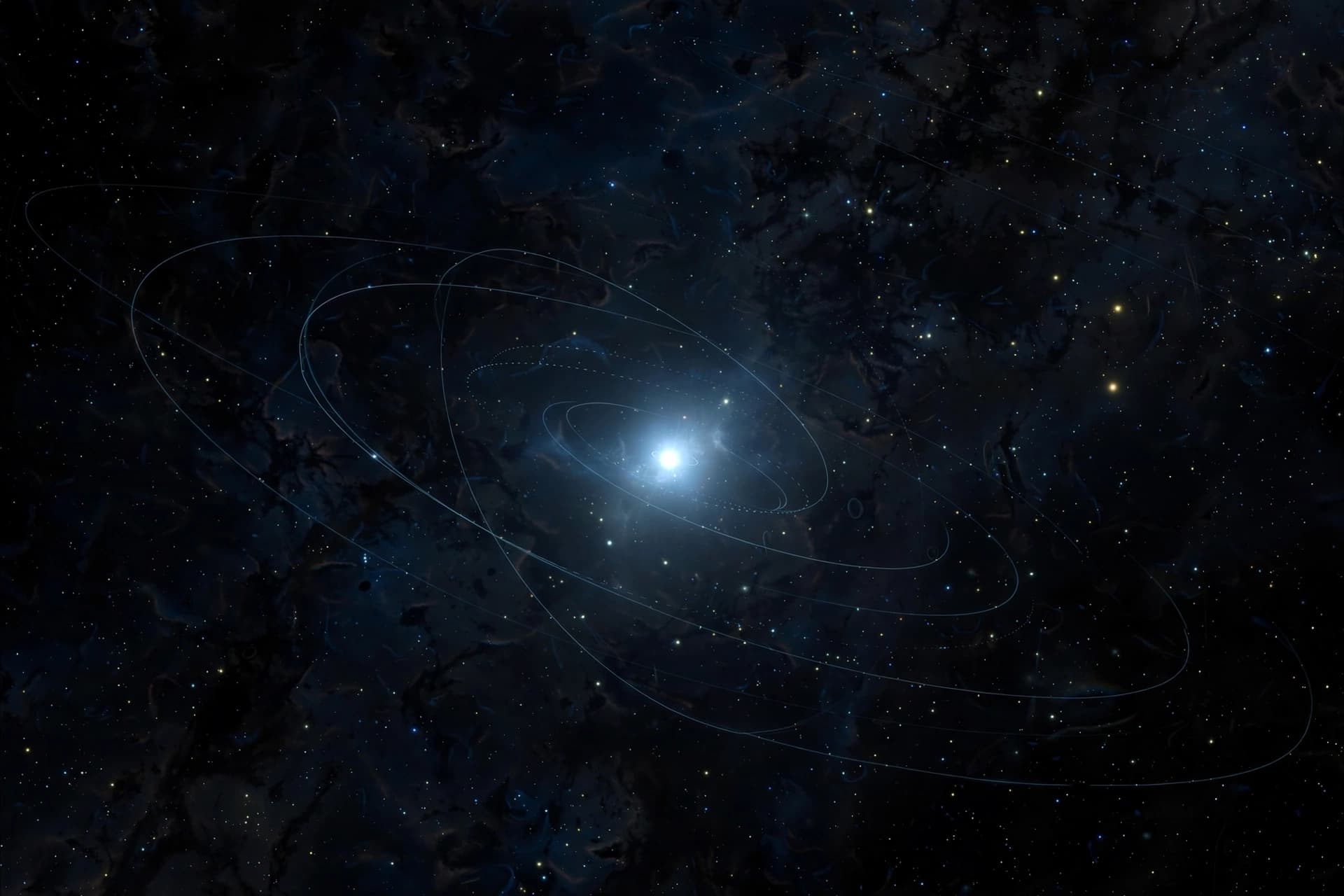
There are moments in the vast theater of space when destruction does not arrive with violence, but with a kind of quiet inevitability. The Sun, often seen as a life-giving force, can also act as a patient sculptor—peeling away the surface of celestial wanderers that dare to drift too close.
Recent observations have revealed an asteroid undergoing precisely this transformation. Drawn inward by gravitational forces, the object has ventured into a region where solar radiation intensifies beyond endurance. Instead of remaining intact, it has begun to fracture, shedding layers of rock and dust in a slow-motion unraveling.
Astronomers describe this process as thermal fragmentation. As the asteroid nears the Sun, its surface heats unevenly, expanding and cracking under stress. Over time, these fractures deepen, releasing streams of debris that trail behind like a fading echo.
What makes this event particularly compelling is its proximity—not in distance, but in consequence. Earth, in its steady orbit, is now passing through the diffuse remnants of this disintegrating body. While the particles are small and largely harmless, they form a faint, almost invisible river of cosmic dust.
Scientists note that such encounters are not entirely uncommon, though rarely observed in such clarity. Instruments capable of tracking fine particulate matter have allowed researchers to map this debris field with increasing precision, offering insights into the life cycles of small solar system bodies.
The fragments themselves vary in size, from microscopic grains to pebble-like remnants. As they drift through space, some may eventually enter Earth’s atmosphere, burning up as meteors—brief streaks of light that hint at a much larger story unfolding beyond view.
There is no immediate danger associated with this phenomenon. Experts emphasize that Earth’s atmosphere acts as a natural shield, disintegrating incoming particles long before they reach the surface. The event remains, for now, a subject of study rather than concern.
Yet, in a broader sense, it serves as a reminder of the Sun’s dual nature. It sustains life on Earth while quietly reshaping the architecture of the solar system, breaking down what once seemed permanent.
As Earth continues its journey through this delicate debris, the encounter becomes less about risk and more about perspective. Even in destruction, there is a kind of continuity—a transformation that keeps the cosmos in motion.
AI Image Disclaimer: Images in this article are AI-generated illustrations, meant for concept only
Source Check: NASA ESA (European Space Agency) Nature Astronomy Space.com Scientific American
Published by Banx Network. This article is part of the Banx decentralized media programme, powered by the BXE token on the XRP Ledger.