The streets of Iran have long known how to carry echoes. At times, they hum with ordinary life — footsteps, conversations, the rhythm of commerce. At other moments, they absorb something heavier: raised voices, hurried movement, and the tension that gathers when frustration spills beyond private spaces and into public view. In recent days, those streets have again become witnesses to unrest, and this time, they have also borne the weight of a life lost.
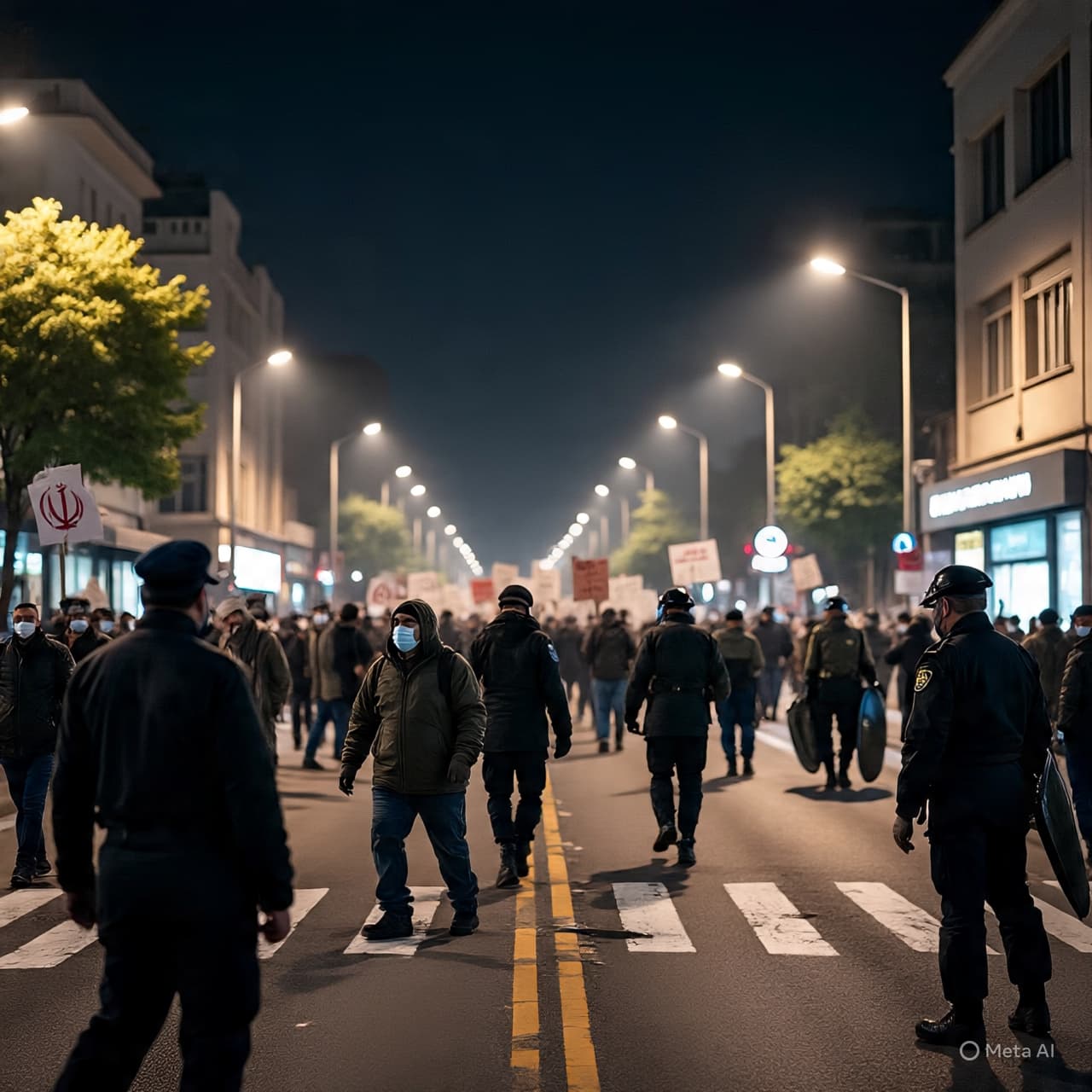
Iranian officials say a member of the country’s security forces was killed during protests that erupted amid growing economic pressure and public discontent. The demonstrations, reported in several cities, unfolded against a backdrop of rising prices, persistent sanctions, and a population grappling with daily uncertainty. What began as expressions of grievance, authorities say, escalated into confrontations that proved deadly.
According to official accounts, the security force member was killed during clashes with protesters, though details surrounding the incident remain limited. State media described the death as occurring in the line of duty, framing it as a reminder of the risks faced by those deployed to manage unrest. The identity of the officer and the precise circumstances have not been fully disclosed, a common pattern in moments of heightened tension.
The protests themselves reflect deeper currents that have been flowing through Iranian society for years. Economic hardship has been a recurring spark, igniting demonstrations over fuel prices, wages, and living costs. Each wave carries familiar scenes: gatherings swelling after dark, chants rising in defiance, and a swift security response aimed at restoring order. In this charged environment, the boundary between control and chaos often grows thin.
Authorities have emphasized that security forces are tasked with maintaining stability, even as anger and despair push people into the streets. At the same time, rights groups and observers have long noted the human cost on all sides during such confrontations — protesters injured or detained, and security personnel placed in volatile, unpredictable situations.
This latest death adds another layer to an already complex picture. It underscores how unrest in Iran is not an abstract political struggle, but a series of real, human encounters, where fear, duty, and frustration collide. Each casualty, regardless of role, deepens the sense of strain between state and society.
Officials say investigations are ongoing, and additional security measures have been deployed in affected areas. Public messaging has called for calm, even as authorities warn against further unrest. For now, the streets have quieted, though their silence feels tentative, as if holding unresolved questions beneath the surface.
In the end, the death of a security force member during these protests stands as a stark marker of how fragile moments of order can become when pressures accumulate. It is a single event within a larger story — one that continues to unfold, shaped by economics, governance, and the enduring challenge of finding stability amid widespread discontent.
AI Image Disclaimer Visuals in this article are created using AI tools and are intended as conceptual illustrations rather than real photographs.
Sources Reuters Associated Press The Guardian Hurriyet Daily News Iranian state media
Published by Banx Network. This article is part of the Banx decentralized media programme, powered by the BXE token on the XRP Ledger.