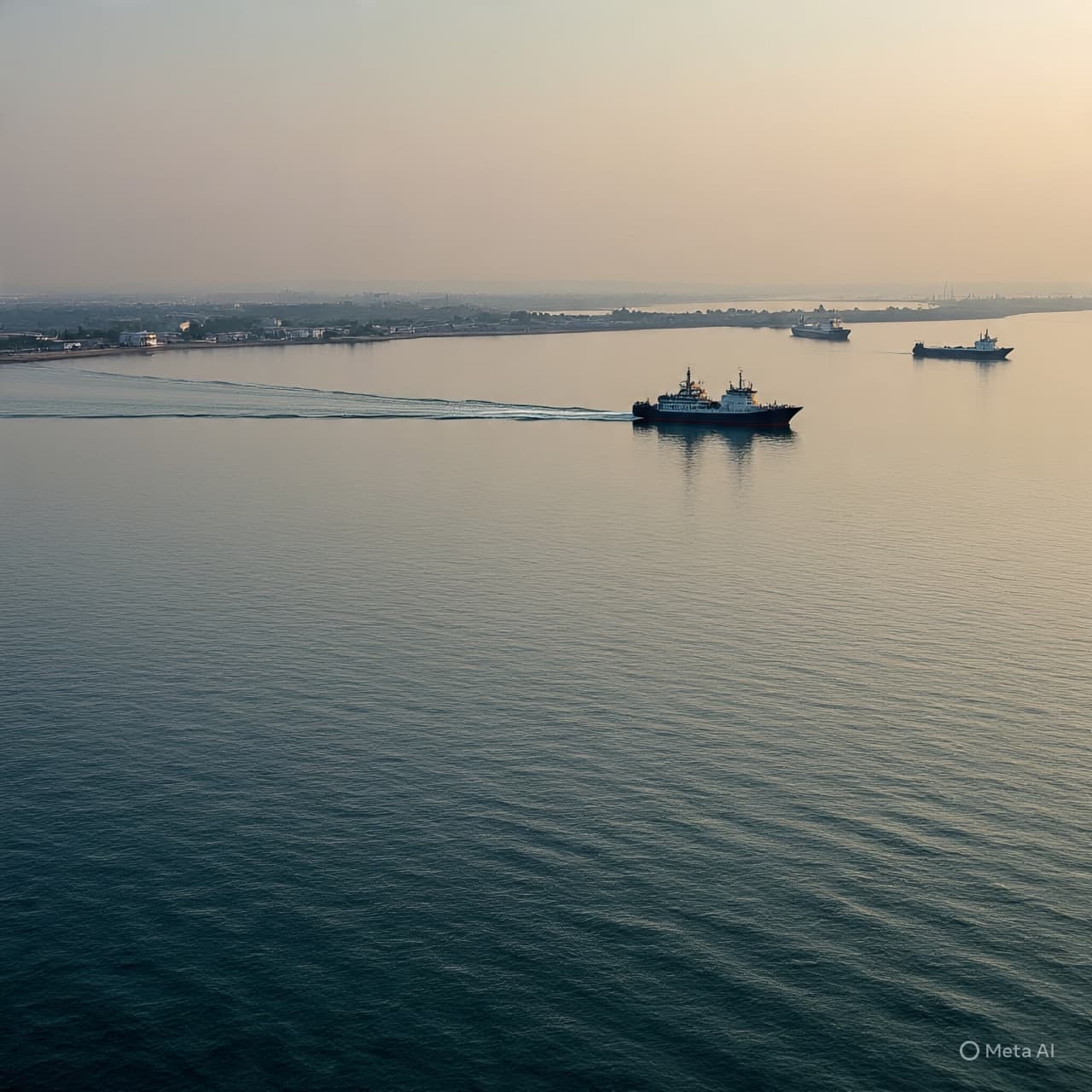
There are moments in global affairs when silence speaks louder than declarations, when the absence of agreement echoes like a distant storm over calm waters. The Strait of Hormuz—narrow, restless, and endlessly watched—has long been one such place, where the tides carry not only oil, but also the weight of uncertainty. In this fragile corridor, words are measured carefully, and denials can ripple just as far as promises.
Recently, Iran has firmly denied engaging in negotiations with the United States to bring an end to ongoing tensions, dismissing suggestions of backchannel diplomacy as speculation rather than substance. The statement arrives not with the sharpness of confrontation, but with the steadiness of a country intent on controlling its narrative. Like a lighthouse refusing to flicker in the wind, Tehran maintains its position: there has been no shift, no quiet compromise unfolding behind closed doors.
At the heart of this denial lies the enduring question of the Strait of Hormuz. This strategic passage, through which a significant portion of the world’s energy supply flows, remains a symbol of both vulnerability and leverage. Iran has reiterated that its stance regarding the strait is unchanged, suggesting that any expectations of flexibility may be premature. The message is not delivered as a threat, but rather as a reminder—of geography, of sovereignty, and of long-standing policy.
Observers have often viewed the strait as a pressure point, a place where tensions could tighten with little warning. Yet, Iran’s recent remarks seem to frame it differently—not as an immediate trigger, but as a constant, an unaltered element in a shifting geopolitical landscape. In doing so, the country appears to be signaling continuity rather than escalation, even as speculation continues to swirl beyond its borders.
The absence of negotiations, as emphasized by Iranian officials, also reflects a broader atmosphere of mistrust. Years of strained relations have built layers of caution that are not easily peeled away. In such an environment, even the idea of dialogue can feel distant, like a horizon that recedes as one moves toward it. And yet, the conversation about that possibility persists, carried forward by analysts, diplomats, and the quiet hopes of stability.
For the global community, the situation invites careful attention rather than immediate conclusions. The denial of talks does not necessarily close the door to future engagement, nor does it confirm an inevitable path toward further conflict. Instead, it underscores the complexity of a relationship shaped by history, perception, and strategic calculation.
As the waters of the Strait of Hormuz continue their steady flow, so too does the rhythm of international discourse—measured, cautious, and often unresolved. Iran’s position, unchanged for now, adds another layer to this unfolding narrative. Whether it signals a pause, a stalemate, or simply a moment of clarity remains to be seen, as the world watches the horizon with quiet anticipation.
AI Image Disclaimer Visuals are created with AI tools and are not real photographs.
Source Check
Credible coverage exists from major international outlets:
Reuters
Al Jazeera
BBC News
The New York Times
The Guardian
Published by Banx Network. This article is part of the Banx decentralized media programme, powered by the BXE token on the XRP Ledger.