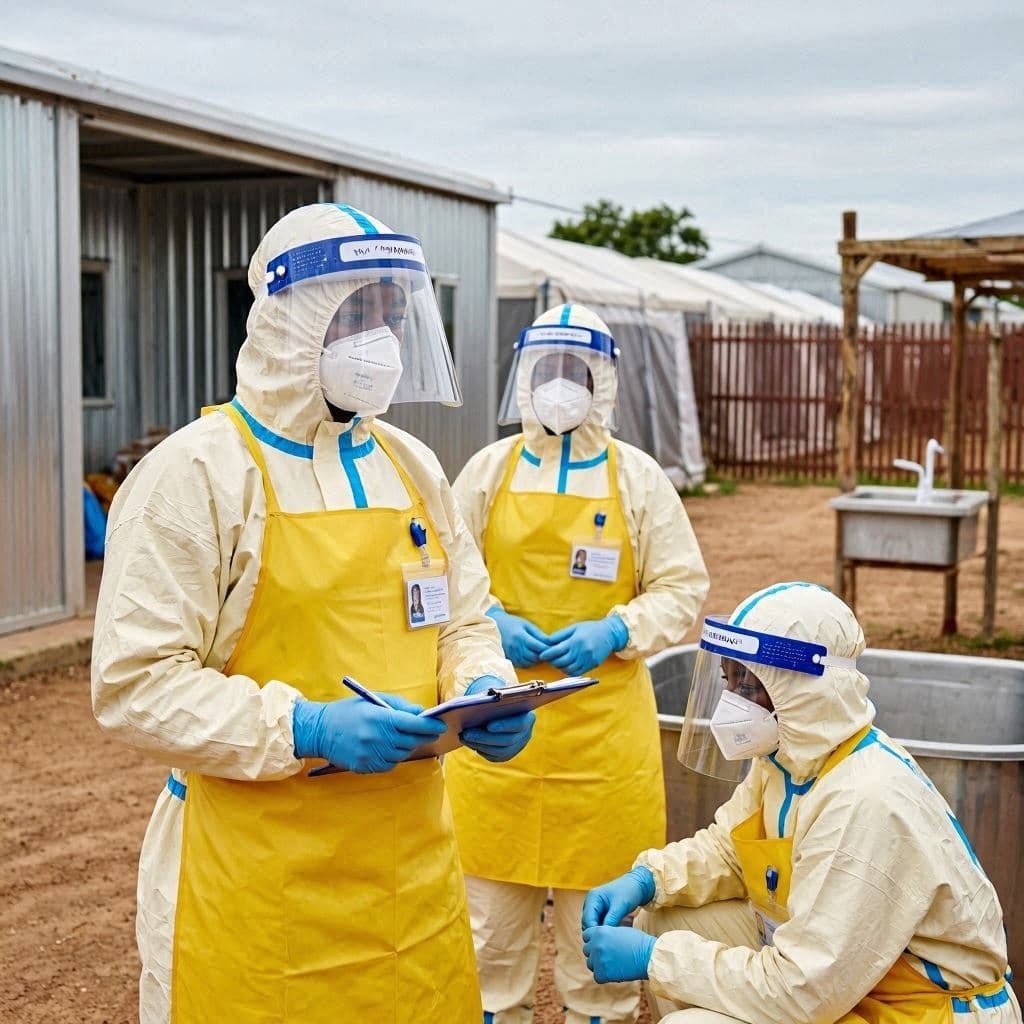
Even the strongest rivers can overflow when relentless rain falls faster than the land can absorb it. Public health emergencies often follow a similar course, beginning with isolated cases before gathering momentum that tests the resilience of communities and healthcare systems alike. In the eastern Democratic Republic of the Congo, the latest Ebola outbreak has become a profound reminder that infectious diseases can move with unsettling speed when conflict, limited resources, and fragile infrastructure converge.
Authorities in the Democratic Republic of the Congo have announced that the country's ongoing Ebola outbreak has claimed more than 1,500 lives, making it the fastest-growing Ebola outbreak ever recorded. Official figures reported more than 3,400 confirmed cases, with the outbreak continuing to expand across several provinces despite an extensive public health response.
The outbreak, declared in May 2026, is caused by the Bundibugyo strain of the Ebola virus. Unlike the Zaire strain responsible for several previous outbreaks, the Bundibugyo variant currently has no approved vaccine or specific treatment, increasing the difficulty of containing transmission while researchers continue evaluating experimental medical approaches.
Health officials say the epidemic has been driven by multiple overlapping challenges. Armed conflict in eastern Congo has disrupted healthcare operations, while population displacement, limited access to affected communities, and insecurity have complicated contact tracing and disease surveillance. In several instances, attacks on health facilities have temporarily interrupted emergency response activities.
Another significant concern is that many recent deaths have occurred outside designated Ebola treatment centers. Public health experts warn that when patients remain in their communities during illness or after death, opportunities for further transmission increase, particularly during traditional caregiving and funeral practices involving close physical contact.
The World Health Organization and Africa CDC continue supporting Congolese authorities through surveillance, laboratory testing, infection prevention, community education, and international coordination. While officials currently assess the global public health risk as relatively low, they emphasize that the regional situation remains serious and requires sustained international assistance.
Humanitarian organizations have also highlighted the broader consequences of the outbreak. Restrictions on movement, disruptions to local markets, and ongoing insecurity have deepened food insecurity in parts of eastern Congo, placing additional pressure on families already coping with conflict and disease. International agencies continue appealing for increased funding and resources to strengthen both the health response and humanitarian support.
As response efforts continue, Congolese authorities and international health partners remain focused on slowing transmission through early detection, community engagement, and strengthened medical care. Although the outbreak has reached a sobering milestone, health officials maintain that coordinated action and sustained public cooperation remain essential to limiting further spread and protecting vulnerable communities.
AI Image Disclaimer:
The illustrations accompanying this article are AI-generated visual representations intended for informational purposes and do not depict actual scenes from the reported events.
Sources:
Associated Press (AP) Reuters World Health Organization (WHO) Africa Centres for Disease Control and Prevention (Africa CDC)
Published by Banx Network. This article is part of the Banx decentralized media programme, powered by the BXE token on the XRP Ledger.