
Key Highlights
- U.S. Political Uncertainty: The potential for a second Trump presidency raises fears of aggressive tariff diplomacy.
- Global Trade Diversification:Countries are strengthening ties with one another to mitigate risks associated with U.S. trade policies.
- Shift in Trade Dynamics:A move towards redundancy in supply chains and trade agreements is emerging as a response to unpredictability.
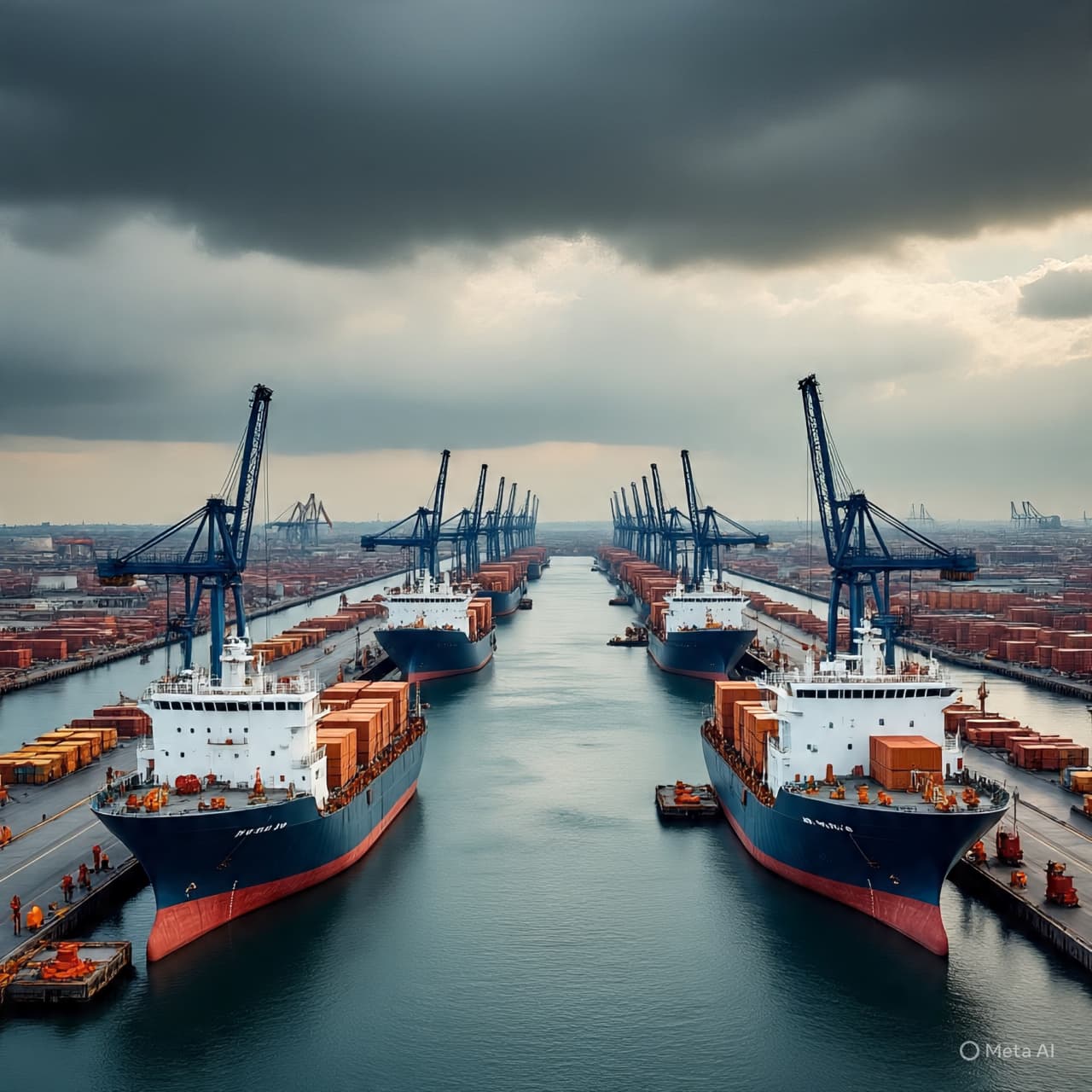
In global trade, fear rarely arrives with a siren. It settles instead like changing weather — first a pressure drop, then a darkening horizon, and finally the quiet certainty that shelter will soon be needed. As the political landscape in the United States shifts, particularly with the possibility of a second Trump presidency, global trade partners are beginning to reconsider their reliance on the U.S. as the central pillar of international commerce.
The language surrounding these changes remains diplomatic and cautious. However, the actions taken by countries across Asia, Europe, Latin America, and Africa tell a different story. Trade partners are increasingly strengthening ties with one another, not as an act of defiance against the U.S., but as a form of insurance against potential economic volatility.
The logic behind this shift is straightforward: as uncertainty grows around one dominant market, diversification becomes a matter of survival. Recent months have seen a notable acceleration in bilateral and regional trade talks that bypass Washington entirely. The European Union is advancing agreements with countries in Latin America and Asia, while Asian economies are deepening their regional supply chains. Middle-income nations are also pursuing pacts that aim to reduce exposure to sudden tariff shocks.
Publicly, leaders continue to describe the United States as indispensable. However, privately, there is a growing acknowledgment that dependence on a single market without alternatives feels increasingly precarious. The experiences from Trump’s first term, marked by steel and aluminum tariffs, threats against auto imports, and sweeping duties on Chinese goods, have reshaped corporate behavior worldwide. Companies learned that market access could become a bargaining chip overnight, and governments realized that even close allies were not immune to unilateral pressure.
This memory is now influencing a quiet recalibration of trade strategies. Trade officials describe a world where redundancy is becoming a virtue. The focus is shifting towards multiple sourcing, multiple markets, and multiple fallback routes. Resilience is now valued as highly as efficiency once was. This shift means more cross-regional agreements that connect economies that were previously linked only loosely, faster approval of trade frameworks that had stalled, and renewed attention to rules-based systems that can function even when major powers step back.
Despite the irony of the situation, the United States remains the world’s largest consumer market and a central engine of innovation. Its companies anchor global supply chains, and its currency underpins international finance. Yet, its unpredictability is prompting other nations to build a network of connections that do not rely solely on American participation. There is no grand coalition forming, nor is there a declared alternative bloc. Instead, a dense web of overlapping agreements is quietly spreading — flexible, pragmatic, and intentionally non-confrontational.
This is not a decoupling from the U.S. economy; it is a form of hedging. For many governments, the goal is not to escape American influence but to soften its impact when it swings sharply. A tariff shock hurts less when other doors are already open, and a disrupted route matters less when alternatives exist.
The political undertone of this shift is significant. Trump has signaled a willingness to impose across-the-board tariffs and has revived rhetoric about economic nationalism, framing trade deficits as evidence of foreign exploitation. Even without formal policy documents, the direction feels familiar, and markets are responding to this perceived direction.
Executives are revisiting contingency plans, and trade ministries are accelerating discussions that had previously moved at a glacial pace. Regional groupings are discovering renewed purpose in this evolving landscape. While these changes may not produce dramatic headlines or emergency summits, they represent a meaningful evolution in global trade dynamics.
The post–Cold War assumption that global trade would steadily deepen around a U.S.-anchored center is giving way to a more diffuse reality. This is not a collapse or a revolt; it is a quiet pluralism characterized by multiple centers, corridors, and anchors. In this emerging landscape, Washington remains powerful, but it is no longer the singular force it once was.
As political winds gather over the United States, much of the world is proactively building its own roofs to weather the storm.
Published by Banx Network. This article is part of the Banx decentralized media programme, powered by the BXE token on the XRP Ledger.



