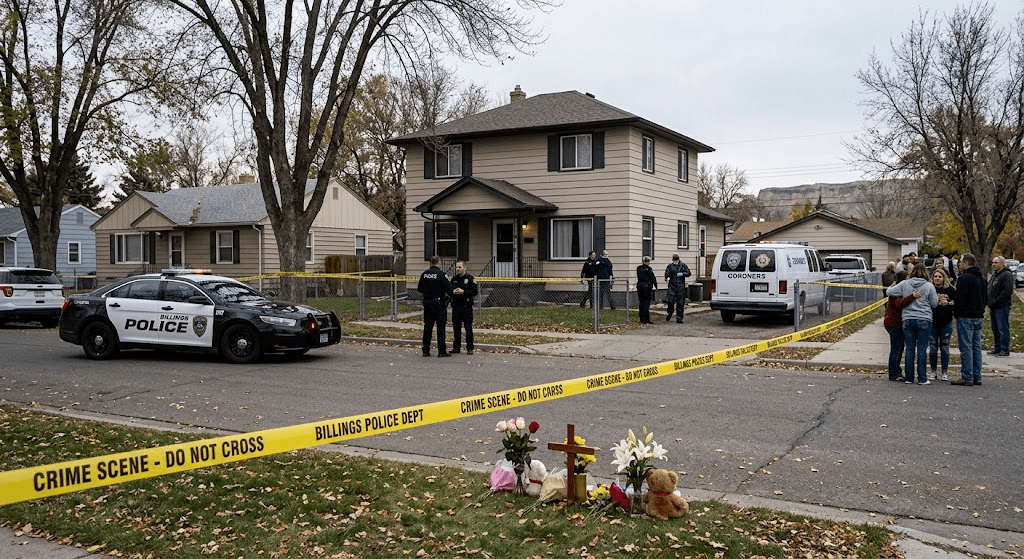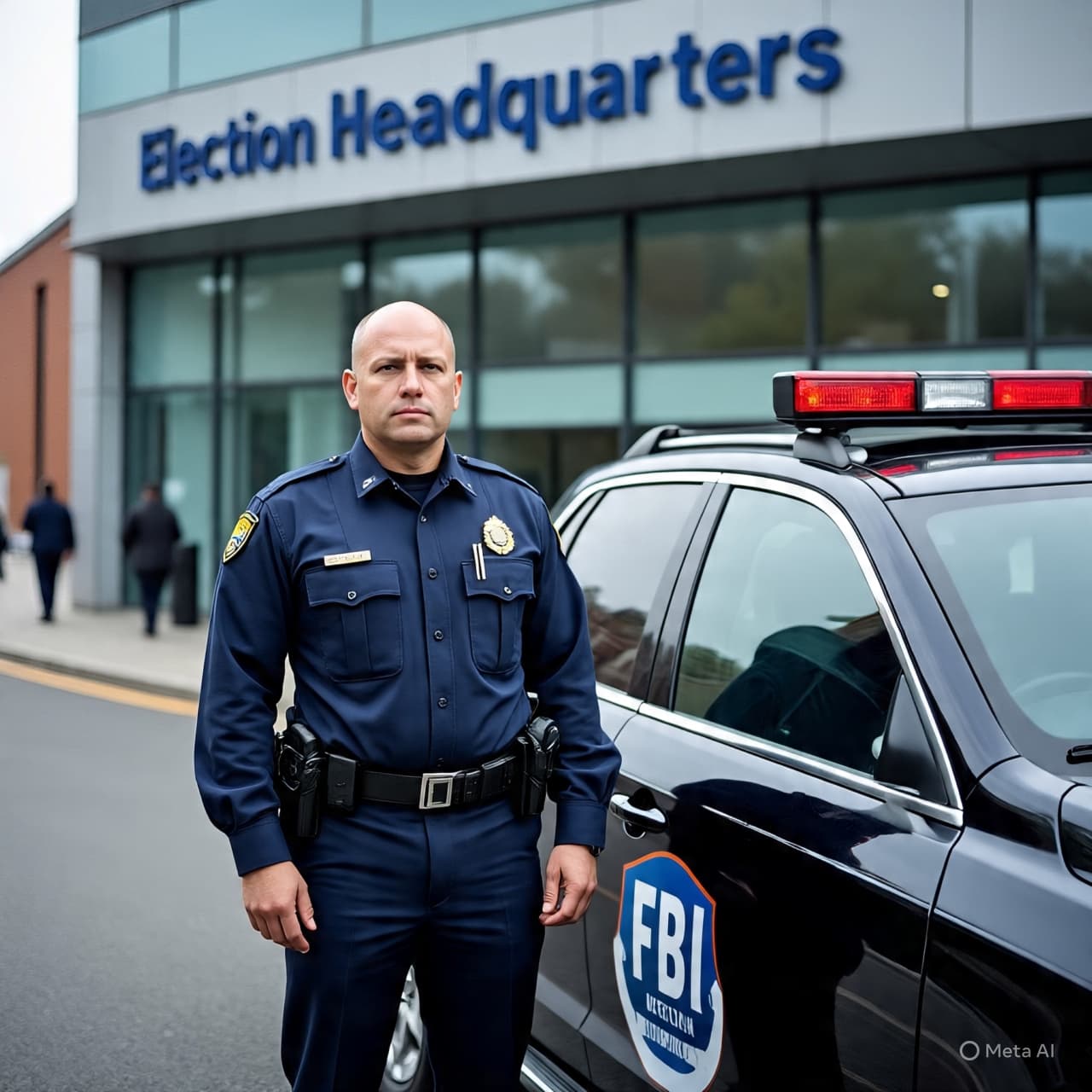
In daylight’s gentle hold, a photograph can sometimes act like a ripple on a still pond — small in itself, yet widening outward to touch distant shores of public conversation and concern. This week, such a ripple appeared near Union City, Georgia, where an FBI search was underway at the Fulton County election hub. Among the flurry of evidence trucks and agents was a figure unfamiliar in that setting: Tulsi Gabbard, the United States Director of National Intelligence. Her presence at a domestic law enforcement action — one tied to the 2020 election records — stirred questions about roles, boundaries, and the quiet lines that separate different parts of the federal government’s work.
For more than a century, the intelligence apparatus of the United States has been shaped around a distinct purpose: to monitor and assess threats from abroad. The Director of National Intelligence (DNI) oversees the nation’s community of spy agencies, keeping an eye on foreign adversaries and the complexities of an interconnected world. To see that office represented amid boxes of ballots and tabulator tapes was enough to prompt lawmakers and observers to pause and reflect.
The FBI’s search was a court-authorized law enforcement action, part of a federal probe involving records from the 2020 presidential election — an election that, despite extensive judicial review and recounts, remains a locus of political debate. Agents sought ballots, rolls, and other documentation that have become central to ongoing investigations. In that context, Gabbard’s presence — captured on camera beside government vehicles — became a point of scrutiny, drawing voices from Capitol Hill and beyond.
Top Democrats, including Senator Mark Warner and Representative Jim Himes — leaders on intelligence oversight committees — responded with concern. In letters and public remarks, they pressed for clarity on why the DNI was present at a domestic operation and whether any foreign intelligence nexus existed to justify that involvement. Their appeals were composed in a tone of serious inquiry rather than partisan invective, underscoring the importance of understanding the boundaries of institutional roles and responsibilities.
Critics of Gabbard’s presence emphasized that domestic law enforcement actions, particularly those involving election records, traditionally fall outside the intelligence community’s domain. Former intelligence officials have echoed that view, noting that involvement in domestic matters without clear foreign links raises questions about statutory limits and the proper division of duties.
In response, administration officials defended Gabbard’s visit as part of her role in overseeing election security — a priority that bridges concerns about external interference and the integrity of democratic processes. They reiterated that the FBI search was lawful and agreed upon by a judge, while casting the intelligence director’s participation as coordination with interagency partners working to safeguard electoral infrastructure.
In the soft interplay of institution and expectation, the episode has prompted lawmakers to demand briefings and oversight, urging that conversations about election security remain grounded in transparency and established legal frameworks. It is, at its core, a dialogue about trust within the architecture of governance — about how public servants navigate their mandates in an environment where public confidence is as crucial as procedural clarity.
As these discussions continue in congressional hearings and official briefings, the mechanics of the FBI’s action and the rationale for the intelligence director’s presence will be examined further. For now, the event stands as a reminder that even routine operational moments can hold deeper implications when they touch the ever-evolving conversation on democracy, oversight, and the rule of law.
In factual terms, Gabbard was photographed at the Fulton County election hub while the FBI executed a court-authorized search tied to an investigation involving the 2020 election. Lawmakers have questioned her presence, seeking explanation through formal oversight channels, and officials have defended the rationale as part of election security efforts.
AI Image Disclaimer (rotated wording) Visuals are created with AI tools and are not real photographs, intended for representation only.
Sources Check — Credible Media
Reuters NBC News (via NBC New York) PBS NewsHour The Guardian Associated Press
Published by Banx Network. This article is part of the Banx decentralized media programme, powered by the BXE token on the XRP Ledger.