There is a particular sorrow that settles over a campus when the sounds of celebration are replaced by gunfire. Homecoming is meant to be a homeward return, a gathering of alumni and students and families in the shared ritual of a football game and a weekend of belonging. On Saturday night near Florida A&M University, that ritual was broken.
Eleven people were shot near Bragg Memorial Stadium, just hours after the university's homecoming football game had ended. Six of the victims were minors, the youngest just 11 years old. A twelfth person, the grandmother of one of those shot, was injured while fleeing the scene . Tallahassee Police Chief Lawrence Revell told reporters that the shooting likely stemmed from an altercation between two or three individuals, and that at least three victims had sustained serious injuries, with one in critical condition .
By Sunday, police had arrested a 15-year-old suspect. He faces 11 counts of attempted murder and one count of illegal possession of a firearm . The investigation remains open, and detectives have urged the community to come forward with any information, no detail too small . The university, a historically Black institution with nearly 10,000 students, issued a shelter-in-place alert shortly after the shooting and later expressed its grief in a statement: "Our hearts go out to the victims and all those affected by this tragic incident" .
What makes this shooting particularly difficult to absorb is the ordinariness of its setting. A college stadium on a Saturday night, a homecoming crowd dispersing after a game, families walking to their cars—these are not scenes that should require a second thought. The violence did not announce itself with a manifesto or a target. It emerged, according to early reports, from a dispute among a handful of people, and it spread outward into a crowd that had gathered for something else entirely.
Tallahassee Mayor John Dailey called it "a truly horrific and heartbreaking tragedy," and promised that the FAMU family would not be alone . Florida State University, across town, advised its students to remain indoors as a precaution, though there was no indication its community was involved . The campus lockdowns and safety alerts have become a familiar choreography in American life, a script that plays out after each shooting with a predictability that does not make it any less painful.
The arrest of a 15-year-old suspect adds another layer to the grief. A child, accused of shooting other children, in a place of learning and celebration. The legal process will unfold over months, and the reasons behind the altercation may become clearer. But the questions that linger are not legal ones. They are about how a dispute becomes a shooting, how a crowd becomes a casualty list, how a homecoming becomes a memory of sirens.
For the six victims who remained hospitalized as of Sunday morning, and for the families of all twelve injured, the weekend has become something else entirely. The football game will be forgotten. The homecoming schedule will be archived. What will remain is the sound of gunfire near a stadium, and the long recovery that follows.
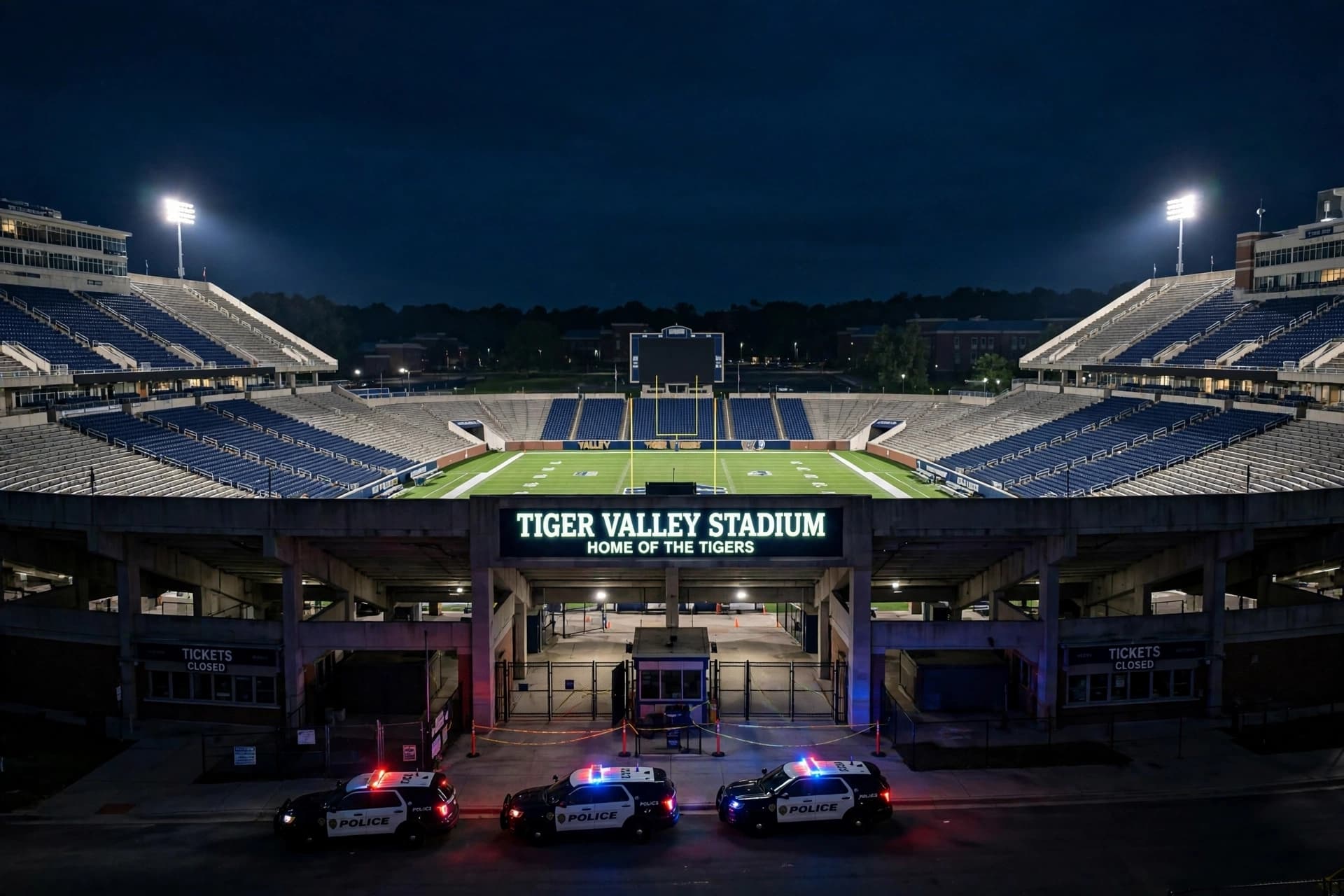
Image note: This article's visual is an AI-generated illustration and does not depict actual events, individuals, or the campus.
Sources: Anadolu Ajansı, RNZ, Tanjug, BNR News
Published by Banx Network. This article is part of the Banx decentralized media programme, powered by the BXE token on the XRP Ledger.