
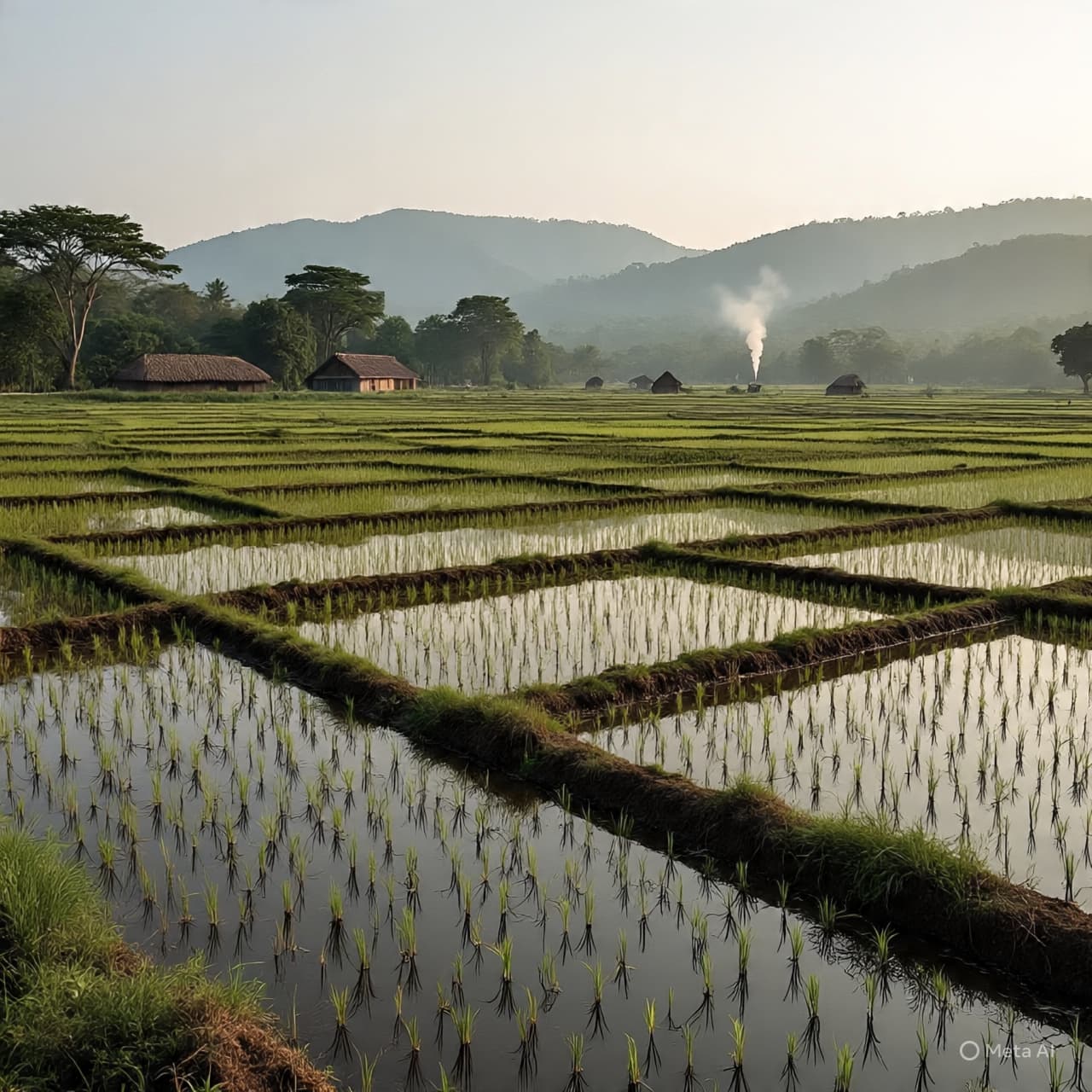
There are days in the rhythm of life where the land seems to speak in whispers — the rustle of grain in the breeze, the quiet promise of another harvest, the shared hope of families gathered around fields at dusk. Yet in the Democratic Republic of Congo, that whisper has grown fragile, like an echo across a distant plain. Here, where fertile soil once offered the reassurance of sustenance, the combination of conflict and flooding has unsettled the very foundation of food production, leaving millions in a delicate state of hunger and uncertainty.
Across the country’s sprawling landscapes, farmers have long planted maize and other cereals with the quiet faith that a season’s toil will yield nourishment. But over the past year, the clash of armed groups in the eastern provinces disrupted sowing and harvesting, forcing families from their homes and fields and leaving rich soils untended. At the same time, severe floods — drenching wide swaths of cropland between April and September — washed away crops and damaged infrastructure that farmers rely on, challenging the rhythms of growth that once felt so reliable. These severe disruptions, outlined by the Food and Agriculture Organization of the United Nations (FAO), have deepened an already fragile food situation across the nation.
In provinces such as North Kivu, South Kivu, Ituri and Tanganyika, the pressures of conflict and environmental shocks have combined in a way that feels almost like a double shadow — each casting uncertainty over the other. As insecurity forces people to flee, so too does it erode the pulse of agricultural activity that sustains rural communities. Meanwhile, flooding has not only damaged fields; it has also reduced access to roads and markets, constraining the movement of goods and pushing staple prices higher in urban and rural markets alike. Maize and imported rice remain expensive and scarce, making it harder for families to put food on the table.
The human impact of these pressures is stark. According to combined analyses from FAO and related Integrated Food Security Phase Classification data, tens of millions of Congolese — nearly one in five people — are estimated to face crisis levels of food insecurity or worse, including millions in emergency conditions where lack of food threatens lives and livelihoods. These figures reflect not only lost cereals but also the broader erosion of household income, market access and dietary stability.
Beyond the statistics are families who adjust daily meals, reduce portion sizes and rely on humanitarian aid to fill gaps that once were met by local fields. Children’s growth and development are jeopardized where chronic malnutrition already persisted before these compounded shocks. Even where farmers wish to sow, uncertainty about seeds, tools and safe access to land weighs heavily on their decisions.
As the country looks ahead to the next planting and harvesting seasons, the challenges remain layered. The threat of ongoing conflict spilling into new areas could further disrupt cereal production and livelihoods. Meanwhile, climate variability — expressed in intense rainfalls and floods — continues to test farmers’ resilience, demanding responses that reach beyond emergency food assistance to longer‑term adaptation.
In plain terms, FAO and partners emphasize that without increased support for both immediate hunger relief and sustainable agricultural recovery, food insecurity in the Democratic Republic of Congo is likely to persist and deepen in the months to come.
AI Image Disclaimer “Visuals are created with AI tools and are not real photographs.”
Sources ReliefWeb – FAO GIEWS Country Brief Milling Middle East & Africa Magazine World Food Programme news Reuters (Hunger Hotspots report) WFP, FAO joint warnings
نُشر بواسطة Banx Network. هذا المقال جزء من برنامج الوسائط اللامركزية من Banx، مدعومًا برمز BXE على شبكة XRP Ledger.


