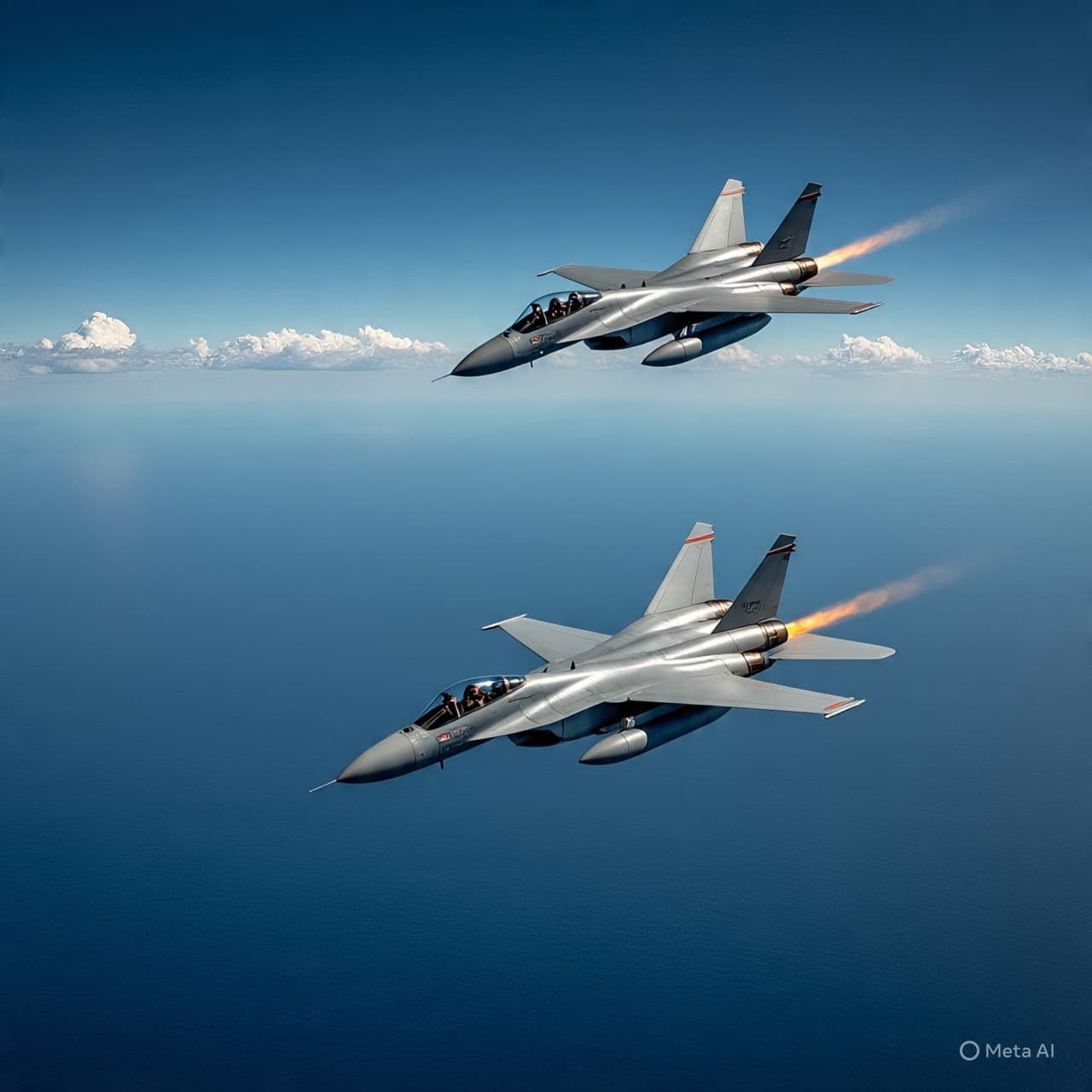
The air above the Western Pacific often carries the weight of unspoken disagreements. On a recent morning near Okinawa, that tension suddenly condensed into a moment measured not in minutes, but in milliseconds. Japanese pilots reported that Chinese fighter jets had directed fire-control radar toward their aircraft — a signal interpreted worldwide as one step closer to a confrontation no one wants to see realized.
For the pilots involved, the encounter unfolded as a choreography of instinct and training. Japan’s F-15s were monitoring activity linked to Chinese carrier operations in nearby waters, a routine mission in a region where routine rarely feels simple. Then came the alert: a radar lock, the electronic equivalent of someone placing a finger directly on a trigger shaped by technology, history, and mistrust.
Japan’s defense officials described the act as dangerous and unacceptable, stressing that such behavior leaves no margin for error in skies already thick with geopolitical strain. A radar lock does not fire a weapon, but it speaks the same language — a mechanical glare that tells the other side, *You are in my sights.* In a region where every second counts, symbolism becomes substance.
China rejected the accusation, insisting its aircraft were conducting lawful operations and accusing Japan of misrepresenting the encounter. The exchange revealed a familiar pattern between the two neighbors: sharply differing narratives built atop the same thin layer of air and ocean. Each statement, each counterstatement, slipped into the broader rhythm of their long-standing disputes, from territorial disagreements to military posturing.
Yet the real story sits somewhere beyond the formal language of ministries. It resides in the skies where pilots do not trade diplomatic notes, only signals — some intentional, some unintended, all potentially consequential. When a radar lock is reported, the world takes notice not because it expects conflict tomorrow, but because it reminds us how quickly accidents, misreads, and split-second reactions can become history’s irreversible moments.
As the noise settles, both countries return to familiar postures: investigations in one capital, denials in another, and an unspoken acknowledgment that the region remains as fragile as ever. But for those who navigate these contested spaces in flight suits rather than conference rooms, the message carried by that radar beam cannot be softened. It was a reminder that peace in the Pacific is maintained not only by treaties and summits, but by restraint — and the hope that every pilot, on every side, keeps their discipline when machines and nations inch too close.
Published by Banx Network. This article is part of the Banx decentralized media programme, powered by the BXE token on the XRP Ledger.