There are nights when the sky, usually a quiet witness to human affairs, becomes something else entirely—a moving canvas of urgency, streaked with light and consequence. In such moments, the distance between horizon and home feels suddenly smaller, as if events once far away have stepped closer, uninvited, into the rhythm of everyday life.
In recent developments, that fragile boundary was crossed again as Iranian missiles struck several Israeli towns, leaving behind not only physical damage but a lingering sense of unease. Reports from Reuters and BBC News describe scenes marked by shattered buildings, disrupted neighborhoods, and civilians moving quickly between shelter and uncertainty, guided by the echo of sirens that have become all too familiar.
The strikes, part of an ongoing cycle of escalation between Iran and Israel, illustrate how modern conflict rarely stays confined to abstract strategy. Instead, it arrives in fragments—broken glass, halted traffic, interrupted sleep. Al Jazeera and CNN note that the attacks triggered widespread panic in affected areas, as residents sought safety amid successive waves of incoming projectiles.
Israel’s air defense systems, long regarded as highly advanced, intercepted many of the missiles. Yet, as Associated Press reporting suggests, some were able to pass through, underscoring a reality often acknowledged but rarely felt so directly: even the most sophisticated defenses operate within limits. It is not a question of whether they work, but of how much they can absorb when the pressure intensifies.
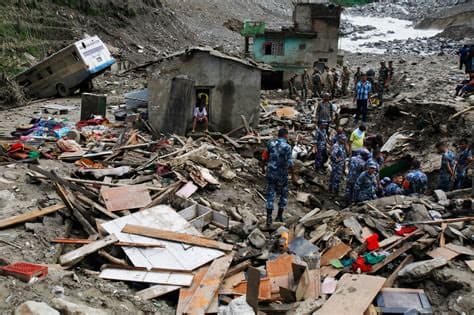
In towns that experienced direct impact, emergency services responded swiftly. Medical teams treated the injured while rescue crews worked through debris, their efforts forming a quiet counterpoint to the violence overhead. The destruction, though localized, carried a broader weight—each damaged home reflecting a wider instability that stretches beyond borders.
There is also a psychological dimension that lingers long after the sirens fall silent. The unpredictability of such attacks reshapes daily life, turning ordinary routines into calculated decisions. Schools, workplaces, and public spaces become part of a larger equation, where safety is no longer assumed but continually assessed.
At a wider level, these घटनाएँ signal a continuation of tensions that have steadily intensified in the region. The exchange of strikes between Iran and Israel reflects not just immediate retaliation, but a deeper strategic contest—one that draws in questions about deterrence, capability, and the fragile balance that holds broader conflict at bay.
Observers have pointed out that such incidents risk widening the scope of confrontation, particularly as regional and international actors watch closely. The concern is less about a single রাত and more about what repeated nights like this might accumulate into—a pattern that becomes harder to interrupt with each iteration.
And yet, amid the scale of military calculations and geopolitical analysis, the human experience remains quietly central. For those in affected towns, the story is not written in policy or strategy, but in moments—gathering family members, finding shelter, waiting for the all-clear that signals a temporary return to normalcy.
Officials in Israel have indicated that defensive operations remain active, while international leaders continue to call for restraint and de-escalation. The situation remains fluid, with further developments expected as both sides assess their next steps.
AI Image Disclaimer Illustrations were produced with AI and serve as conceptual depictions.
Source Check Credible sources found:
Reuters BBC News Al Jazeera Associated Press CNN
Published by Banx Network. This article is part of the Banx decentralized media programme, powered by the BXE token on the XRP Ledger.