
Key Highlights
- Record Rainfall:Wellington experienced over 70 millimeters of rain in less than an hour.
- State of Emergency:A state of emergency was declared across the Wellington region due to severe flooding.
- Human Cost:The body of a missing man was recovered, highlighting the storm's tragic impact.
Wellington, New Zealand, has recently been transformed by a relentless deluge, as torrential rain fell upon the city, turning familiar streets into rivers and prompting urgent emergency responses. This week, the capital faced unprecedented rainfall, leading to flash floods and landslides that wreaked havoc across neighborhoods already vulnerable from previous storms. As the floodwaters began to recede, authorities confirmed the tragic discovery of a body believed to be that of Philip Sutton, a man who had gone missing during the storm.
Sutton was reported missing after floodwaters surged through his property in the suburb of Karori. Search and rescue teams faced significant challenges, including unstable terrain and fast-moving water, but were able to recover his body a considerable distance from his vehicle. His death underscores the human toll of a storm that struck with unusual ferocity.
Meteorological data revealed that Wellington recorded its heaviest rainfall intensity on record, with reports indicating that over 70 millimeters—some sources citing as much as 77 millimeters—fell within a single hour. Over a 48-hour period, the rainfall totals approached nearly three times the monthly average for April, overwhelming the city’s drainage systems and urban infrastructure.
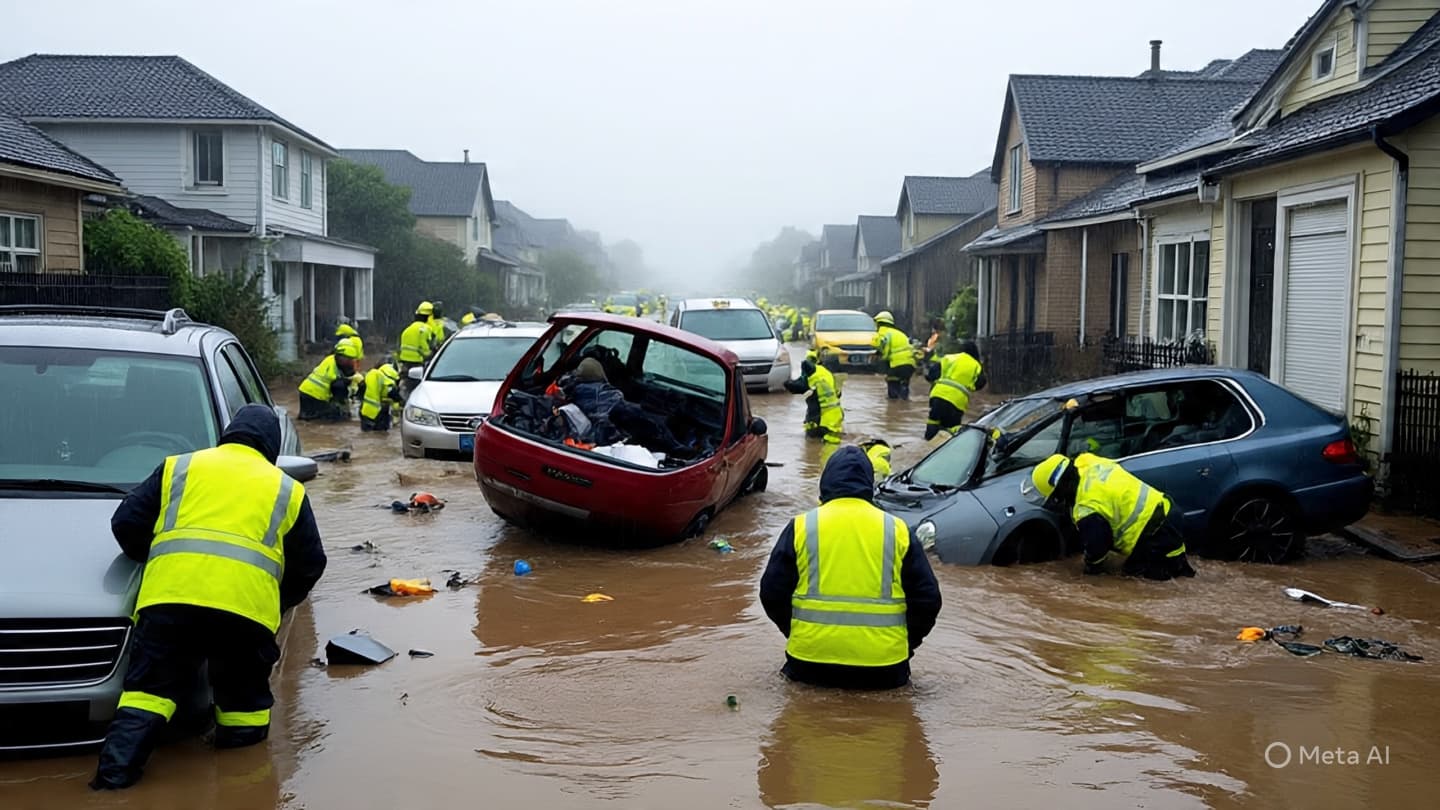
In the aftermath, floodwaters surged through streets, lifted vehicles from parking lots, and forced residents in low-lying areas to evacuate. Emergency services received over 150 calls for assistance as roads were closed, tunnels were shut down, and landslides disrupted transport links. A state of emergency was declared across the Wellington region, with evacuation advisories issued for communities at heightened risk of flooding.
For many residents, the storm represented more than just a weather event; it disrupted daily life and altered the rhythm of the city. Shops were forced to close, homes were inundated with mud and debris, and vehicles were found overturned or swept away. Community centers and emergency hubs sprang into action, providing shelter and support as neighbors banded together to clear streets and salvage belongings from their damaged homes.
Experts attribute the severity of the flooding to a combination of factors, including saturated ground conditions from recent severe weather events, such as Cyclone Vaianu, which left little capacity for additional rainfall absorption. Additionally, meteorologists noted that converging winds and localized atmospheric conditions intensified the downpour over the southern coast of the city. Some researchers have suggested that climate change may be contributing to more intense rainfall events, resulting in storms that carry greater moisture.
Although weather warnings have eased and the rain has moved north, the danger remains. Authorities continue to caution residents about unstable slopes, swollen rivers, and damaged structures. Cleanup efforts are underway, but many areas are still grappling with the aftermath, including broken roads, damaged homes, and lives irrevocably changed in just a few hours.
Wellington is no stranger to storms, yet some residents have described this flooding as the worst since the catastrophic storms of 1976. Such comparisons resonate deeply, as they reflect not only the rainfall totals but also the collective memory of the city and its residents, who must brace for the possibility of future storms.
As the floodwaters recede, they leave behind silt lines on walls and a haunting silence where sirens once blared. The city begins the process of recovery, checking on neighbors and assessing the damage. Yet, amidst this quiet work, another truth emerges: when rain falls with such intensity, it does not merely pass through; it reshapes the very fabric of the city.
Published by Banx Network. This article is part of the Banx decentralized media programme, powered by the BXE token on the XRP Ledger.



